
-questions State land allocations
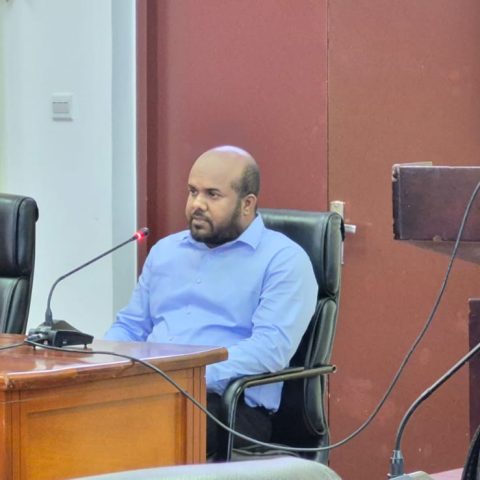
The Guyana Lands and Surveys Commission (GLSC) has been operating without its statutory governing board for more than six years, prompting APNU Member of Parliament Sharma Solomon to raise questions about oversight of State land allocations made during that period to President Irfaan Ali.
In a statement, Solomon cited Section 7(1) of the Guyana Lands and Surveys Commission Act, which states that the governing body of the Commission “shall be the Board” and that it is responsible for the discharge of the Commission’s functions.
Solomon pointed out that the absence of the board throughout Ali’s presidency raises questions about the level of statutory oversight exercised over the allocation of State lands and whether all required procedures were followed.
“For over six years, that Board has not been in place. The very body established by law to provide oversight over State land allocations was absent for all your presidency,” Solomon said.
His comments came in context of the ongoing public scrutiny surrounding the farm associated with the President at Long Creek and questions about the amount of land comprising the property.
Solomon stressed that his concern was not with the President owning a farm, but with whether State land was allocated in accordance with the law during a period in which he said the Commission lacked its governing board. “My concern is not that you own a farm. Every Guyanese has the right to own land. My concern and the concern of Guyanese, is whether the laws governing State lands were followed when the statutory oversight mechanism was missing,” he said.
Solomon referred to a document circulating publicly which he said shows a lease for approximately 20 acres of State land at Long Creek. He contrasted this with statements that the property is approximately 150 acres and called for an explanation of the difference.
“If the original lease was for about 20 acres, how did it become approximately 150 acres? Was an additional 130 acres of State land allocated? If so, when was it granted, by whom, and under what legal authority?” Solomon questioned. The President has said that the acreage is less than half of 150 acres.
Solomon questioned whether other individuals or entities had received large tracts of State land during the period and called for the identities of beneficiaries, locations of the lands and the legal authority under which any such allocations were made to be disclosed.
“During those six years with absolute authority over land distribution, who else received large tracts of State land? Who received 150 acres or more? Where are those lands located? Who were the beneficiaries, and under what authority were those allocations made?” Solomon asked.
He argued that State land is a public resource and that citizens should be able to determine how it was distributed and whether allocations complied with the relevant laws and procedures.
“State lands belong to the people of Guyana. They deserve to know who received them, how they were received, and whether every acre was allocated openly, lawfully, and in the national interest,” he said.
Solomon called on the President and relevant authorities to provide greater transparency on the matter, saying the issue was one of “fairness” and “public trust” rather than opposition to private land ownership.
After Opposition Leader Azruddin Mohamed had dropped his 23-minute video highlighting Ali’s mega farm near St Cuthbert’s Mission, the President had responded flippantly while abroad that he would facilitate a tour of the facility when he returned to Guyana. Ever since then, no word has been forthcoming on his promise of a tour.
Meanwhile, Kiskadee Watch has been unable to obtain answers from the GLSC and the Environmental Protection Agency (EPA), the two key agencies responsible for state lands and environmental oversight.
On Wednesday, this publication visited the GLSC headquarters seeking comment from Chief
Executive Officer Enrique Monize on matters relating to the leasing of lands for the
President’s agricultural operations. Monize was unavailable, while two senior officials
referred to by staff as responsible for such matters also declined to comment.
Senior Land Administration Officer for Region Four Cycrene Fredericks reportedly said she
would not speak with the media, while Land Administration Manager Jewel Cheong said she
was not authorised to comment and that only the CEO addresses such issues.
At the EPA, Executive Director Kemraj Parsram was also unavailable. Through his secretary,
he requested that questions be submitted in writing. Previous telephone requests for comment
have also gone unanswered despite assurances that a call would be returned.
The silence from both agencies comes as calls grow for greater transparency over the
President’s farm, including questions surrounding the acquisition of the land, financing of the
development and whether the necessary approvals were obtained.
The controversy began after Mohamed released the video in which he questioned the scale and financing of the President’s agricultural operations. Standing near the property, Mohamed estimated that the ranch, which he described as encompassing about 150 acres, represented an investment exceeding $2.2 billion. He contended that such a development—including poultry tunnel houses, cattle and sheep facilities, electrical infrastructure, heavy equipment and an access road—could not have been financed from the President’s declared salary.
Ali subsequently rejected Mohamed’s estimates of both the size and value of the farm and said the project had been financed through a “huge loan” from the banking system. “My farm is not a discovery. It is public information… a farm that I have built and can account for every single investment in that farm,” the President said, adding that the property had been declared to the Integrity Commission.
However, he did not publicly release documents showing when the land was acquired, the total amount invested or the financing arrangements.








Discussion