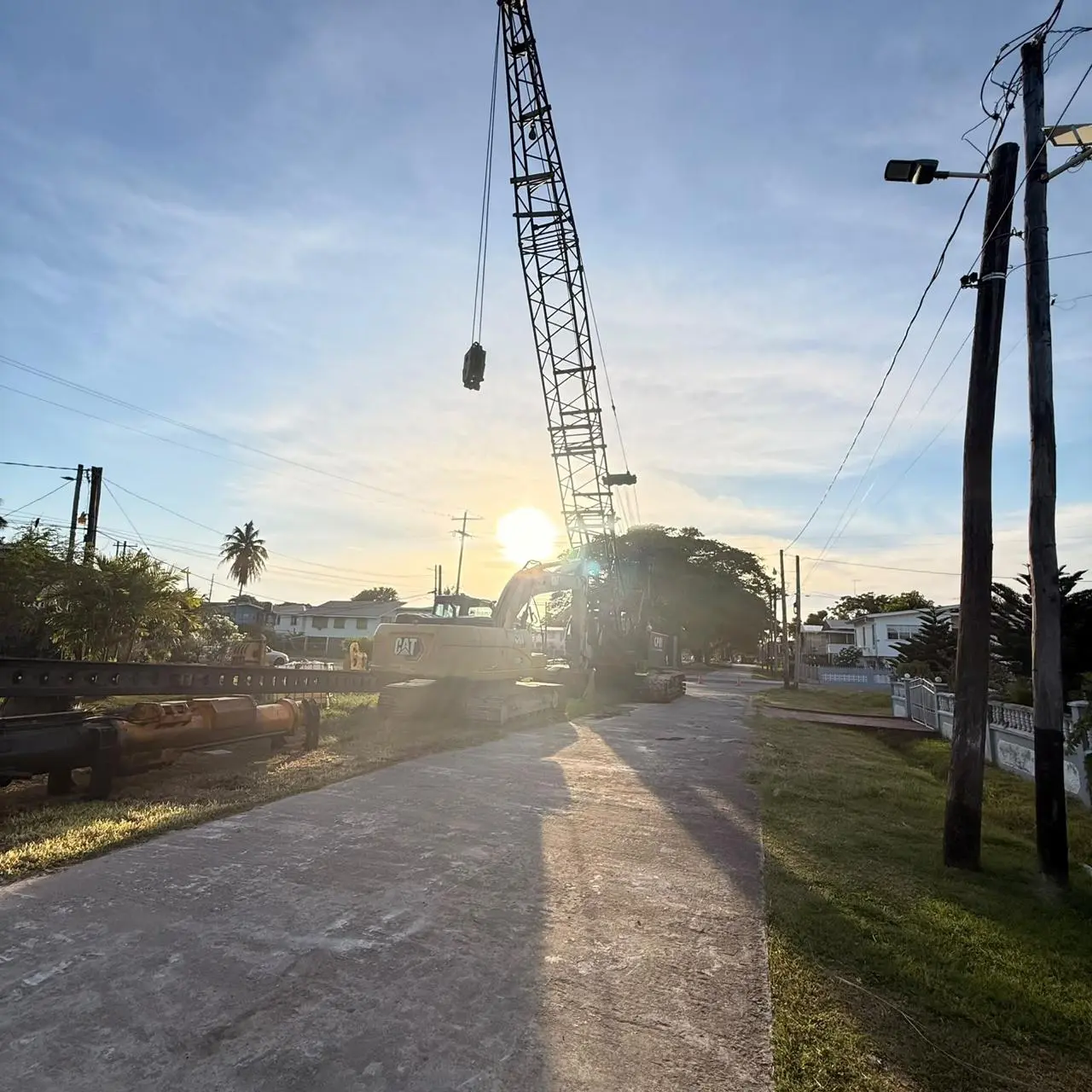
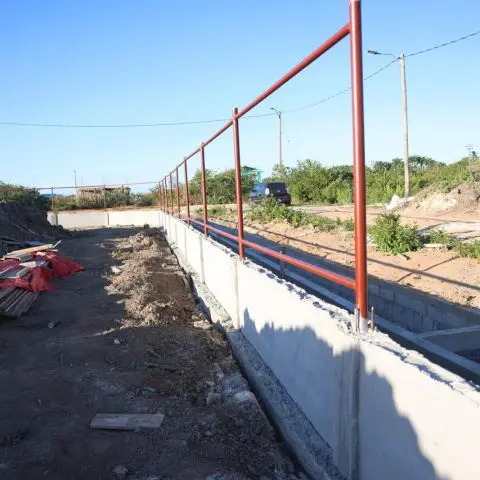
The Meadowbrook Gardens Community Group has called for the immediate suspension of electricity transmission line works through the residential community, saying construction has resumed despite a commitment by project representatives to halt activities along a disputed section.
In a statement issued yesterday, the group said residents had been requesting meaningful consultation since February over the proposed alignment, its proximity to homes, potential health and safety implications and the availability of alternative routes.
Despite those requests, it said, fundamental questions remained unanswered while construction proceeded.
The group called on the Guyana Power and Light Inc (GPL), the relevant project authorities and responsible government agencies to suspend the disputed works pending consultation, disclosure of relevant assessments and proper consideration of residents’ concerns.
It also demanded a written explanation for the resumption of construction following what it described as a commitment at a recent community meeting to halt work along that section.
Residents had understood the undertaking would provide an opportunity for further engagement and consideration of the issues raised. The resumption of work without satisfactory answers or a clear explanation had seriously undermined confidence in the consultation process, the group said.
“What is the purpose of consultation if legitimate questions remain unanswered, commitments are disregarded, and construction proceeds regardless of residents’ objections?” it asked.
The statement did not identify the project representatives who made the commitment or give the date of the meeting.
Questions over route
According to the group, residents formally sought consultation as early as February after learning that the proposed transmission alignment would affect Meadowbrook Gardens.
They questioned why the lines, previously proposed for another community where objections had been raised, were subsequently redirected towards their neighbourhood.
“Why was our residential community selected following objections from another community? What technical, environmental or safety considerations justified this decision?” the group asked.
It called for disclosure of the justification for the change, including the reasons for moving the route towards Meadowbrook Gardens.
Residents also identified reserves bordering the community which, they said, might offer an alternative to routing major transmission infrastructure through an established residential area.
The group requested a detailed technical explanation of why those reserves had not been utilised, together with an assessment of their feasibility as alternative transmission corridors.
It said residents had received neither satisfactory explanations nor supporting documents addressing the alleged rerouting and the proposed alternatives.
The group expressed concern that decisions affecting residents’ homes and daily lives were being implemented without sufficient transparency or consideration of their objections.
Safety and use of properties
Meadowbrook Gardens is an established community where children play outdoors, families gather on their lawns and residents hold community activities, the statement said.
“These are not vacant or unused spaces. They are essential parts of our homes, neighbourhood and daily lives.”
Based on the information presently available to residents, the group said, the proposed lines might pass within a few feet of homes and areas used by road users.
Its concerns include possible electrical hazards, the proximity of infrastructure to residential properties, restrictions on the use and enjoyment of homes and the implications of long-term exposure to electromagnetic fields.
The group cited the International Agency for Research on Cancer’s classification of extremely low-frequency magnetic fields as Group 2B, or possibly carcinogenic to humans. It noted that the classification was based primarily on epidemiological studies showing an association between elevated residential magnetic-field exposure and childhood leukaemia.
The group said that where reasonable alternatives existed, potential risks and unnecessary proximity to homes should be evaluated rather than dismissed.
It requested disclosure of the relevant environmental, health, engineering and safety assessments, including proposed clearances from homes, roads and public spaces, applicable safety standards, electromagnetic-field exposure assessments and any required environmental authorisations.
Independent review sought
The group also called for an independent technical and environmental review of the disputed alignment. This should include an objective comparison of alternative routes that could reduce potential impacts on residential properties and community spaces, it said.
It sought urgent intervention by the Environmental Protection Agency and other oversight authorities to examine whether the alignment and associated works had undergone appropriate environmental review, regulatory authorisation and public consultation.
A further meeting should be convened with community representatives, project decision-makers and qualified technical personnel, with all outstanding questions addressed before construction resumes along the disputed route, the group added.
“Meaningful consultation cannot simply be an exercise in informing residents of decisions already made. It must involve genuine engagement, access to relevant information, consideration of alternatives and accountability for commitments communicated to affected communities,” it said.
The statement acknowledged the importance of modernising electricity infrastructure and strengthening the national power supply, but said development must respect established communities and prioritise public safety.
“Our position has remained consistent: we are not opposed to electricity infrastructure development. We object to the disputed alignment through our residential community and the apparent failure to adequately consider safer or less intrusive alternatives.”
The group said the absence of an explanation for rejecting the bordering reserves was particularly concerning, given the proposed proximity of the lines to homes and frequently used community spaces.
The group added that residents had spent months attempting to engage constructively, requesting consultation and identifying alternatives.
They were entitled to know why their residential streets had been selected, why alternative corridors had not been adequately considered and what measures would protect public safety and residential wellbeing, it said.
“A commitment made to a community must carry meaning and accountability.”
The group said it remained willing to pursue a responsible resolution but would continue advocating for residents and for transparency and meaningful public participation in national development.
“Our homes are not simply points on an engineering drawing. They are where our families live, our children grow and our community thrives,” it said.









Discussion