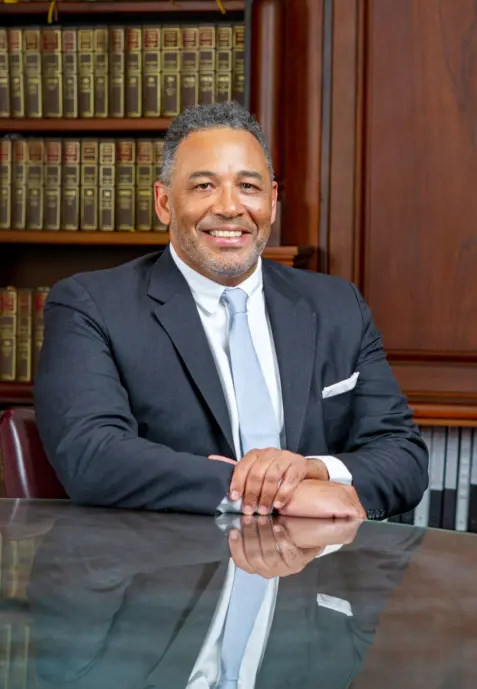
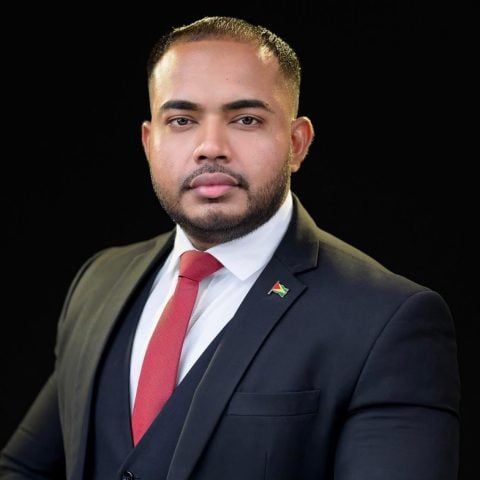
Godfrey P Smith, the Chairman of the Commission of Inquiry into the MV Barima sinking, today said the task of the commissioners is to follow the evidence wherever it leads and to “frankly and fearlessly” report their findings.
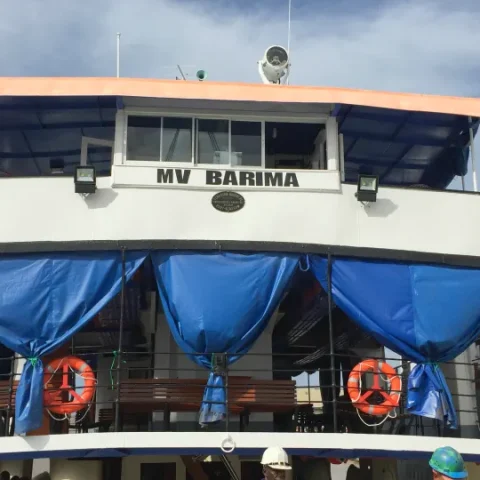
He was at the time delivering an opening address at the Arthur Chung Conference Centre where the long-awaited inquiry into the July 18 sinking of the MV Barima and the loss of around 100 lives will be held.
He said that the Terms of Reference require the commissioners to undertake a thorough, independent and impartial public inquiry into the circumstances surrounding the capsizing and sinking of the MV BARIMA, the loss of lives, the response to the tragedy, and all matters reasonably connected with it.
“They require us, so far as the evidence reveals, to establish the full facts and sequence of events; to determine the immediate, direct and contributing causes of the casualty; to identify operational shortcomings or failures; to assess compliance with applicable legal and safety requirements; to consider accountability where warranted; and to propose reforms necessary to strengthen maritime safety and prevent the possibility of recurrence. Our mandate is therefore not confined to the final moments of the voyage but includes the circumstances which existed before, during and after the casualty occurred”, he stated.
Smith also said that major casualties rarely come from one isolated circumstance but may stem from the interaction of several factors such as physical conditions, human decisions, organizational systems, systemic failures, inadequate regulatory controls and failures of communication or oversight that may have built up over a long period of time.
“Our responsibility is to identify and examine those matters fairly and precisely, to follow the evidence wherever it leads and to frankly and fearlessly report our findings”, he declared.
PRELIMINARY HEARING
Chairman’s Opening Statement
7 October 2026
Introduction
Fellow Commissioners, counsel, distinguished guests, representatives of interested parties, survivors, relatives and loved ones of those who lost their lives in the BARIMA tragedy, witnesses, members of the media, citizens of Guyana: On 30″ July 2026, H.E. Dr. Mohamed Irfaan Ali appointed us as Commissioners to inquire into, and report on, the circumstances surrounding the capsizing and sinking of the BARIMA on the night of 18″ July 2026 and the tragic consequences that followed. Since our appointment, we, together with the Commission’s counsel and personnel, have been gathering important technical maritime documentation and analyzing it, conducting investigations, drawing up a list of potential witnesses and interviewing them, drafting procedural rules to guide the conduct of the Commission’s work and other preparatory work necessary for the full and efficient discharge of this solemn public duty we have been entrusted with. Today’s hearing is a preliminary hearing to introduce ourselves, key personnel of the Commission and to explain how the Commission intends to go about its work, before we begin calling witnesses to give oral evidence at the substantive hearings. By way of introduction then, I am Godfrey Smith, Senior Counsel, and a former judge of the Eastern Caribbean Supreme Court. I will serve as the Chairman of this Commission of Inquiry. I will now ask my fellow Commissioners to introduce themselves. I will now ask Counsel to the Commission to introduce themselves and their team. The BARIMA tragedy has inflicted immeasurable human loss to families, to communities and an extensive circle of people whose lives have now been permanently changed. The loss of lives, persons who remain unaccounted for and those who survived, are not merely the statistics of a maritime casualty but are the loss and cause of deep suffering experienced by many families and, by extension, the nation. We therefore open these proceedings expressing our sorrow for those whose lives were lost, compassion for and empathy with the bereaved, and for those who survived, Put in plain language, our task is to find out what happened to the BARIMA and why it happened? What circumstances permitted it to happen? Were there warning signs? Were there failures? Were laws, regulations and safety procedures complied with? Were they adequate? Were they properly administered and enforced? Who is responsible and what is to be done about it? Having answered those questions, as far as the evidence reveals, we must then consider what is to be done to reduce the possibility of such a tragedy occurring again? These are complex and difficult questions. But they are questions which this Commission has been mandated to answer and which, given the collective expertise of the Commissioners, it has the competence to answer.
Purpose of this Inquiry
This Commission derives its authority from the Commission of Inquiry Act and, in particular, from the comprehensive Terms of Reference issued to us. The Terms of Reference require us to conduct a thorough, independent and impartial public inquiry into the circumstances surrounding the capsizing and sinking of the BARIMA, the loss of lives, the response to the casualty, and all matters reasonably connected with it. They require us, so far as the evidence reveals, to establish the full facts and sequence of events; to determine the immediate, direct and contributing causes of the casualty; to identify operational shortcomings or failures; to assess compliance with applicable legal and safety requirements; to consider accountability where warranted; and to propose reforms necessary to strengthen maritime safety and prevent the possibility of recurrence. Our mandate is therefore not confined to the final moments of the voyage but includes the circumstances which existed before, during and after the casualty occurred. Major casualties rarely arise from one isolated circumstance. They may arise from the interaction of several factors such as physical conditions, human decisions, organizational systems, systemic failures, inadequate regulatory controls and failures of communication or oversight that may have built up over a long period of time. Our responsibility is to identify and examine those matters fairly and precisely, to follow the evidence wherever it leads and to frankly and fearlessly report our findings.
The Six Main Areas of Inquiry
Our Terms of Reference require us to address a number of interrelated areas.
The seaworthiness and safety of the vessel
We will examine the condition and seaworthiness of the BARIMA. That includes matters relating to its physical condition, stability, machinery, maintenance, certification, inspection, operational condition and compliance with applicable safety and other regulatory requirements. We will ask whether the BARIMA was fit for the voyage on which she embarked and whether the conditions in which she operated were consistent with the requirements imposed upon her.
Passenger and cargo operations
We will examine the circumstances and methodology by which passengers boarded the vessel and cargo was loaded. Questions concerning passenger numbers, manifests, cargo quantities, cargo placement, loading procedures, stability, the carriage of potentially hazardous material, the availability and adequacy of lifesaving equipment, and compliance with regulations will all be inquired into. I emphasize that we will not approach these questions with any predetermined conclusion but will attempt to establish the facts based on hard evidence.
The crew — qualifications, competence, conduct and decision-making
The qualifications, training, experience and operational readiness of the master, officers and crew will be examined as well as their conduct before and during the voyage and their actions when the emergency arose. What information was available to those persons manning the BARIMA? What decisions were taken by them? What alternatives, if any, were available? And were those decisions taken reasonable in the circumstances as they existed at the relevant time?
Search, rescue and recovery
We will inquire into the adequacy, timeliness, coordination and effectiveness of the search, rescue and recovery operations which will require examination of the actions of the relevant public authorities, emergency services, maritime agencies and other persons who responded. We will consider the information available to them, the resources available, the communications received and transmitted, the decisions made, and the manner in which the response unfolded. The purpose is to determine whether the response, rescue and recovery efforts were adequate in the circumstances and, if not, why not.
Regulatory and institutional oversight
We will inquire into the systems of supervision and oversight applicable to the BARIMA. This will include consideration of the roles and responsibilities of relevant state institutions, including the Transport and Harbours Department and the Maritime Administration Department. We will examine inspection, certification, maintenance systems, operational procedures, supervision, staffing, training, enforcement and regulatory oversight where those matters are relevant. What rules existed to ensure passenger safety and whether, and to what extent, were they implemented and enforced?
Human factors and emergency decision-making
We will inquire into the human dimensions of the casualty such as workload, training, communication, situational awareness, command structure, risk assessment and emergency decision-making where relevant. The purpose is to understand how decisions were made and how systems functioned in the real circumstances confronting those involved.
This is an Inquiry, not a Trial
From the outset, it is important that the public understands the character of these proceedings. This is a Commission of Inquiry. It is not a criminal trial. In many ways, a Commission of Inquiry may appear to resemble a court, but it is not. It does not sit as a criminal court and will not determine the criminal guilt of anyone. Nor will the Commission determine civil liability like a court exercising civil jurisdiction. Our task is to establish facts, make findings within the scope of our mandate, identify causes and contributing factors, identify shortcomings or failures in a way that the court system does not, and make recommendations. Our recommendations are not legally binding, and it will be for the government or other relevant public bodies and organizations to decide what action will be taken in response to our report. If evidence emerges which properly requires referral to another competent authority, the Commission will deal with that evidence in accordance with its Terms of Reference and the law. The report of a Commission of Inquiry may therefore be the catalyst for civil and criminal proceedings to follow.
The Importance of Procedural Fairness
The Commission has adopted and published Rules of Procedure to ensure that its work is conducted in a manner that is open, transparent, orderly, fair and effective. We have the power to summon witnesses, require the production of relevant documents and other material, require and even compel persons possessing relevant information to give evidence. Any person wishing to participate in the Inquiry as an Interested Party may apply to the Commission for standing by writing to the Secretary of the Commission. The Commission will then consider all applications and may grant standing if it is satisfied, for example, that an applicant has played or may have played, a direct and significant role in relation to the subject matter of the Inquiry or has relevant evidence or information relating to the subject matter of the Inquiry; has a substantial, personal or direct interest in the subject-matter of the Inquiry whether as a witness, survivor, family member of a victim or otherwise; or may be subject to explicit or significant criticism during the proceedings of the Commission or in its Report. Where the Commission considers that any person, institution or organization may be subject to, or who has been subject to, adverse criticism in these proceedings, or who may be subject to adverse criticism in its report, such person or organization shall be afforded the earliest practicable opportunity to fully and adequately respond in accordance with the Rules and the principles of natural justice.
The Families of the Deceased
To those who lost loved ones, we acknowledge that you have endured the worst consequence of this tragedy. For many of you, this Inquiry will bring back painful memories. You may hear accounts which differ from your own understanding of what occurred. You may even hear things which raise further questions rather than answering the questions you already have. We cannot promise that every question you may have will have an answer. But we will endeavor to find answers to the questions we have been asked, in our terms of reference, to inquire into. We shall keep at the forefront of our minds that the reason for this inquiry is the tragic loss of so many precious lives. They were parents, children, spouses, siblings, friends, and members of communities. They were citizens of Guyana. The dignity of those people, as well as the survivors, will remain at the centre of these proceedings.
Witnesses
Since our appointment, we have gathered substantial documentary and technical maritime material that provides a sound foundation for our investigative work and we have been carefully considering this material. However, the taking of evidence from witnesses is one of our core roles. Witness evidence may provide the crucial means for obtaining a full understanding of the facts and issues by filling in any gaps and building on the documentary evidence. In early September, we issued a general notice inviting members of the public, government and non-government organizations, private and public entities, indeed anyone who may possess knowledge or relevant information or documents to approach the Secretariat of the Commission and provide such information. Today, we reiterate that call for potential witnesses to contact the Secretariat of the Commission to assist us by offering evidence voluntarily. The Secretariat has been interviewing witnesses and preparing witness statements and this rolling programme of taking evidence will continue throughout. We therefore urge you to come forward with relevant information. However, the fact that a particular document has been obtained and reviewed does not mean that its contents have been accepted. Similarly, the fact that a witness has been identified and has provided a witness statement does not mean that the witness’s account has been accepted. Each document and each witness will be carefully and scrupulously examined to determine how reliable they may be and what weight should be given to a particular account.
A public inquiry
The capsizing and sinking of the BARIMA and the consequent loss of life is a national tragedy. The public has a legitimate interest in understanding what occurred and why. It is therefore appropriate that this inquiry is a public inquiry and that its proceedings and processes are transparent. In this regard, the Commission’s website should be the public face of the inquiry; it will be the mechanism by which members of the public are informed of the inquiry’s work. We had hoped to have the website ready and accessible by now. Regrettably, it is not yet ready, but we shall double our efforts to have it ready as soon as possible. Our aim is for members of the public to be able to access the terms of reference, the Commission’s Procedural Rules, any hearing timetables, key pieces of evidence, witness statements, rulings and transcripts; and for the website to serve as the primary record of the Commission’s work. In the meantime, copies of the Terms of Reference, and Procedural Rules may be obtained by emailing the Secretary of the Commission. We do not intend to take short cuts, jump to conclusions or deliver a rushed report. We hope to earn the confidence of the public by demonstrating that the process by which conclusions are reached is fair, rigorous, comprehensive and independent; that conclusions are based on solid evidence which has been carefully evaluated and tested. That is the process we intend to follow and our aim is to complete this in about six months.
Independence and Accountability
The Commission is of course conscious of the intense public interest surrounding this tragedy and that different views may have formed about what happened. We approach our task with no predetermined view and will objectively interrogate all the circumstances surrounding the sinking of the BARIMA without fear or favour. While we have been appointed by His Excellency the President, have received our Terms of Reference from him and will in due course deliver a report to him, we are not an arm of the Government or indeed of any other institution or entity. Our allegiance is to the law, to our Terms of Reference, to procedural fairness and, above all, to the truth as established by credible, tested evidence. If the evidence establishes that a person, institution or system failed in its duties, we will say so. Equally, if the evidence does not establish such a failure, we will say so.
The Need for Reform
We appreciate that, unlike any other Caribbean country, transport by water forms an indispensable pillar of your very existence. Whether domestically or commercially, the maritime space is at the center of not just your daily life but your future development. Accordingly, when this perspective is combined with the realities and implications of the tragedy, the need to closely examine current arrangements takes on added significance. There is one further aspect of our mandate which deserves particular emphasis. This Commission has not been established merely to record and determine the tragic circumstances under which the BARIMA sank. Our Terms of Reference require us to make recommendations for reforms necessary to strengthen maritime safety and prevent a recurrence. That means that when this Inquiry is complete, the country should know more than simply what happened on the night of 18 July 2026. It should know what lessons can properly be learnt from the tragedy. We will therefore be looking at identifying and recommending legislation and regulations that require amendment and strengthening, institutional responsibilities that require clear delineation and enforcement, policy changes that must be implemented, training and certification that may be needed and how emergency response arrangements can be improved and any infrastructure and systems that may, over time, need to be put in place. If we see a need to do so in the interest of public safety, we are resolved to make interim recommendations to His Excellency the President before submitting our final Report. ;
The Way Forward
The people of Guyana, especially the bereaved families, are entitled to know what happened to the BARIMA, why the tragedy occurred and whether and how it could have been prevented. This Commission cannot erase the pain, loss and suffering of the survivors and the bereaved, but we will undertake our responsibility with the utmost seriousness and dedication and will endeavor to undertake our mandate honestly, fairly and objectively. Importantly, we are committed to making recommendations to reduce the possibility of other families and communities experiencing this kind of loss. If, through this Inquiry, we can identify the causes of this tragedy, expose the weaknesses that permitted it to happen, recognize the failures that contributed to it, and recommend measures aimed at making Guyana’s maritime transportation system safer, then we will have discharged an important part of the responsibility entrusted to us.
This afternoon we will be meeting with some of the survivors here in Georgetown. On Thursday and Friday, we will be visiting the Kingston Goods Wharf, MARAD, the Transport and Harbours Department and Dry Dock facilities. Then on Monday and Tuesday we are planning to visit communities in Mabaruma and Port Kaituma which were most grievously affected by this tragedy. Thereafter we intend to commence substantive hearings with the calling of witnesses.
I now declare the public hearings of the Commission of Inquiry into the Capsizing and Sinking of the M/V Barima formally open.
Thank you.
Godfrey P. Smith
Chairman









Discussion