
-Patterson says large-scale operation did not exist during 2015 to 2020
Aside from saying that his extensive farm at Long Creek was financed by a “huge” loan, President Irfaan Ali was silent yesterday on a multitude of questions that have arisen over the propriety of his business operations following disclosures by Opposition Leader Azruddin Mohamed.
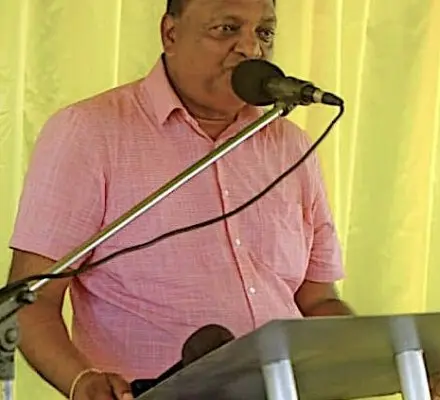
Instead, Ali, in a video spanning more than 13 and a half minutes, sought to attack Mohamed’s character stating that he has been accused of “murder, smuggling, beating people, kidnapping people, robbing the state and the people of Guyana of hundreds of billions of dollars.”

Further, the president asserted that his conscience is clear and went on to call out “transparency bodies” that he believes are not in support of his actions.
“The transparency bodies, many of whom the Kiskadees and others who wrote headlines about his involvement, who accused me of protecting him, who accused the PPP government of protecting him. These sanctions did not come from President Ali. It did not come from the PPP/Civic government,” Ali stated. His mention of Kiskadees appears to be a reference to Kiskadee Watch which launched an online news service on June 14 and which has editorialized twice on the President’s farm.
In the video released on Sunday, Mohamed stood on a road near the property and provided his own cost estimates for the infrastructure, buildings, machinery, livestock and agricultural operations, arguing that a presidential salary of $3.7 million per month could never finance a 150-acre ranch investment amounting to what he said was more than $2.2 billion.
Responding, Ali said: “My farm is not a discovery. It is public information… a farm that I have built and can account for every single; every single investment in that farm.”
However, while insisting that the property has never been hidden, the President did not provide documents or other records to support that assertion during his address. Nor did he indicate whether such records would be made publicly available.
Ali also did not disclose key details about the property, including the total acreage under his ownership or control, when the land was acquired, the purchase price, or how the acquisition and subsequent development of the farm were financed.
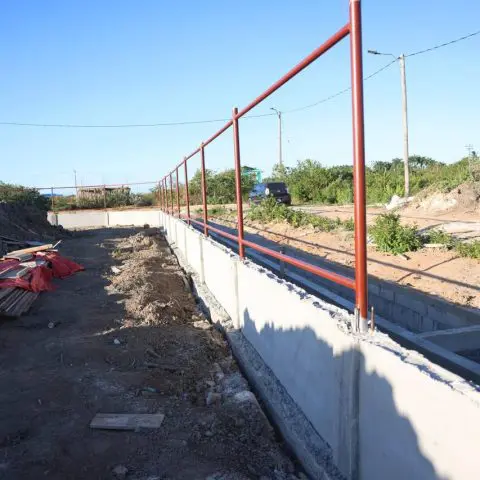
The President further did not address the overall value of the investment or the cost of the infrastructure and facilities that appear on the property, as shown in the photographs and video released by Mohamed.
Given the apparent scale of the agricultural operation depicted in Mohamed’s 23-minute presentation, Ali also did not explain whether any measures were taken to manage potential conflicts of interest between his role as Head of State and his private farming enterprise.
Additionally, the President did not comment on the size and scope of the development, including the various structures and amenities visible in the images, nor did he indicate what planning approvals, environmental clearances, building permits or other regulatory authorisations were obtained for the construction and operation of the facilities on the property.
“You can check with all of the established entities, whether it’s a bounty farmer, anyone, and you would see that the farm has been in existence. And let me be very clear, I have not sought any special treatment, any benefit, any investment by the state,” Ali said, adding, “My farm carries a huge loan, a huge loan, and everything has been disclosed to the Integrity Commission in and out of government. There is absolutely nothing to hide.” The Integrity Commission does not publicly address questions that arise about whether there is a discrepancy between returns filed and publicly known assets.
Ali argued that Mohamed’s claims were contradictory, saying Mohamed had alleged that the farm was generating substantial income while simultaneously questioning the source of the funds used to develop it. He also disputed Mohamed’s description of the property’s size, claiming the farm was “not even half” the acreage alleged in Mohamed’s video.
Ali further rejected Mohamed’s estimates of the farm’s value, describing them as grossly exaggerated and noting that he wished the entire property had received even 20 percent of the level of investment claimed by Mohamed.
He also sought to address allegations that he had been subjected to blackmail by businessman Nazar Mohamed (father of the Opposition Leader). However, while referring to the issue during his remarks, he did not explain what actions or demands he believed constituted blackmail. As a result, the nature of the alleged blackmail remained unclear at the conclusion of his address. Nazar Mohamed, in an interview this week with Kiskadee Watch, had denied that any blackmail was involved, stating that he reached out to the president with civility in a plea to end political oppression of his family.
Meanwhile, Kiskadee Watch yesterday attempted to elicit comments on the farm from head of the Environmental Protection Agency (EPA) Dr Kemraj Parsram who undertook to return calls but never did. Efforts to obtain a comment from officials of the Guyana Lands and Surveys Commission were also unsuccessful.
Did not exist
Speaking with Kiskadee Watch, former Minister of Public Infrastructure David Patterson said that during the 2015 to 2020 APNU+AFC administration, the assets of Ali and several other government officials were the subject of investigations by the then State Assets Recovery Agency (SARA), which was headed by Professor Clive Thomas.

SARA fell under the Ministry of the Presidency at the time, meaning progress reports would have been submitted to the Minister of State and possibly the President, while completed investigations were forwarded to the Attorney General’ s Chambers for further legal review.
He noted that the PPP/C administration subsequently dissolved SARA in October 2020. “With regards to the mega farm, I can state with certainty that it did not exist during that period,” he said.
Regarding the reported cost of developing the property, Patterson said that estimates publicly circulated may actually understate the level of investment required, noting that constructing an access road of the apparent length and scale shown in photographs and videos would likely cost in excess of $200 million once earthworks, creek crossings and other infrastructure were taken into account.
He further estimated that connecting a commercial agricultural operation of that size to the national electricity grid would require more than $75 million in Guyana Power and Light (GPL) infrastructure, including poles, transformers and transmission lines. In addition, Patterson said the one-time demand charge for a commercial grid connection alone could be approximately $5 million.
Patterson also questioned assertions that loans were used to finance the development, arguing that the source of funding warranted closer scrutiny. He said no mortgage had been publicly recorded for the property, noting that mortgages are ordinarily published in the Official Gazette.
Further, Patterson shared information from Citizens Bank’s website showing commercial loan interest rates ranging from 9% to 14% on a reducing balance. Referring to those rates, he noted that financing a project valued at approximately $1.5 billion through commercial borrowing would result in monthly repayments well above the President’s salary. Even assuming a highly unlikely preferential interest rate of 2%, Patterson estimated that repayments over 20 years would amount to about $7.6 million per month, further arguing that even at an interest rate of 0.5% over 30 years, monthly repayments would still be approximately $4.87 million.
Patterson said that while he welcomed the President’s apparent interest in agriculture, that alone could not answer questions about how the project was financed. He said any suggestion that the investment had simply been declared to the Integrity Commission did not adequately address the issue of the source of the funds used to develop the property.
Questions remain
We Invest in Nationhood (WIN) parliamentarian Tabitha Sarabo-Halley, in a video post yesterday, said the controversy surrounding Ali’s farm was not about whether the President was entitled to own land or engage in farming, but whether there had been a clear separation between his public office and private business interests.
She said the central issue was whether the President had fully complied with the disclosure requirements of the Integrity Commission Act. While noting that Ali had publicly stated he owned the property before assuming office, Sarabo-Halley argued that the relevant legal question was whether every declaration required under the law was complete, truthful and accurately reflected any expansion of the agricultural enterprise during the period the President was required to file declarations.
According to her, legitimate questions also remain about whether all declarable assets, business interests and sources of income associated with the farm had been disclosed, as required by law.
She further said the public was entitled to know how the property’s development had been financed, when the land was acquired, whether the buildings, equipment, businesses and income generated from the operation had been properly declared, and whether any public resources, state assets or official influence had been used in developing the property.
Sarabo-Halley said that if the President was unable to provide the level of accountability demanded by the situation, he should accept responsibility and step aside. She also argued that ministers who had lost the confidence of the public should likewise be held accountable rather than remain in office as though nothing had occurred, adding that corruption within the public sector remained a serious concern.
Last Wednesday, former EPA Executive Director, Dr Vincent Adams told Kiskadee Watch there should have been environmental and other approvals granted for Ali’s sprawling farm and that any expansion of Ali’s livestock farm from about 20 acres to approximately 150 acres should have triggered a fresh environmental approval process. He called on the EPA to release official records to determine whether the required permits were ever obtained.
WIN party executive Odessa Primus has called on President Ali to publicly release documents detailing how his livestock farm at Long Creek near to St. Cuthbert’s Mission was financed, arguing that a tour of the property alone would not answer questions surrounding the investment.
In a video statement Wednesday, Primus said the President should disclose loan agreements, banking records and other documents showing how the farm was acquired and developed, following his assertion that the operation was financed through bank loans. She questioned how the President could have qualified for loans sufficient to finance a multi-billion-dollar investment, particularly during the period before he assumed the presidency.
Further, the Guyana Trades Union Congress (GTUC) has called for an independent Commission of Inquiry into the matter, arguing that investigators should determine how the property was acquired, whether state resources were used in its development and if the office of the Presidency conferred any benefits that facilitated its establishment or expansion.
On Tuesday, PNCR/APNU and the AFC joined calls for Ali to publicly disclose details of his assets and the financing of the farm. The opposition party also called on Ali to make “full disclosure of his income, assets, liabilities, and the financial arrangements associated with these lands,” arguing that, as President, he has “a fiduciary responsibility to the people of this country” and is obliged to uphold “the highest standards of transparency and accountability.”
On July 5th after Azruddin Mohamed had posted the video about the farm, Ali issued a brief response from St Lucia.
Beaming as he spoke to the Starting Point programme, Ali said “Hi, I am at the CARICOM Heads of Government Meeting. You see all the excitement in Guyana? You have a President who practices what he preach(es). When I come back home we will go to the farm live and you will see how to do agriculture and you will see all that we do there. Don’t worry, together we will explore great techniques”. He then gave a thumbs up.
In the six years that he has been President, Ali has never mentioned the farm. It is unclear who he intends to take on a visit to the farm.







Discussion