By Harry Husbands
Harry Husbands is a man of many parts. He was an educator, trade union leader, business executive, politician, senator, radio talk show host and a newspaper columnist. He is an ardent cricket fan, avid reader and lover of kaiso, reggae, jazz and some European classical music. He is a proud Bajan Pan-Africanist.
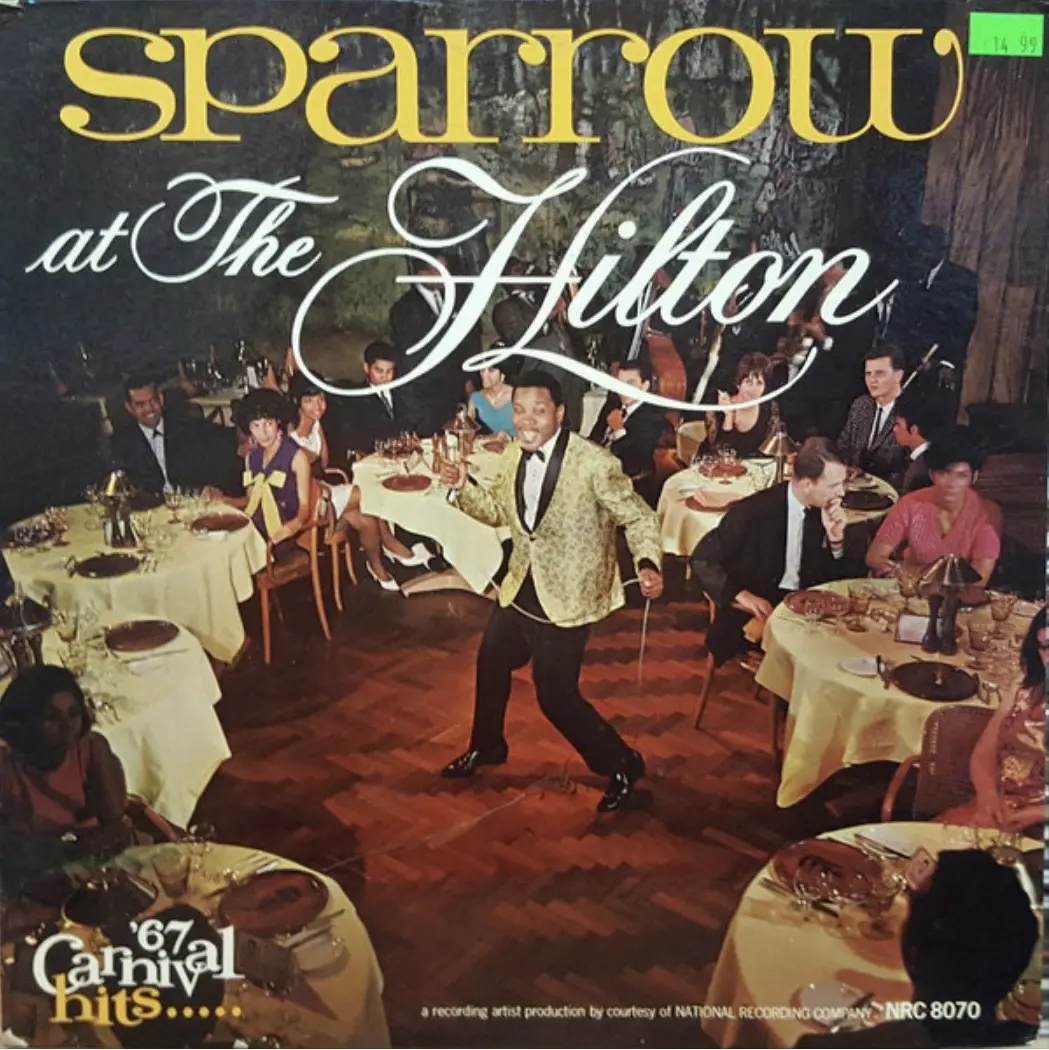
It’s hard to explain how much my mother loved the Mighty Sparrow. But I think I know how much. She owned two record albums and they were both by him. As much as she loved him she also cussed him out as she never forgave him for the alleged crime of singing the popular Ovaltine jingle as one of the selections on a show he held at the Globe cinema sometime during the 1960s. I said alleged because I’m not sure that she was there at the show or this was just another urban legend with which he was tarred. She would regularly sing the refrain, Ovaltine highly delicious Ovaltine/ to strengthen up your vitality/ drink plenty Ovaltine.
I consulted The Great Zuckerberg and his headline hungry twin, Meta, on this issue. They responded saying, that they could find no evidence that Sparrow ever sang a commercial with those words. That means that you might be one of the only people left who remembers the words, they concluded. But they did go on to say, (1) “highly delicious” was Ovaltine’s official print slogan in the Caribbean during the 1960s. (2) “strengthen up your vitality” is almost word for word a joke Sparrow made in Bois Bande one of his songs and (3) “drink plenty Ovaltine” is a classic calypso advert ending. As interesting as this is it still leaves unresolved the issue of whether or not he sang the commercial at a show inBarbados. Assuming that he did, my mother’s disappointment was understandable. After all she and the other patrons would have much preferred to hear one of his more salacious hits like Mae Mae, Bag ah Sugar or Salt Fish.
The first of the albums she owned was Sparrow at the Hilton. Although a 1967 studio recording it probably represented a step up for the calypso genre to be associated with such a prestigious and uniquely up sided down hotel as the Trinidad Hilton. The album included such hits as Rufus, Education a Must, Shango, No Money No Love and Sandra. But it was the Governor’s Ball that was my mother’s favourite. She played the stuffing out of it. Until this day I can still sing along with it, word for word, The Governor had a ball ah never see nothing so yet/ a mad woman jump the wall and invade the fete/ Prospect with the baton in hand conducting the Police Band/ he say the woman shake she waist in the Governor face/ telling everybody inside the place/ shake your baton like Mr. Prospect.
“She bann she belly” the day she gave it away. Her Trinidad born Canadian resident step son-in-law on his first visit to Barbados begged her to let him have it. She gave him a firm NO! On his second visit he came prepared. He was teary eyed and carried a hang-dog look on his face so she gave into his carefully planned entreaties. From the moment he left, smiling, carrying her Sparrow from the Hilton to Toronto she regretted her decision. She spent many subsequent years looking for a replacement but to no avail.
The second LP in her possession was Christmas with Sparrow. It contained many Christmas classics such as Silent Night, White Christmas, Jingle Bells and Rudolph the Red Nosed Reindeer. But the banger was There’s no Place like Home for the Holidays. With the volume on the radiogram on blast I can still hear Sparrow crooning, I met a man who lived in Port of Spain/ he was heading for San Fernando and some homemade pumpkin pie/ from San Fernando folks are traveling up to Maracas Bay for sure/ to a lovely moon light picnic man the traffic is terrific/ for there is no place like home for the holidays. Lord Have Mercy (or, as the young people say, LHM)! There is no better feeling than a Christmas Eve with the radiogram speakers belting out Sparrow’s beautiful rendition of No Place Like Home, the smell of ham in the oven and freshly baked Great Cake on the dining room table.
My mother played her Sparrow LPs on her fancy sleek Philips radiogram, a combination radio and record player both encased in a dark teak wood cabinet. She got it on hire-purchase from Mannings, a popular Barbadian department store of the time. It wasn’t just an entertainment centre, it was a status symbol. It meant that we had arrived. By today’s standards we were balling. It was a step up from the private radio and several steps up from the Rediffusion.
Whenever my aunt’s husband visited Barbados from New York he brought along his Mills Brothers 78s singing, you always hurt the one you love/ the one you shouldn’t hurt at all/ you always take the sweetest rose and crush it til’ the petals fall. Another family member hired a car regularly on Sunday afternoon and put his radiogram in the back seat and with a few of his lady friends, made a tour visiting other friends where he would play his records.
Our radiogram was pivotal in extending my awareness and knowledge of Sparrow’s music and the wider calypso genre. It permitted us to borrow records from neighboursand to listen to Trinidadian radio stations especially at carnival time.
Many years later and with this heightened awareness I could confidently propose to my tutors at Erdiston Teachers College that I incorporate calypso music as an aide in my Social Studies lessons during teaching practice. Fortunately, the Instructional Plan I was asked to teach included a sub-theme on slavery. The first song I selected was Sparrow’s Slave. The first two lines of that kaiso, I’m a slave from a land so far/ I was caught and I was brought here from Africa, contains enough material to last an entire semester. This wasn’t banja* but Sparrow at his genius-best.
In a nutshell, we integrated Social Studies, vocabulary, mathematics, map work skills and health sciences with other areas of the curriculum. This allowed us to define the word slave and then compare and contrast slavery and freedom. From there we identified and located via map work the countries in Africa from which slaves came, identifying the names they’re called today. Additional map work located Barbados, the continents, the Atlantic and the other oceans.
In my lesson plans I applied the Socratic method to interrogate the Middle Passage. We explored a number of themes including the length of time it took a slave ship to transit the Atlantic, the number of slaves each ship carried on average, how the slaves were stored for travel, the foods they ate, what were the likely conditions on board, what health issues did the slaves confront, what materials were used in the ship construction, how were the ships propelled, how do slave ships compare and contrast with ships today?
Eventually I was successful not so much for what was achieved but more for the vision of trying something different and creative. I was a young inexperienced teacher in training and couldn’t fully pull it together. I could only scratch the surface.
When it is said that the Sparrow catalogue is like no other ranging from the comical to the spicy to the historical and highly educational I know that to be accurate. So as The Mighty Sparrow sang in praise to others we sing for him in his own words, Sparrow we will always remember/ jumping when them big band pass/ playing mas’/ sugary, peppery,you were never ever one for class/ Birdie where ever you are brother/ Just for you we gine give dem real thunder everyday/ We will always remember you with pride
*Banja/banjo: secular music if played on Sunday and/or any sexually suggestive song







Discussion