Dear Editor,
I write in response to a letter written by Mr. Khemraj Harryram captioned “Rwanda’s example puts Guyana to shame” dated October 23, 2026. I wish to contribute an additional dimension to that important line of inquiry. I hold considerable admiration for President Paul Kagame’s developmental achievements, while remaining cognizant of the concerns regarding his style of enforcing the rule of law in his country.
In 2008, Rwanda ranked 143rd globally for ease of doing business. By 2018—just one decade later—Rwanda had climbed to 38th. This was no accident. In Africa, Rwanda is now among the easiest places to start a business (four hours), obtain electricity (72 hours), access credit, resolve business conflicts, secure construction permits, pay taxes (now conducted online by transferring payment from one’s bank to the revenue authority after completing and signing forms remotely), trade across borders, enforce contracts, and register property (seven days).
Guyana’s trajectory offers a stark contrast. In 2008, we ranked 104th. Ten years later, Guyana had fallen to 134th. The explanation is institutional: Rwanda made a conscious effort to build its services sector, while Guyana continued to pay lip service to the foundational systems required to support a robust services economy (the judiciary, the police system, the tax system, low-cost and reliable electricity, and world-class telecommunications infrastructure, etc). Services now account for nearly half of Rwanda’s GDP, whereas Guyana’s economy is dominated by oil and gas. Our services sector has flatlined to one-fifth of the economy and is poised to decline further as the oil industry crowds out other sectors. This is the economic model that President Irfaan Ali appears to favour: an unhinged dependency on Texas.
Consider agriculture, the bedrock of any economy. Rwanda is growing this sector using state-of-the-art technology in the fields and their agro-processing facilities. This national development strategy is paying dividends as Rwanda continues to expand its volume of value-added food exports to the East African region. What is Guyana doing to the Caribbean Region? Irfaan Ali talks and talks and talks.
Their young people aspire to be IT technicians rather than men with cutlasses clearing bush. Guyana, by contrast, continues to export raw bulk rice and literally indentured our people on the cane fields in antiquated conditions. Agriculture today constitutes 25% of Rwanda’s economy; in Guyana, it has fallen to 8%, down from 25% in 2015. Guyana’s agricultural economy is under severe stress due to a lack of competent leadership in the Ministry of Agriculture at the highest levels—more a matter of jobs for the Freedom House boys than transformation of our traditional economic base into a modern export proposition. Mr. Zulfikar Mustapha has repeatedly earned an “F” grade; year after year.
Kigali now boasts a new international financial center comparable to anywhere in the world, a new technology park modeled after Silicon Valley, and full power from low-cost and reliable electricity. What does Georgetown have? We cannot even supply low-cost and reliable electricity to the cake shop on the corner, much less an international-grade technology park. This is the legacy of President Irfaan Ali.
If that were not sufficient, Rwanda was able to attract Carnegie Mellon University—one of America’s leading research universities—to Kigali. Those familiar with the institution will know it was built by Andrew Carnegie as the Carnegie Institute of Technology and later merged with the Mellon Institute of Industrial Research. In Kigali, it hosts branches of the College of Engineering (biomedical, chemical, civil, electrical, and mechanical); the College of Fine Arts (architecture, art, design, drama, and music); the College of Humanities and Social Sciences (English, history, philosophy, psychology, and statistics); the College of Information Systems and Public Policy (public policy, leadership, and information systems); the College of Science (biological sciences, chemistry, mathematics, and physics); the School of Computer Science (artificial intelligence, computational biology, human-computer interaction, and robotics); and the School of Business (business administration and economics).
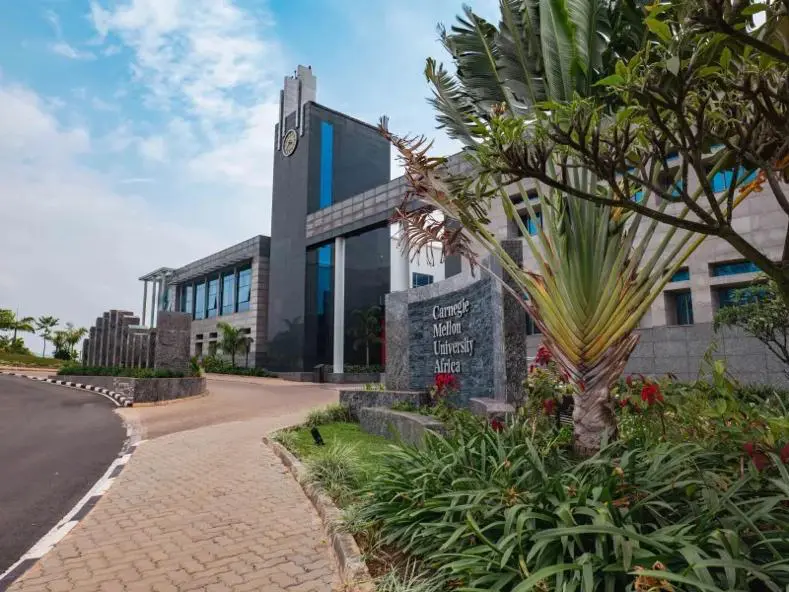
Using this university as an incubator, Rwanda’s ICT sector in 2025 became the second-largest export contributor, accounting for 17% of the economy. One can imagine the University of Guyana driving similar economic activity. It is possible—but not under this system of nepotism that currently prevails under Irfaan Ali.
Rwanda stands as one of Africa’s leading knowledge-based economies, centered on finance, technology, and as East Africa’s premier conferencing destination. Guyana, meanwhile, trails Jamaica, Barbados, and Trinidad and Tobago on all these fronts.
These are not merely statistics; they are the measurable outcomes of deliberate institutional choices. The question for Guyana is whether we possess the leadership willing to make different choices to truly bring real wealth to every man, woman and child in Guyana. It is clear President Irfaan Ali is not up to the task.
Yours faithfully,
Surujdai Juglall







Discussion