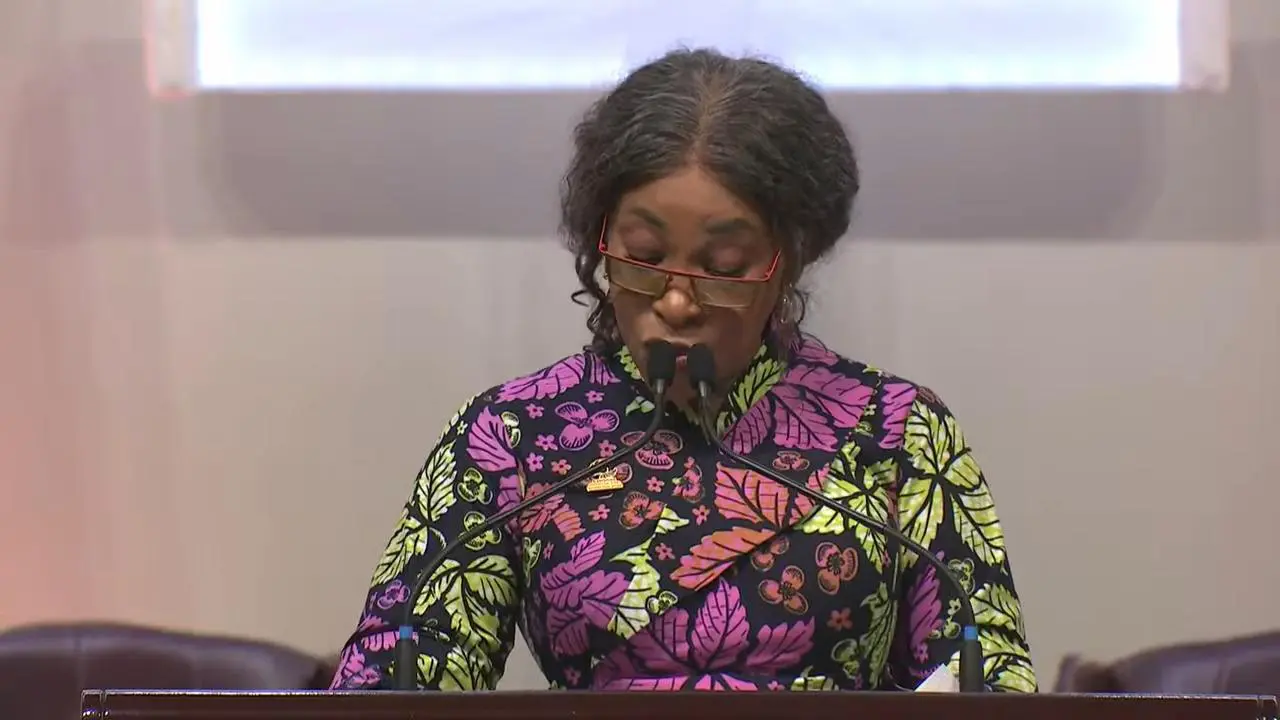
—Botchwey outlines financing push as joint forums open in Antigua
Commonwealth Secretary-General Shirley Botchwey has outlined a partnership to train 10 million young people in digital skills and entrepreneurship over five years, alongside efforts to mobilise more than US$1 billion in credit to support renewable energy.
Speaking at the joint opening of the Commonwealth forums in Antigua and Barbuda yesterday, Botchwey said governments, businesses, foundations and wealthy individuals must work together differently to address unemployment, inequality and climate vulnerability.
The ceremony, held under the theme “Turning Shared Ambition into Lasting Impact”, brought together participants from the Youth, Women’s, People’s and Business forums ahead of Commonwealth leaders’ deliberations.
Botchwey said the youth training partnership had been developed in response to changes in employment and growing unemployment and underemployment among young people.
She also pointed to work with Commonwealth institutions to strengthen young people’s participation in governance and give them a greater economic stake in their societies.
“We need to do things differently if we are to change the world,” she told delegates.
Her remarks did not specify how much financing had already been secured, which countries would participate in the training programme or how beneficiaries would be selected.
Botchwey urged participants to produce practical recommendations and hold leaders accountable for delivering them.
“Business as usual will not transform the lives of the majority of our youth and women. We need bold, innovative, ambitious, action-oriented responses to the challenges that we face,” she said.
She noted that 60 per cent of Commonwealth citizens were younger than 30 and half were women and girls, yet both groups remained inadequately represented in decision-making.
“I mean no offence to our Heads of Government, but when I look around the summit table this week, I will not see many young people, and not nearly enough women,” she said.
The 14th Youth Forum would examine investment in young people’s ability to shape their futures, with its outcome document going before leaders. The fifth Women’s Forum would address leadership, economic empowerment, climate action, disability inclusion and the involvement of men and boys in ending violence.
The Commonwealth’s published Youth Forum programme provides for 300 youth delegates, with recommendations to be presented to leaders. Planning has been led by an international task force of young people working with the host government, Secretariat and Commonwealth Youth
Host Prime Minister Gaston Browne similarly challenged delegates to move beyond declarations and leave with partnerships, commitments and initiatives capable of improving people’s lives.
For small island states, he said, access to affordable finance remained a major constraint on development and climate resilience.
“What we require is not sympathy, but opportunity,” Browne said, calling for meaningful investment and fairer participation in the global economy.
He argued that governments could not address climate change, inequality, economic uncertainty and technological disruption alone. Civil society, businesses, universities, women and young people all had roles in developing solutions.
“Our young people must be empowered not simply to inherit the future, but to shape it. Our women must have equal access to leadership, financing, and economic opportunity,” he said.
Browne also urged businesses to consider social and environmental benefits alongside financial returns.
“True prosperity must be measured not only by the wealth that we generate, but by the lives we improve and the opportunities that we create.”
Delivering the keynote address, Australian Prime Minister Anthony Albanese called for stronger democratic institutions, protection of elected representatives and international cooperation to ensure that artificial intelligence remained under human control.
He said political polarisation, threats against public representatives and the spread of misinformation were placing democratic systems under increasing pressure.
Albanese called on Russia to end its “illegal invasion of Ukraine” and urged a ceasefire in the Middle East, along with the reopening of the Strait of Hormuz to restore freedom of navigation and trade.
He said the conflicts were exacting a tragic human toll and damaging the global economy.
“Returning our nations and our world to the path of prosperity and rising living standards requires an end to those wars,” he said.
Regulation of digital platforms, he argued, had become a matter of national sovereignty and democracy. He pointed to Australia’s minimum-age requirements for social media and proposed digital duty-of-care legislation as approaches placing responsibility on technology companies.
“Being created by humans, AI must be controlled by humans for the benefit of humanity,” Albanese said.
He also called for support for smaller states facing climate threats, stronger international trade and cooperation to address the economic consequences of conflict.
Albanese said Australia would seek to amplify the voices of small states and work with Commonwealth members as equal partners.
CHOGM 2026 is being held under the theme “Accelerating Partnerships and Investment for a Prosperous Commonwealth”, with climate resilience, trade, innovation, equality and sustainable development among its stated priorities. The association comprises 56 countries representing approximately 2.7 billion people.









Discussion