—proposes $20,000 addition followed by 15% increase, retroactive to January
The Guyana Public Service Union (GPSU) is proposing an increase in the entry-level public service salary from $102,346 to $140,698 a month, retroactive to January 1, 2026, while offering to abandon its demand for a review of the 2025 increases to facilitate a settlement.
The proposed minimum represents an increase of approximately 37.5 per cent. It would be achieved by adding $20,000 to existing monthly salaries before applying a 15 per cent increase, under the union’s preferred option for revising the public service salary scale.
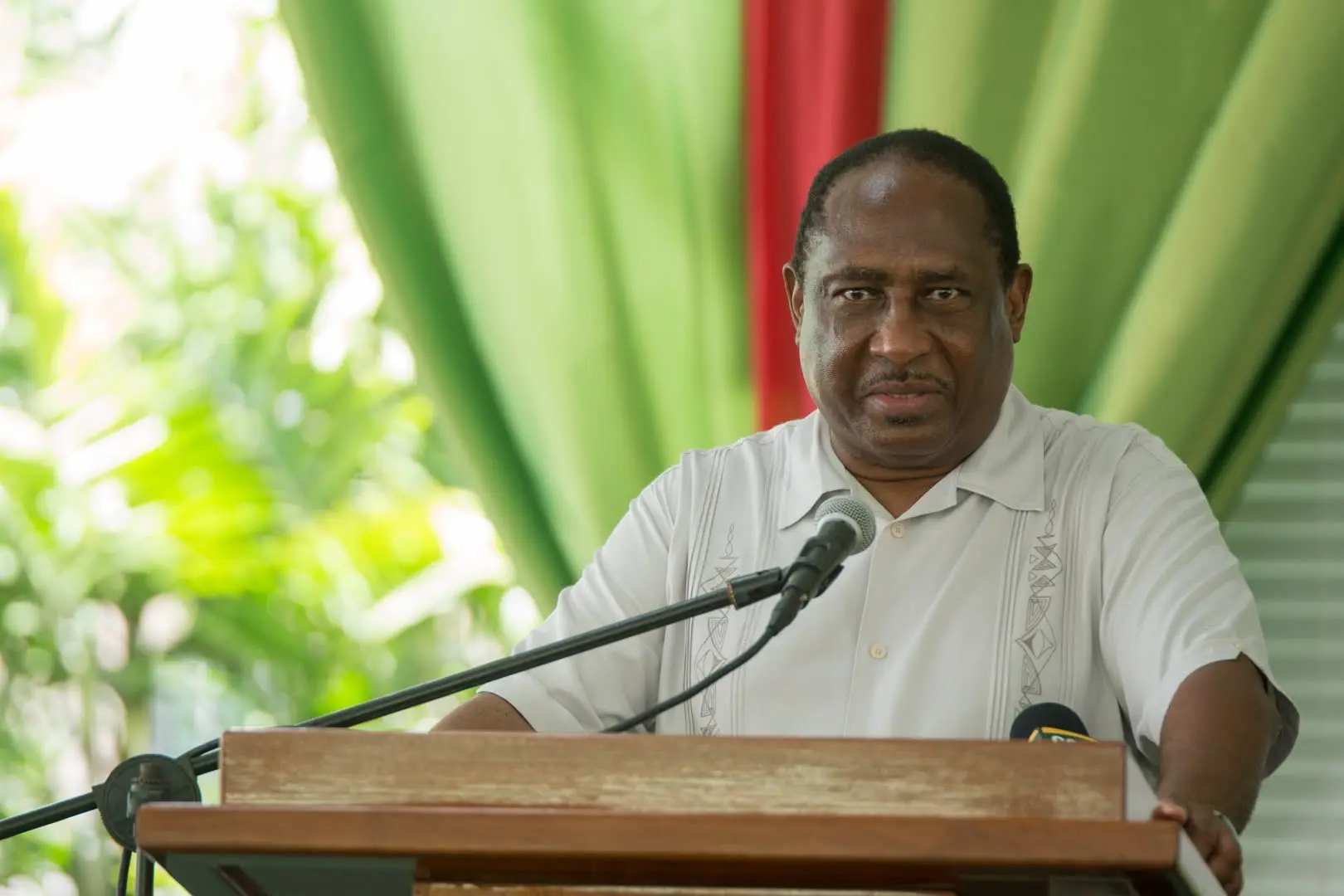
In correspondence, seen by this publication, dated November 18 to Senior Minister with responsibility for Finance Dr Ashni Singh, GPSU President Patrick Yarde also proposed a three-year agreement to progressively move public servants towards a living wage, with subsequent annual adjustments paid with February salaries.
“In the spirit of good-faith compromise to facilitate a timely settlement, the Guyana Public Service Union (GPSU) will formally discontinue its pursuit of a review of the 2025 salary increases,” Yarde wrote.
The letter and accompanying memorandum, seen by Kiskadee Watch, outline two alternatives covering all 14 public service salary bands. Both combine a fixed-dollar addition with a percentage increase, giving employees at the lower end larger proportional adjustments while preserving salary differences associated with promotion.
Under the preferred option, an employee receiving the entry salary of $102,346 would first have $20,000 added, bringing the amount to $122,346. Applying the 15 per cent increase would take the salary to approximately $140,698—an additional $38,352 monthly.
The union’s alternative would add $15,000 before applying a 20 per cent increase, producing an entry salary of approximately $140,815, or 37.59 per cent above the existing minimum.
Although the alternative would deliver a slightly higher minimum, the union recommends the $20,000 addition followed by 15 per cent because it estimates that this would cost less overall while still meeting its proposed starting benchmark.
The GPSU is using the $140,000 monthly income-tax threshold as the initial floor for addressing a living wage. It argues that the government has already recognised through tax legislation that earnings up to that amount should remain untaxed.
“Using the G$140,000 PAYE threshold as the commencement point for addressing a living wage ought to be non-controversial,” the memorandum states, explaining that the government has legislated that individuals earning up to that amount should not be subject to income taxation.
The submission treats the threshold as a starting point, rather than a determination of the full living wage. It proposes that the parties agree on criteria for reaching that wage through a three-year settlement.
The union argues that neither a percentage increase alone nor a flat-dollar increase would adequately address both low salaries and the structure of the public service pay scale.
A uniform percentage increase sufficient to lift the entry salary to $140,000 would require approximately 36.8 per cent, it says, and would deliver much larger absolute increases to employees in the higher grades. A fixed-dollar adjustment alone, meanwhile, would narrow the proportional differences between grades.
The combined approach is intended to provide greater proportional relief to junior and middle-level employees while retaining incentives for promotion. Under the preferred option, the increases at the minimum points of Bands One to Seven would range from approximately 29 to 37.5 per cent. The percentage adjustments would taper at higher salary levels.
The GPSU also insists that the increases must be additional to existing entitlements.
Yarde’s letter says the revisions must “remain strictly additive and do not compromise, diminish, or substitute for any existing allowances, benefits, or conditions of service”.
A separate memorandum addressing non-wage conditions, benefits and allowances would follow, he indicated.
The union estimates that its preferred option would cost approximately $39.58 billion when applied to the baseline wage bill used in its calculations. Against the approximately $29.34 billion it identifies under the 2026 budget’s Other Employment Costs allocation, it estimates that another $10.24 billion would be required.
The alternative would cost an estimated $41.33 billion on the same basis, requiring approximately $11.99 billion beyond that allocation. The preferred option would therefore be about $1.75 billion less expensive, according to the union’s calculations.
Those estimates depend on assumptions about the distribution of employees and salaries. The memorandum assumes that 75 per cent of the relevant payroll weight falls within Bands One to Seven and 25 per cent within Bands Eight to Fourteen, with most employees at or near their bands’ minimum salaries.
The union has separately requested official staffing figures to support its engagement with the government.
In a November 19 letter to Public Service Permanent Secretary Dr Soyinka Grogan, the GPSU sought the total number of public service employees on the government payroll, a breakdown by salary band, and the number of filled and vacant positions in each band.
The request covers ministries, departments and regional administrations. The union asked for a response within five working days of receipt, saying accurate and current figures were necessary for transparent, evidence-based discussions.
The proposals follow months of disagreement over the commencement of wage negotiations. Kiskadee Watch reported on October 20 that the GPSU had alerted members to possible industrial action over delays in talks on salaries, allowances and benefits. The ministry had apologised for the delays, cited its negotiating team’s travel commitments and proposed an October 27 meeting.
The government–GPSU agreement concluded in December 2024 provided increases of 10 per cent for 2024 and eight per cent for 2025, but did not specify an adjustment for 2026. At his November 13 press conference, President Irfaan Ali said the government would honour salary commitments under its agreements, without identifying a 2026 increase for the affected public servants.
In a November 14 statement, the GPSU said the ministry had requested more time to begin negotiations. It maintained that research submitted to the government showed minimum-wage households with at least one child faced substantial shortfalls in meeting basic expenses, and that even a 35 per cent increase would leave workers below a living wage.








Discussion