The Aviation Operators’ Association of Guyana (AOAG) yesterday called on the Guyana Civil Aviation Authority (GCAA) “to assert its authority to ensure that all of our aerodromes are regulated to observe and meet the required safety standards”.
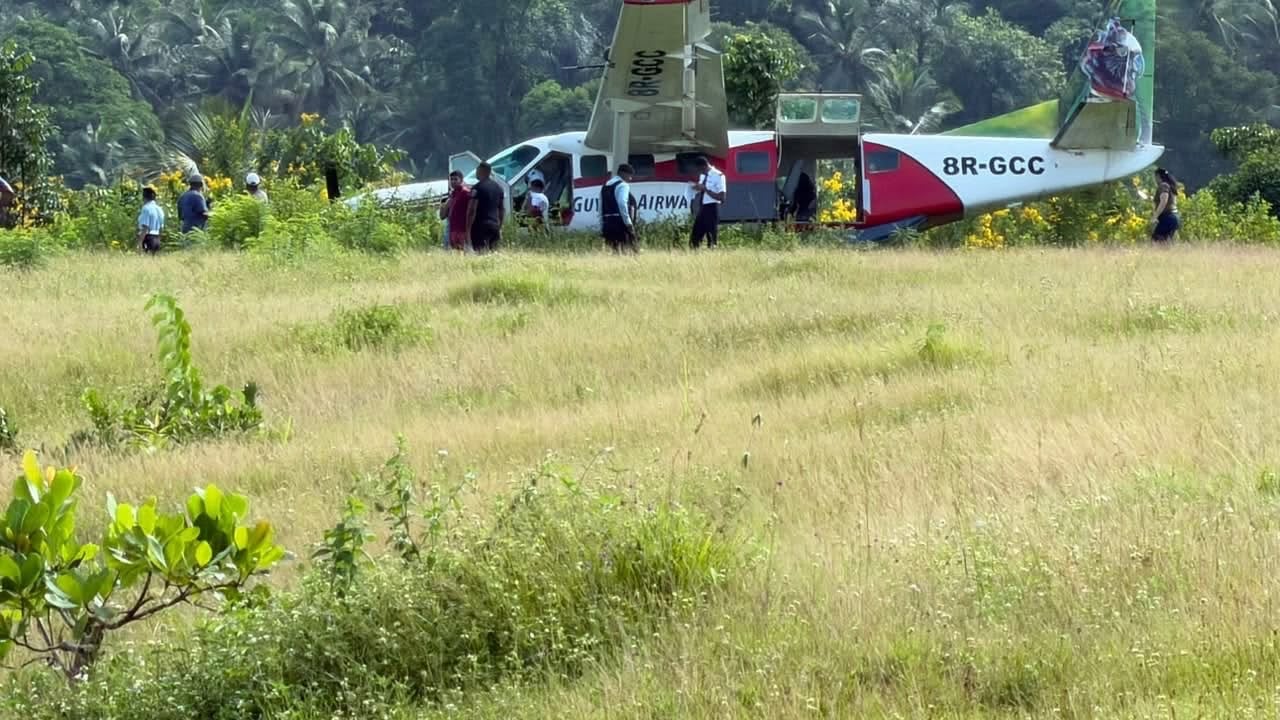
The AOAG statement came after Trans Guyana Airways (TGA) said its plane ran off of the airstrip at Mabaruma last week because a dog was present on it.
TGA said it had forwarded several complaints to the GCAA about incursions and malicious acts in and around hinterland airstrips.
“The recent aircraft occurrence at Mabaruma has again brought public attention to the issue of runway incursions. While the circumstances of that occurrence are subject to investigation by the Guyana Civil Aviation Authority (GCAA), the wider problem of animals and persons entering aerodrome operating areas has long been a concern to aircraft operators.
“An aircraft taking off or landing is operating at a critical phase of flight. The sudden appearance of a dog, cow, horse, pig, bird, person, vehicle or other obstruction on a runway can leave a pilot with only seconds to react. Avoiding a collision may require a rejected take-off, go-around, emergency braking or evasive action, any of which can place passengers, crew and the aircraft at considerable risk.
“Hinterland aerodromes are essential lifelines for many communities, providing access to medical evacuation, food and supplies, passenger transportation, government services, tourism and emergency response.
“Protecting these aerodromes must therefore be a shared responsibility”, the AOAG said.
The association urged residents living near aerodromes to keep livestock away from airport boundaries, refrain from crossing runways or damaging perimeter fences, and immediately report animals, persons or other hazards observed within restricted airport areas.
It also encouraged the relevant authorities, aerodrome operators and aircraft operators to continue bolstering runway inspections, perimeter security, wildlife-control measures and mechanisms for reporting and responding to hazards.
“The objective must not be to assign blame, but to prevent an avoidable tragedy”, the AOAG stated.












Discussion