Guyana’s installed renewable energy capacity is projected to reach 77.14 megawatts (MW) by 2031, almost double the 38.72 MW reported for this year, Prime Minister Mark Phillips said on Thursday.
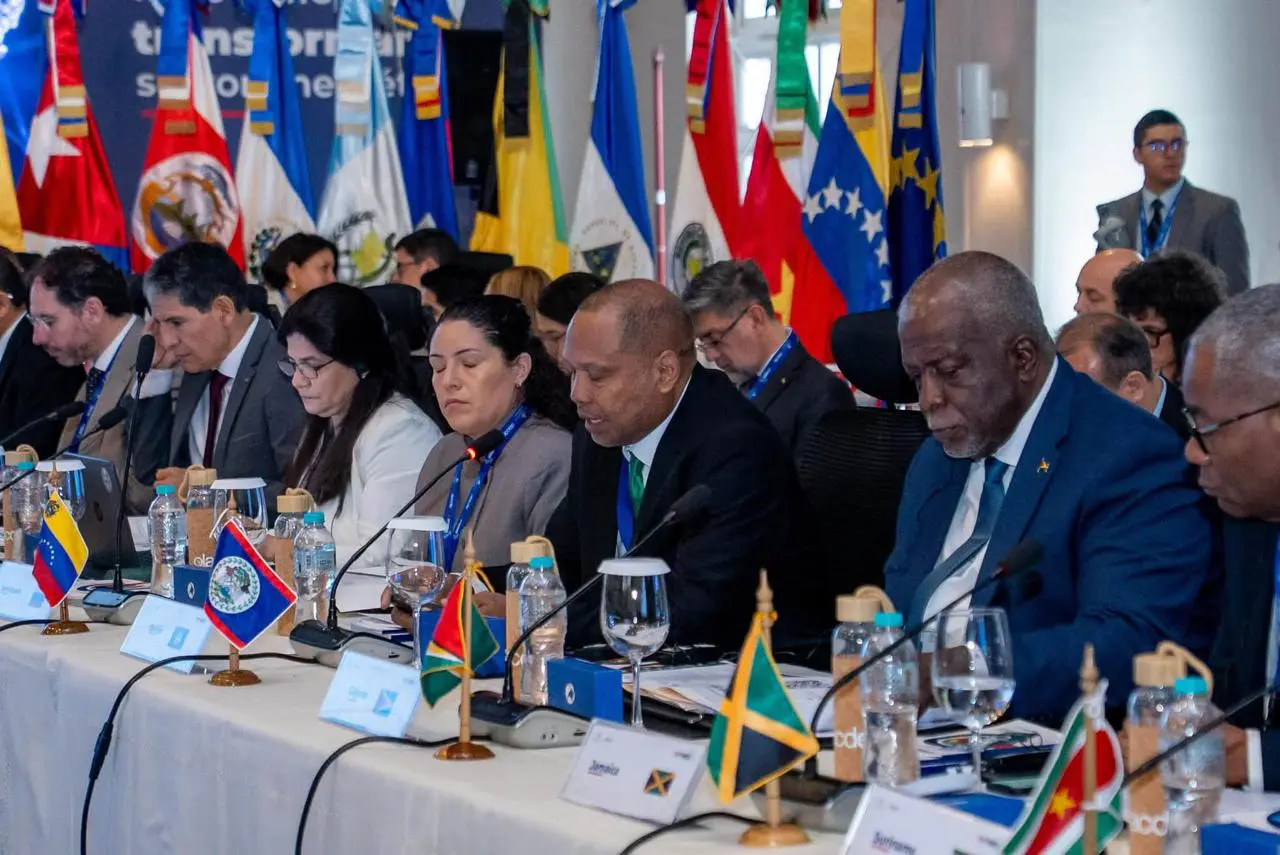
Addressing a ministerial dialogue during the 11th Latin American and Caribbean Energy Organization Energy Week in Santo Domingo, Dominican Republic, Phillips said the projection was based on projects committed through 2031.
The figure mentioned by Phillips is small relative to the single US$2b, 300 MW gas-to-energy plant that the government hopes to inaugurate by the end of the year
According to a release from his office, renewable energy projects and programmes implemented or committed between 2020 and 2026 represent investments of $37.717 billion. Installed renewable energy capacity increased from 5.35 MW in 2019 to 38.72 MW in 2026, a rise of approximately 623 per cent.
The initiatives outlined include 13 utility-scale solar photovoltaic farms, 57 solar mini-grids, three hydropower plants, 37,730 solar home energy systems and 239 rooftop solar systems on public and community buildings.
Phillips said natural gas would also play an important role in replacing the more carbon-intensive imported fuels used for electricity generation, improving energy security and supporting lower electricity costs. Renewable energy development and battery storage would continue to expand alongside this.
He urged regional governments to plan beyond their immediate generation requirements, warning that economic growth, industrialisation, urbanisation and digitalisation would significantly increase electricity demand.
“The energy system of the next decade must be more diversified, more resilient, more efficient, more digital and increasingly low carbon. This requires us to plan not only for today’s needs, but for the economy and society we expect to have 20 or 50 years from now,” he said.
The PM’s caution to the conference is ironic as Guyana is struggling to currently meet its peak demand.
Phillips outlined Guyana’s approach under the Low Carbon Development Strategy 2030, which envisages a diversified energy supply incorporating natural gas, hydropower, solar, wind and other technologies.
He argued that the country’s expanding oil and gas industry and its commitment to low-carbon development could be pursued together.
“Guyana is an emerging oil and gas producer and, simultaneously, a country with approximately 85 per cent forest cover and a longstanding commitment to low-carbon development. We do not regard these realities as contradictory. Rather, our responsibility is to manage our natural resources strategically and sustainably, and to use them to accelerate national development and the transformation of our energy system,” he said.
The Prime Minister also highlighted the potential of grid modernisation, digitalisation and artificial intelligence to improve demand forecasting, energy planning and predictive maintenance.
However, he cautioned that the increasing use of artificial intelligence and data centres would itself drive up electricity demand, requiring greater investment in cybersecurity, data governance and technical expertise.
Phillips said the energy transition must deliver practical benefits to communities, including reliable and affordable electricity, employment and opportunities for local businesses.
“We must ensure that hinterland, riverine and Indigenous communities, vulnerable households, workers and businesses are not left behind. This requires expanding access to reliable and affordable energy, creating opportunities for local employment and enterprise, investing in skills and technical capacity, and ensuring meaningful community participation in energy development,” he stated.











Discussion