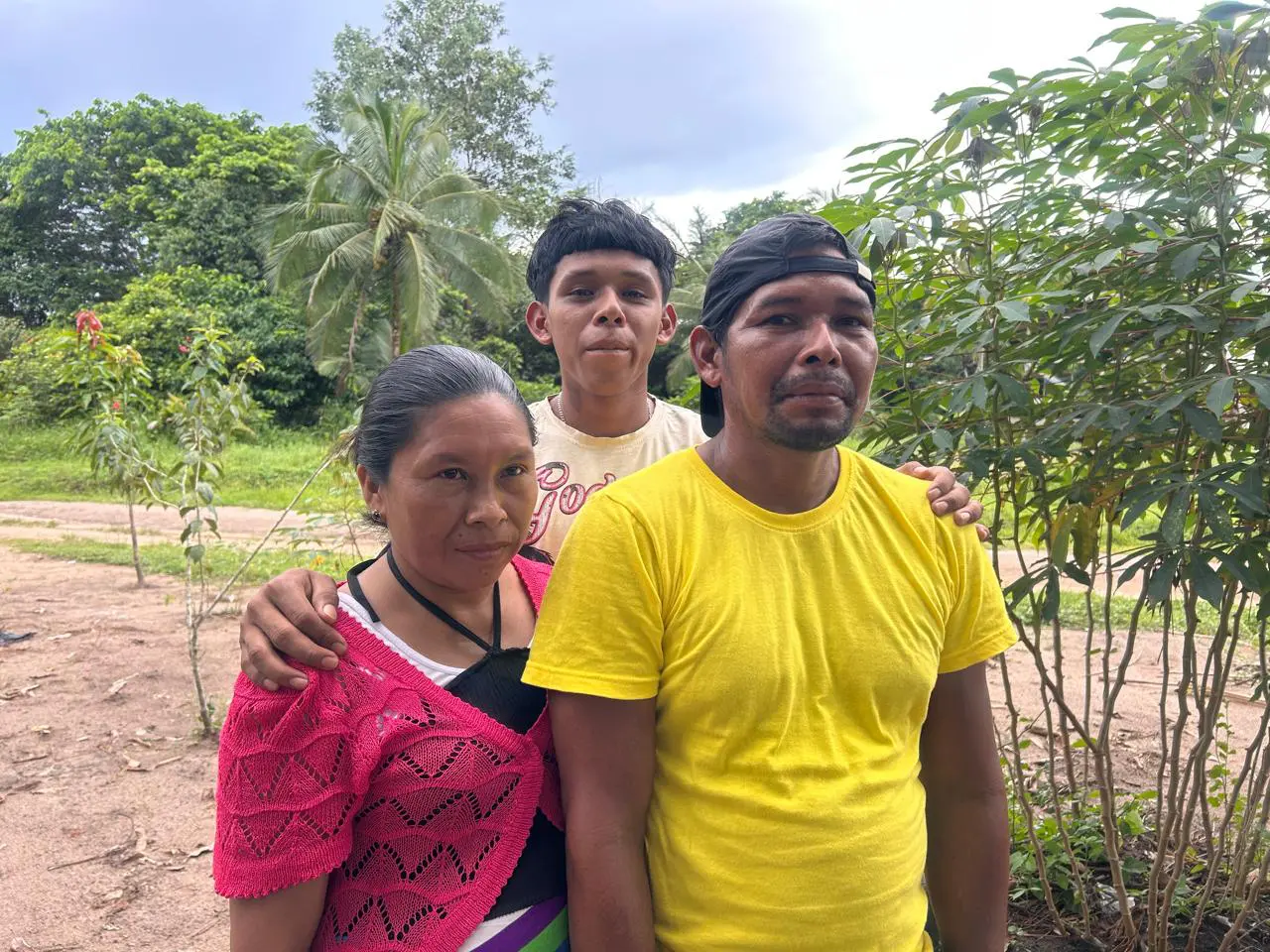
-says saved by life jacket that suddenly appeared
“When I get this life jacket, I tell myself all my family gone, my wife, my son, my two children, all them dead”
By Mia Anthony in Mabaruma
As the MV Barima Commission of Inquiry prepares to begin public hearings, survivor Grenville Smith is still grappling with the loss of his daughter, Shamera Smith, and grandson, Aarav Daniels, who died when the vessel capsized on July 18.
Smith survived approximately seven hours in the water before he was rescued, but during those long hours, he believed that his entire family had perished.
He had been travelling with his wife, Rosa Smith, their son, Alex Smith, their daughter, Shamera, and grandson, Aarav, when the vessel sank during its journey to Port Kaituma.
Recounting the ordeal to Kiskadee Watch ahead of the upcoming Commission of Inquiry sittings, Smith described the confusion aboard the vessel before it capsized, the desperate struggle to survive in the darkness and the moment he was reunited with his wife and son.
“When I get this life jacket, I tell myself all my family gone, my wife, my son, my two children, all them dead,” Smith recalled.
“That was the last thing I think to myself. I lost my whole family.”
Smith said the family had travelled to Georgetown for a funeral and was returning to the North West District when the tragedy occurred.
According to his account, the boat was already loaded when they boarded. However, additional cargo continued to be loaded while passengers were already aboard.
The vessel eventually departed at about 3:30 p.m. to 4 p.m., he recalled.
After securing a seat, Smith said he and his family settled in for the journey. But the space was cramped, leaving them with little room to rest.
Around 7 p.m., he told his children that he wanted to lie down. With insufficient space for everyone, his daughter lay across the seat, while his wife and grandson lay on the floor. Smith remained seated, resting but not sleeping.
He recalled that the boat was rocking heavily as the journey continued.
At some point that night, a police officer approached him and asked for $1,000. Smith said he had no money on him because the family’s cash was inside his wife’s shoulder bag, which she had been using as a pillow.
He subsequently became aware of concerns about water entering the vessel.
Smith said another person warned that water was accumulating below deck and that the situation could become dangerous quickly.
He recalled that the vessel appeared to make an initial movement before a second wave struck, after which he found himself under water.
“All passenger them… everybody is under water,” he said, describing the chaos as people screamed and struggled to escape.
Smith said he managed to make his way out of the vessel and surface. He recalled praying and asking God for forgiveness as he struggled to stay alive.
Then, in what he described as an extraordinary moment, a life jacket appeared in the water and became secured around his back.
He said the life jacket helped keep him afloat as the current carried him away from the sinking vessel.
Alone in the darkness, Smith believed he had lost his wife, son, daughter and grandson.
He remained in the water for about seven hours before a rescue boat arrived at approximately 5 a.m.
It was then that he saw his wife and son again.
“I feel comfortable again. I felt normal again,” he said, describing the relief of seeing them alive after believing they had died.
But the reunion was incomplete.
His daughter, Shamera, and grandson, Aarav, did not survive the tragedy.
Smith said the experience continues to weigh heavily on him, particularly at night, when he sometimes struggles to sleep because the memories return.
“Every day I try,” he said, acknowledging that the ordeal remains difficult to put behind him.
He said the family had been travelling with plans for the future, including the purchase of a vehicle to make it easier to transport his daughter to school.
Smith explained that he had worked and saved for the vehicle, describing the sacrifices he made to earn the money. He said the loss of his daughter and grandson has compounded the pain of an already devastating experience.
Despite his grief, Smith said his faith has helped him continue.
He believes God saved his life, pointing to the unexpected appearance of the life jacket that kept him afloat.
“I can’t believe how the life jacket come up to me,” he said, explaining that he sees his survival as an act of divine intervention.
Smith also expressed concerns about how survivors and affected families are coping with the aftermath of the tragedy.
He said that when contacted, he often tells those checking on him that he is doing well, even though the experience continues to affect him.
He questioned whether others could fully understand the trauma survivors endured, particularly those who spent hours in the water fearing for their lives and the lives of loved ones.
Asked about the support offered after the disaster, including mental health assistance and counselling, Smith said survivors may not always communicate the extent of their distress when asked how they are doing.
His account comes as the Commission of Inquiry prepares to examine the circumstances surrounding the sinking of the MV Barima, including the vessel’s seaworthiness, passenger and cargo operations, the actions of its crew and the search-and-rescue response.
The Commission is scheduled to begin public hearings on October 14, with survivors expected to give evidence. The inquiry is intended to establish what led to the tragedy and identify any failures or contributing factors.
For Smith, the inquiry comes against the backdrop of a loss that cannot be undone. He is left to navigate his grief while holding on to the belief that the same God who helped him survive the night will give him the strength to continue living.









Discussion