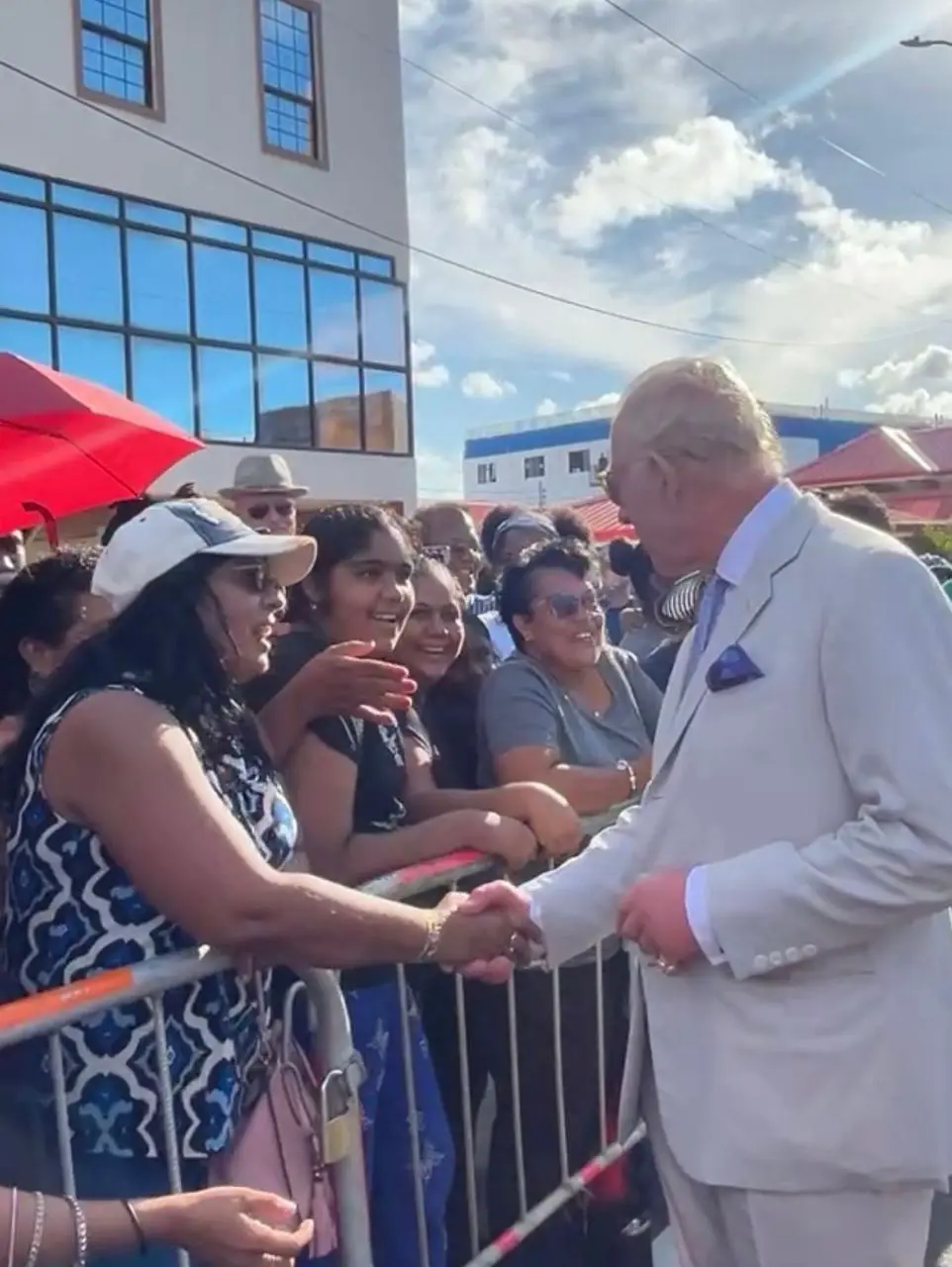
Excited greetings and outstretched hands welcomed King Charles III to the Kingston Seawall Esplanade yesterday afternoon, as the British monarch concluded his two-day State Visit to Guyana with a brief public engagement before departing for Antigua and Barbuda.
Under hot, sunny skies, members of the public gathered behind barricades near the bandstand, hoping for an opportunity to speak with the King. For those he approached, a handshake and a short conversation brought visible excitement. Others, however, left disappointed that the encounter had ended before they could have a similar opportunity.
The seawall stop brought together public greetings and presentations on coastal conservation, rounding off the King’s engagements in Guyana on October 30. His visit began on Thursday and coincided with the observance of 60 years of diplomatic relations between Guyana and the United Kingdom.
Before approaching the waiting crowd, the King toured environmental displays and received a briefing from Agriculture Minister Zulfikar Mustapha on Guyana’s mangrove restoration efforts and their importance to coastal communities.
In a statement shared by the Ministry of Agriculture, Mustapha said he outlined how mangroves help shield the coastline from the Atlantic Ocean while supporting the livelihoods of people who depend on coastal resources.
“I explained how these natural barriers help reduce coastal erosion and flooding, protect agricultural lands, support fisheries, and create sustainable economic opportunities for communities,” the minister stated.
He described the restoration programme as part of the government’s commitment to environmental protection, climate resilience and sustainable development.
“Our mangroves are not simply trees along our shores; they are a vital line of defence against the ocean, a source of livelihood for our people, and a lasting investment in the future of our nation,” Mustapha said.
The King was accompanied at the esplanade by First Lady Arya Ali and Minister Mustapha. He also met participants in the Wilton Park Commonwealth Sustainable Cities Initiative Dialogue, which focuses on practical approaches to sustainable urban development.
Following the tour, attention shifted to the barricaded area, where residents were waiting to greet him.
The brief exchanges offered some an opportunity to tell the monarch about their family connections to the United Kingdom. One attendee excitedly told him of having more than 17 grandchildren living there, while others spoke about their collections of royal keepsakes, memorabilia and hardcover books about the Royal Family.
Several people reacted enthusiastically after shaking his hand, delighted that they had been acknowledged personally during the visit.
For some in the crowd, however, the public engagement fell short of their expectations. They had hoped for a longer encounter and a greater opportunity to speak individually with the King.
After he moved away, some attendees asked Kiskadee Watch whether the public greeting was already over and whether that was the extent of the encounter. On learning that it had concluded, they expressed dissatisfaction with its brevity.
Their reactions contrasted with the excitement of those who had managed to exchange a few words or secure a handshake.
Members of the British media were also present at the seawall. Some turned their attention to protest action in the area, recording the demonstration and speaking with protesters, who outlined their concerns and calls for reparations.
The seawall appearance followed a series of engagements across Georgetown during the King’s final day in the country. His programme included a wreath-laying at the Georgetown Commonwealth War Graves memorial, a visit to Promenade Gardens, participation in the Global Biodiversity Alliance conference and an engagement with Indigenous representatives at the Umana Yana.
Environmental protection, biodiversity and community resilience were central themes of the visit, alongside Guyana’s relationship with the United Kingdom and links between the two countries’ peoples. Buckingham Palace had identified those themes as key elements of the King’s wider Caribbean tour.
Following the seawall engagement, King Charles departed for the airport and travelled onward to Antigua and Barbuda. There, he will join Queen Camilla for the Commonwealth Heads of Government Meeting, attending in his capacity as Head of the Commonwealth.







Discussion