Four philanthropic organisations have pledged an initial US$12.5 million to support conservation in Guyana, with funding for the proposed Acarai–Rupununi Corridor dependent on permanent legal protection against mining, industrial logging and other activities incompatible with conservation.
The commitment, announced at the opening of the second Global Biodiversity Alliance Conference being held in Guyana at the Arthur Chung Conference Centre, comes from the Bezos Earth Fund, Andes Amazon Fund, Nia Tero and Rainforest Trust.
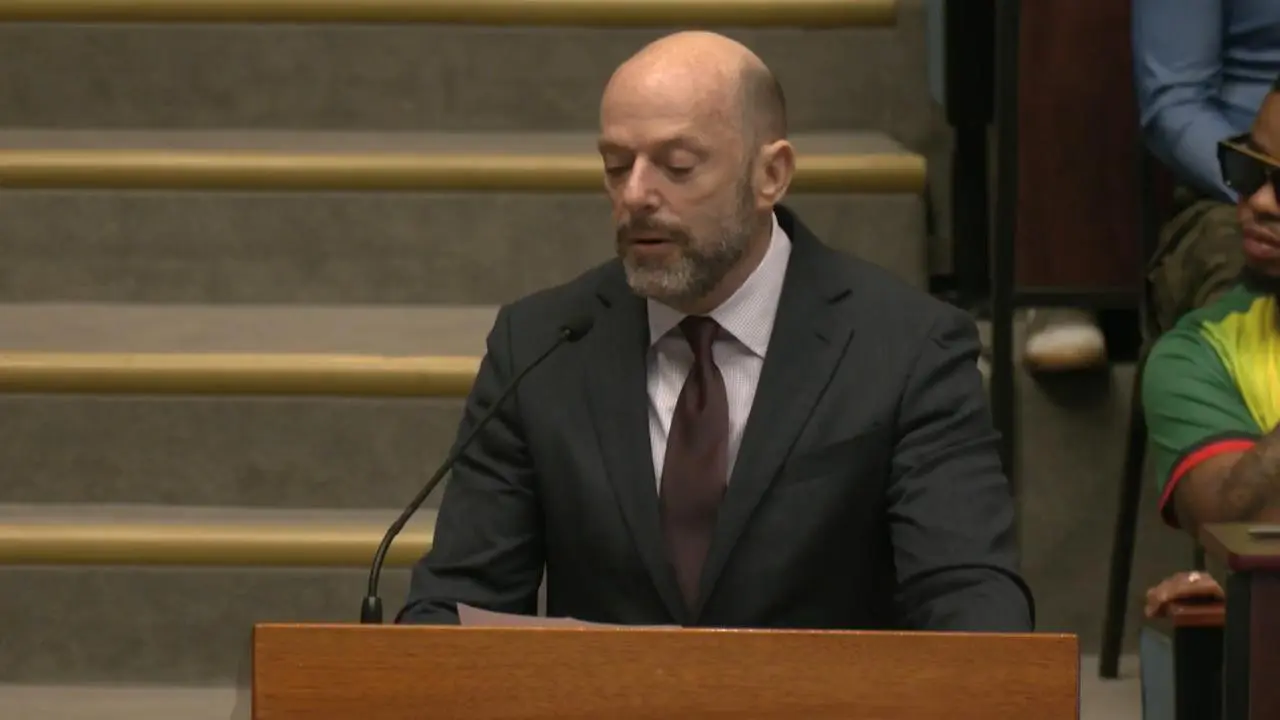
Rainforest Trust Chief Executive Officer Dr James Deutsch told the gathering that the funding was also conditional on safeguards for Indigenous peoples’ rights, including free, prior and informed consent.
“Our financial commitment is conditional on legally enforceable permanent protection for the corridor against mining and other activities incompatible with conservation,” he said.
A joint announcement published by Rainforest Trust said the pledge brings together new and existing funding. It will be implemented through conservation organisations and other eligible partners working with the government, Indigenous peoples and local communities.
Deutsch described the sum as “a very small down payment” towards securing a future for Guyana’s nature, wildlife and communities.
He said the pledge would provide a foundation for helping Guyana achieve its commitment to conserve 30 per cent of its lands and waters by 2030.
The written announcement identifies the Acarai–Rupununi Corridor as a landscape covering more than one million hectares and describes it as one of the largest intact forest landscapes remaining in the Americas.
It says donor funding will support the corridor as it gains permanent legal protection, with clearly defined boundaries and lasting safeguards against incompatible extractive activities.
Deutsch stressed that Indigenous peoples and local communities must be meaningfully involved in conservation planning, governance and management.
Beyond the initial commitment, he said philanthropic partners had expressed strong interest in long-term financing arrangements to sustain conservation stewardship, strengthen the public institutions responsible for protected areas and support communities.
He expressed hope that the pledge would encourage sustained public investment and further philanthropic support.
The proposed corridor forms part of Guyana’s wider conservation ambitions under its Low Carbon Development Strategy. According to background accompanying the donors’ announcement, roughly 8.4 per cent of the country’s land is currently within the National Protected Area System.
Protection of the corridor would roughly double the protected-area footprint, the announcement said.
Rainforest Trust has already done conservation work in Guyana. Its website describes a partnership with Conservation International Guyana to support the establishment of 741,000 acres of Indigenous Community Conservation Areas in the Rupununi.
That project involves supporting communities to protect and manage their legally owned territories, with areas for sustainable resource use alongside areas set aside for conservation.
At the conference, Deutsch said Rainforest Trust had helped protect more than 70 million acres of critical habitat worldwide, including 10 million acres during the preceding eight months.
He said this demonstrated what governments, communities and philanthropic partners could achieve together.
The pledge followed an appeal from Vice President of Colombia José Manuel Restrepo Abondano for conservation financing to match the commitments being made by biodiversity-rich countries.
He said countries safeguarding forests, freshwater and other ecosystems provided services used by the world while bearing much of the cost themselves.
Colombia, he added, estimated that approximately US$24 billion would be needed to implement its biodiversity plan through 2030, with more than half of that financing still unsecured.
He called for greater access to grants, concessional funding and responsible private capital, alongside financial instruments developed with the countries expected to use them.
“The test now is to deliver: finance that arrives, projects that work, results we can measure,” he said.
At last year’s biodiversity summit in Guyana, findings from a rapid inventory of the Acarai-Corentyne Corridor were presented, according to a report in Stabroek News. A release from fieldmuseum.org said that an international team of scientists and Indigenous experts surveyed the 1.5 million-hectare Acarai-Corentyne Corridor, in southeastern Guyana, discovering more than 30 species new to science and dozens more never before recorded in Guyana.
Stretching more than half the length of the country, the Acarai-Corentyne Corridor was an unexplored biodiversity hotspot at the time of the November 2024 expedition, the release said.
The large multidisciplinary team documented over 600 species of plants and over 1215 species of vertebrates. Led by the Field Museum of Natural History and Guyana’s Protected Areas Com-mission, the survey deployed scientific field techniques and technologies like environmental DNA sampling alongside time-tested Indigenous collection methods like poison vine fishing. The team also documented local ecological knowledge in collaboration with the nearby Indigenous communities of Masakeñarî, Parabara and Cashew Island, recognizing the longstanding Indigenous stewardship of this landscape.











Discussion