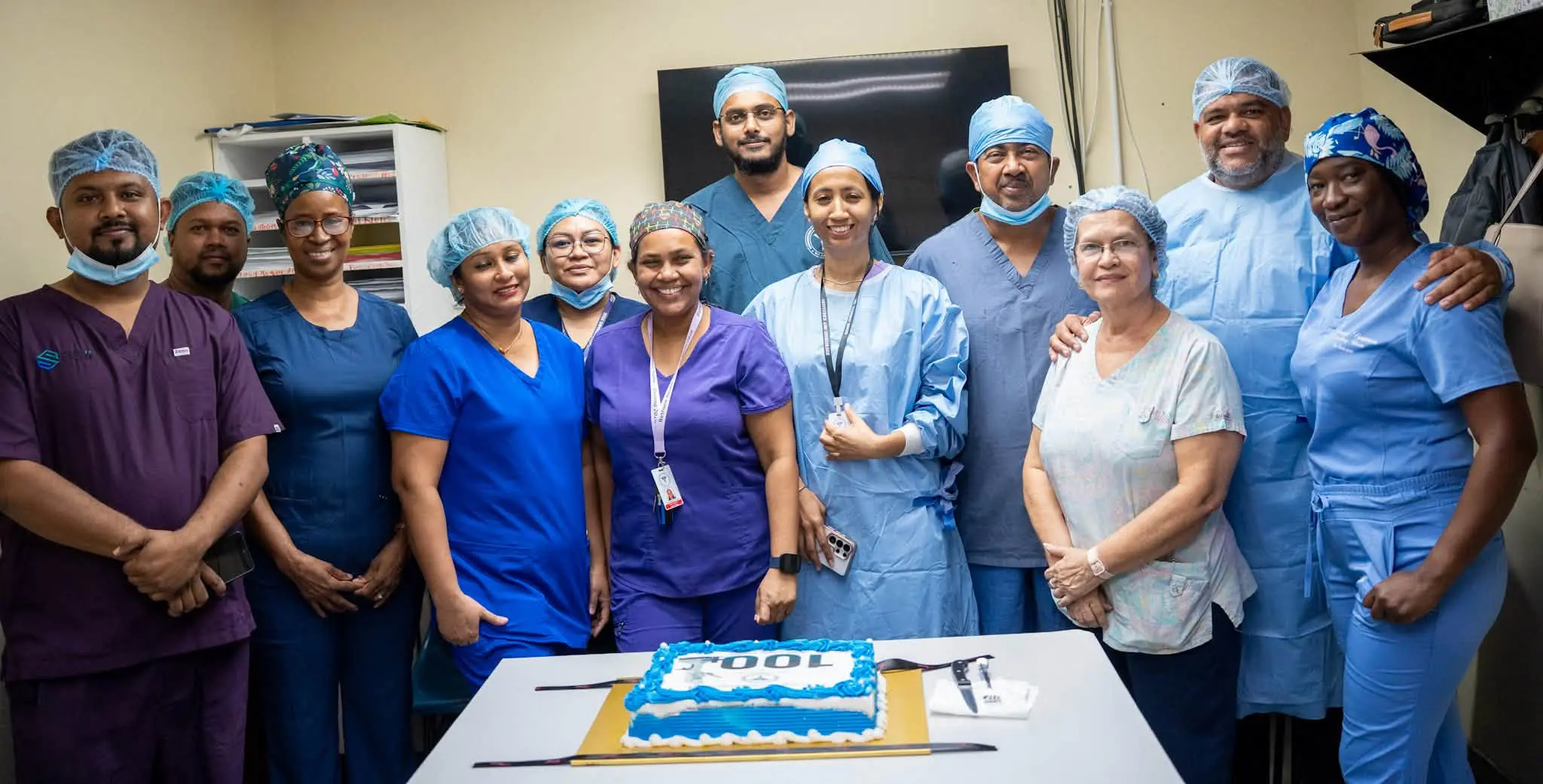
The Georgetown Public Hospital Corporation (GPHC) says it has successfully completed 100 robotic-assisted surgical procedures since the launch of its programme on May 26, 2026.
The hospital said that the achievement marks an important step forward in its efforts to provide patients with modern surgical care. The procedures were carried out across three areas: General Surgery, Urology and Gynaecology.
A release from the GPHC said that of the 100 procedures completed, 47 were performed by the General Surgery team. These included the removal of a gallbladder (cholecystectomy), the repair of a hernia in the groin (inguinal hernia repair), the removal of part of the large intestine (colectomy), and a type of weight-loss surgery that connects the stomach to the small intestine (single-anastomosis gastric bypass).
The Urology team completed 19 procedures. The release said that these included the repair of an abnormal connection between the bladder and vagina (vesicovaginal fistula repair), the removal of the prostate gland (prostatectomy), the removal of a kidney (nephrectomy), the treatment of enlarged veins near the testicles (varicocelectomy), the repair of a narrow area where the kidney drains urine (pyeloplasty), and the opening of a fluid-filled sac in the kidney to help drain it (renal cyst marsupialization).
Meanwhile, the Gynaecology team undertook 34 procedures. These included the removal of ovarian cysts (ovarian cystectomy), the removal of both ovaries and fallopian tubes (bilateral salpingo-oophorectomy), the removal of the womb (total abdominal hysterectomy), and the removal of one or both fallopian tubes (salpingectomy).
The hospital said that the robotic-assisted surgery allows surgeons to use advanced technology to help perform operations with great care and accuracy. The surgeon remains in control of the robotic system throughout the procedure.
As the programme continues to grow, GPHC said it will soon begin training additional surgeons in these specialties to use the robotic surgery system. This will help build local expertise and allow more surgeons to develop the skills needed to perform robotic-assisted procedures.












Discussion