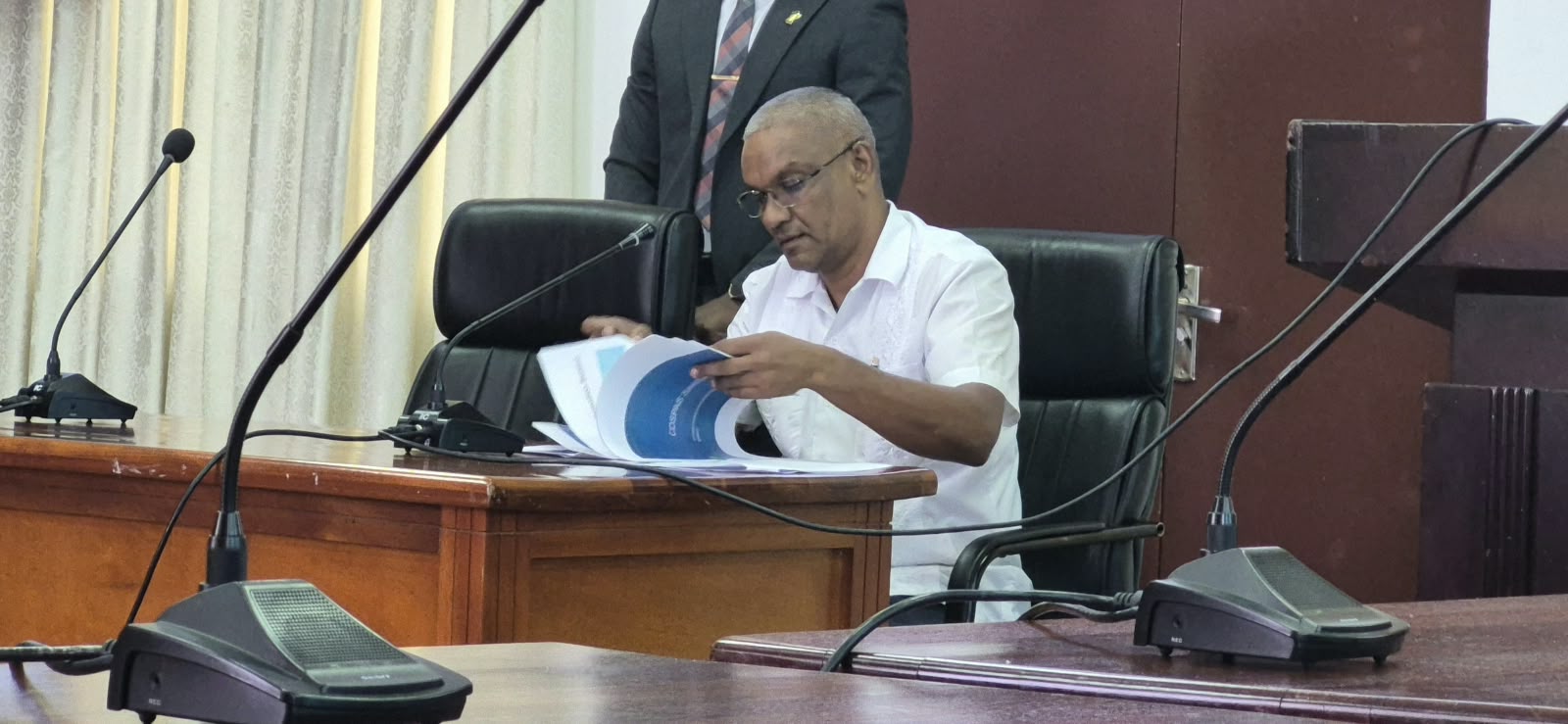
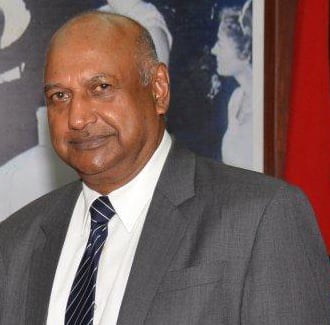
Director of Air Navigation Services at the Guyana Civil Aviation Authority (GCAA), Rickford Samaroo, yesterday told the MV Barima Commission of Inquiry that he learnt of the incident after 1 am on July 19, more than two hours after the Timehri control tower received a distress alert.
Questioned about the interval, Samaroo said the established protocol required his immediate notification of aeronautical distress alerts, but did not impose the same requirement for maritime incidents.
Samaroo was the first witness called as the commission began taking evidence at the Arthur Chung Conference Centre, Liliendaal.
He testified that GCAA Director General Egbert Field called him at about 1 am, informing him that approval had been given for two aircraft to depart from Ogle Airport to investigate the incident.
Samaroo then contacted staff at the Timehri control tower, who briefed him on the distress message received through the United States Mission Control Centre (USMCC) at approximately 10.43 pm on July 18. He placed the time at which he became aware of the incident at about 1.15 am.
When the chairman pressed him on whether he should have been informed sooner, Samaroo maintained that immediate notification was required for aeronautical distress signals, but not necessarily for maritime alerts under the existing arrangements.
The commissioners requested the standard operating procedures governing responses to distress alerts and details of the actions required of Samaroo’s department upon receiving them.
They also sought all communications concerning the incident, from receipt of the initial alert to the closure of the operation, together with an after-incident report and the case file.
Samaroo, who has held his post since 2017, said his responsibilities following a distress alert included establishing and staffing the rescue coordination centre and providing instructions for search-and-rescue operations.
He said the centre operated around the clock, with additional personnel assigned when an incident occurred. For maritime emergencies, his role generally involved relaying distress information and ensuring that the relevant maritime authorities assumed responsibility, while coordinating air support where necessary.
According to his testimony, the centre had returned to regular monitoring by 4.48 am.
Samaroo also outlined how the international satellite-aided search-and-rescue system relays emergency alerts to Guyana.
He said Guyana participated in the USMCC system under a memorandum of understanding, with the Timehri control tower serving as the local point of contact.
The system, known as COSPAS-SARSAT, detects signals from emergency beacons operating on a frequency of 406 megahertz. The signals are processed before alerts are forwarded to the search-and-rescue centre responsible for the relevant area.
Samaroo said alerts normally reached Timehri within three to five minutes of detection and generally contained detailed information. Maritime alerts were relayed to the relevant maritime authorities, the Guyana Defence Force Coast Guard and the lighthouse.
He explained that each beacon had a unique identification code and that its owner was responsible for registering it in a database.
“A beacon is a radio instrument capable of transmitting a signal when activated, continuing to transmit until its battery is exhausted,” he said.
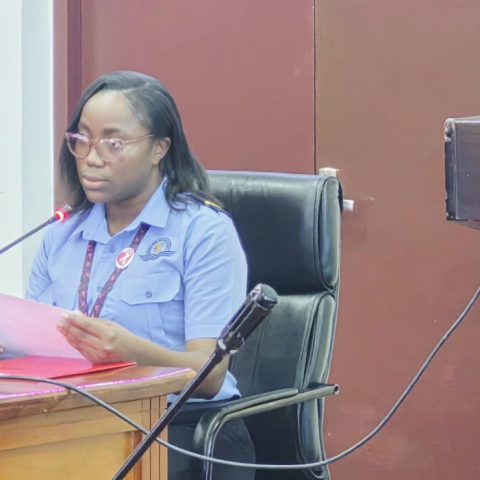
A subsequent witness told the commission that the beacon associated with the alert was registered in the United States, but a database check produced no information identifying its owner.
The commission is investigating the July 18 sinking of the state-operated Barima while travelling from Georgetown to Port Kaituma, including the search, rescue and recovery response.







Discussion