
The Guyana Power and Light Inc (GPL) yesterday announced that Bosai Minerals Group Guyana Inc and Guyana Manganese Inc have donated six one-megawatt generator sets to boost electricity supply in Region Ten and along the Soesdyke-Linden Highway.
The announcement comes amid recent power outages in Linden and criticism from APNU that the government’s short-term interventions do not constitute a coherent plan for meeting the town’s expanding residential and industrial demand.
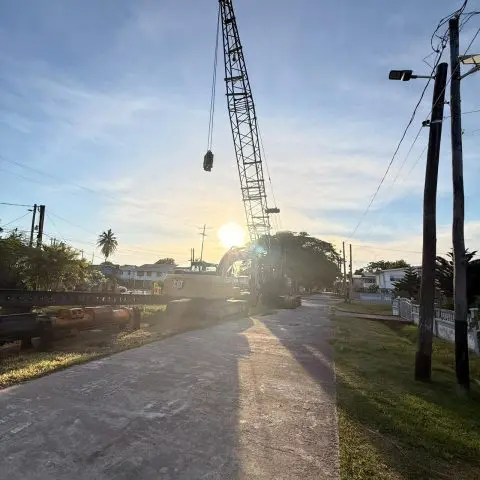
The six generators are currently at Port Kaituma, Region One. GPL said it would dismantle and transport the units before reassembling them as one plant at a location along the Soesdyke-Linden Highway.
The relocation and installation are expected to be completed within four months, according to the utility.
GPL said that the plant would bolster the electricity supply along the highway and in Region Ten, assist with voltage regulation and improve grid stability. The donation also includes power-plant accessories.
An agreement covering the donation was signed by GPL Executive Management Committee Head Kesh Nandlall and Bosai representative George Zhao.
Prime Minister Mark Phillips, Public Utilities and Aviation Minister Deodat Indar, Chinese Ambassador Yang Yang, GPL Director Gary Hall, retired Major General Norman McLean and representatives of Bosai and Guyana Manganese witnessed the signing.
The announcement follows the commissioning on Monday of a 1.5-MW portable generator at Bosai’s Linden powerhouse. That unit increased the company’s supply to Linden and Wismar from approximately 14 MW to 15.5 MW.
Work is continuing to bring another 1.5-MW generator into operation, which the government has said would lift Bosai’s supply to approximately 17 MW.
Linden had been experiencing load-shedding after demand rose above 15 MW, outstripping the approximately 14.5 MW then available. The Linden Electricity Company Inc had attributed the increase partly to high temperatures and the greater use of air-conditioning equipment.
APNU yesterday welcomed efforts to increase generating capacity but reiterated that Linden required a comprehensive, long-term electricity plan rather than a series of emergency interventions.
APNU parliamentarian and former Linden mayor Sharma Solomon said that the town was once capable of powering a substantial industrial base but was now struggling to meet residential and commercial demand with around 15 MW.
“Now, with GPL power purchasing, we need to know how those things will integrate into our system, and we still don’t have a long-term coherent development plan,” Solomon said.
He argued that the administration must plan for Linden’s projected industrial and residential expansion and not rely solely on the addition of small generating units.
“A long-term programme is what this industrial town needs, so that we move back to reliable, sustainable power to allow for that residential, industrial development to be put into proper perspective,” he said.
Solomon had previously accused the government of failing to install additional capacity as demand grew. He said Linden’s electricity demand had moved from approximately six MW when the power purchase agreement was established around 2005 to 12 MW in 2024 and between 14 MW and 14.5 MW this year.
He has also called for industrial consumers to be properly classified, arguing that increased industrial activity should not place an additional burden on residents or undermine the electricity concession enjoyed by the community.
GPL said that the six-MW plant was part of the government’s short-term programme for Region Ten and the highway corridor.
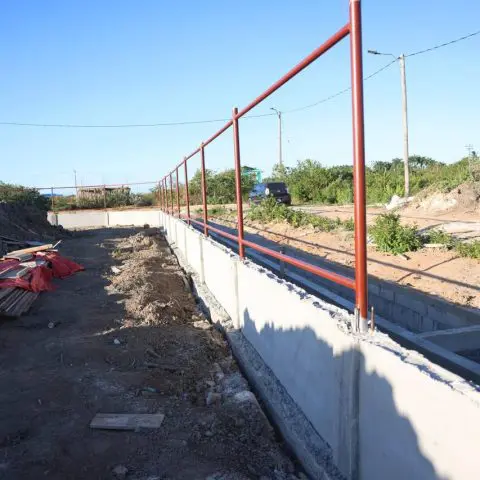
The utility is also constructing three solar farms in Linden with a combined capacity of 15 MW, along with a new substation at Kuru Kururu. According to Phillips, Bosai is separately developing a 10-MW solar farm which is expected to become operational by 2028.









Discussion