(Trinidad Express) ExxonMobil is moving ahead with exploration of Trinidad and Tobago’s ultra-deepwater TTUD-1 block at a faster pace than it did during the early stages of its Guyana campaign, with seismic results expected by the end of this year and an exploration well potentially following in late 2027 or early 2028.
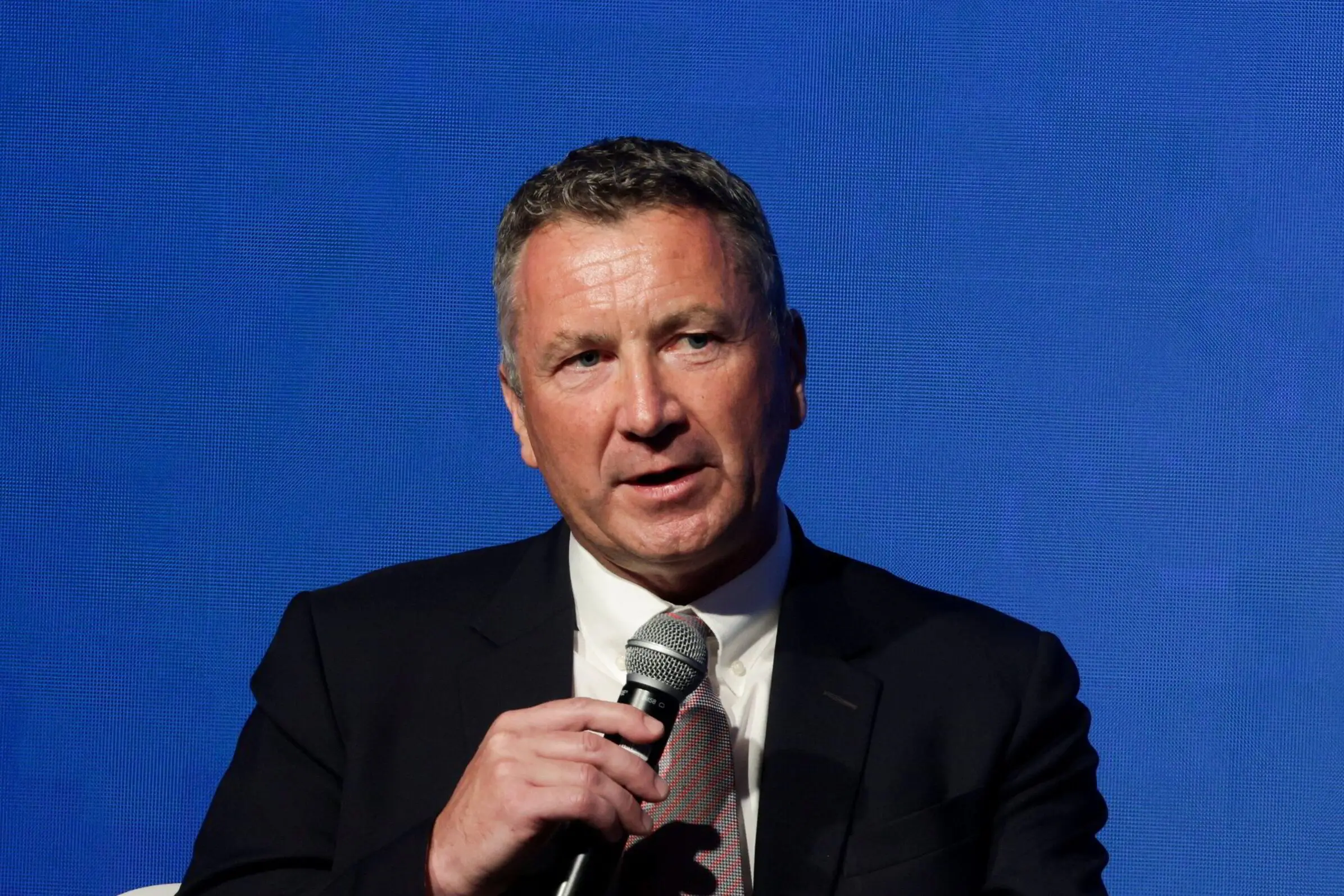
“The data’s in. We’ll see an image by the end of the year, and we would expect to be drilling in late ’27, early ’28,” ExxonMobil vice president of exploration John Ardill said during a session at the Rio Oil and Gas (ROG.e) energy conference in Rio de Janeiro on September 21.
His comments, reported by Upstream Online, highlight the pace at which ExxonMobil is progressing on TTUD-1 since signing a production-sharing contract with the T&T Government in August 2025.
Ardill said ExxonMobil is moving on TTUD-1 “faster than we did in Guyana”, citing the pace of contract negotiations and seismic work.
“The geology has to work for us, same way as it does in any basin, but if it does, the pace at which we can operate today versus Angola—which was great 20, 25 years ago—to Guyana five years ago, to what we’re doing today is just getting bigger and faster,” Ardill said.
The production-sharing contract followed seven months of negotiations, according to Ardill.
TTUD-1 covers about 7,765 square kilometres off T&T’s east coast and was formed by combining seven ultra-deepwater blocks. Water depths in parts of the acreage exceed 2,000 metres.
ExxonMobil operates the block with a 90% interest, while Occidental Petroleum holds the remaining 10%, acquired in June 2026.
The acreage has attracted attention because it could represent a geological extension of Guyana’s prolific Stabroek Block, where ExxonMobil has made a series of major discoveries.
But the company has cautioned that the geological similarities do not guarantee a repeat of Guyana’s results in T&T.
The accelerated exploration programme comes as ExxonMobil outlines a broader push to increase the pace of global oil and gas exploration.
Growing pressure
In a LinkedIn post following the conference, Ardill said the industry was under growing pressure to identify the resources that could become future energy projects.
“International oil and gas exploration is becoming increasingly urgent as we work to discover the next generation of resources that can become tomorrow’s projects—much like ExxonMobil’s deepwater developments in Guyana today.”
Ardill said global energy demand is expected to grow over the coming decades and argued that hydrocarbons will continue to account for a significant share of the world’s energy supply.
“We are entering a decade of growing energy demand. Global total energy needs are forecast to increase by around 15% through 2050, driven by population growth and economic expansion, with hydrocarbons continuing to provide more than half of the world’s energy supply.”
He said ExxonMobil is using technology, advanced computing and artificial intelligence to shorten the time between seismic acquisition, exploration drilling and potential development.
“At ExxonMobil, we are responding to this societal need by expanding our global exploration efforts, accelerating the pace from seismic acquisition to exploratory drilling, and pursuing development at greater speed and scale—enabled by new technologies, advanced computing and AI.”
ExxonMobil’s comparison with Guyana reflects the rapid development of the Stabroek Block. The company announced the Liza discovery in 2015, with first oil achieved in December 2019, about five years later.
Guyana’s offshore developments have since grown into one of the world’s fastest-expanding new oil-producing areas, with production now exceeding 900,000 barrels per day from four developments.
ExxonMobil has also pointed to its experience in Angola’s Lower Congo basin, where it drilled three exploration wells in the late 1990s before production began in 2003.
For Trinidad and Tobago, the immediate milestone will be the processed seismic data expected later this year, which will help determine whether the TTUD-1 acreage contains prospects suitable for drilling.
“These are exciting times to be leading in the global energy industry—and to be part of the team exploring for the resources that will help power the decades ahead,” Ardill stated.









Discussion