
Director of Public Prosecutions (DPP) Shalimar Ali-Hack on Thursday credited the Canadian-funded Justice Education Society (JES) project with helping to strengthen Guyana’s criminal justice system, citing improvements in police investigations, prosecutions, the handling of evidence and access to justice in hinterland communities.
Speaking at the project’s closing ceremony at the Police Officers’ Annex, Eve Leary, Ali-Hack said the impact of the initiative had been evident over the past five years.
“I have seen improvements in the systems in the GPF, the recording of caution statements, the storage of exhibits, the Investigation Planning and Supervisory Forms and in the conduct of the investigations gained through the training,” her office said in a statement.
The DPP recalled that during early discussions with JES officials she had stressed the need for training across the entire criminal justice system rather than focusing solely on prosecutors.
“When only one of these parties is trained then we have difficulty with the others. I know that they would have found it strange that my request and recommendations were never only for the prosecutions…but prosecutions won’t be successful without good investigations and a judiciary that understands the law,” she said.
According to JES, more than 2,000 persons benefited from training under the programme, including 23 judges, 20 magistrates, 70 police prosecutors and state counsel, and 550 police officers. At the community level, the organisation worked with 13 village councils and more than 75 Indigenous communities in Regions One and Nine.
JES also provided practical support to the Guyana Police Force (GPF), including storage containers for exhibits and recording equipment for caution statements.
Without proper storage, she noted, exhibits could not always be produced in court because they had either been misplaced or damaged.
“These two have made drastic improvements in the investigations and prosecutions of criminal charges,” she said.
The project also supplied the GPF and the Ministry of Health with Sexual Assault Evidence Collection Kits, commonly known as rape kits, the statement highlighted.
Ali-Hack also highlighted improvements in the judiciary, recalling that former Chancellor Yonette Cummings played a key role in introducing virtual court hearings to improve access to justice in hinterland communities, where courts had previously sat only once or twice each month.
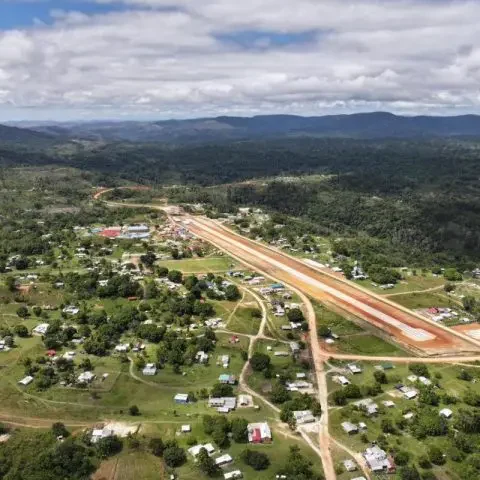
She further pointed to JES’s work in Indigenous communities, particularly in Regions One and Nine, where community outreach programmes were conducted with the participation of the DPP’s Chambers.
According to Ali-Hack, the outreach has led to improvements in police responses to reports of crime and an increase in reporting from Indigenous communities.
“There are more reports than there used to be before the training started. These are all tangible improvements I have seen and I’m happy to have been a part of this justice improvement,” she said.
A memorandum of understanding between Guyana’s Ministry of Home Affairs and Global Affairs Canada was signed in 2022 to facilitate the project.
JES Country Representative Lisa Thompson said the programme sought to institutionalise a trauma-informed, gender-responsive and culturally sensitive approach to the administration of justice for Indigenous peoples while improving knowledge of laws relating to sexual and gender-based violence.
Through partnerships with the Santa Rosa community in Region One, the Macushi Research Unit at Bina Hill in the North Rupununi and the Wapichan Wiizi Women’s Movement in South Rupununi, more than 60 public education audio and video messages on sexual and gender-based violence were produced in Wapichan, Macushi and English for use by village councils, civil society groups and community advocates.
Head of Development Cooperation at the Canadian High Commission, Adam Loyer, said Canada was pleased to have supported efforts to strengthen institutional and community knowledge in combating sexual and gender-based violence since the project’s implementation in 2022.









Discussion