
-cramped, insanitary conditions on ferries recalled
Executive Director of the Amerindian Peoples Association (APA) Jean La Rose is urging all Guyanese to help address the systemic gaps and inequities in services to Indigenous Peoples and education was one major area cited.
La Rose was one of four panellists who spoke at the APA’s sixth edition of ‘Ina Maimu Yetatokon’ meaning ‘Let our voices be heard’ in the Patamona language on the theme ‘Carving our own path’. The event was held at the Marriott Hotel, Kingston, Georgetown on Friday evening.
The panel included Sharon La Rose, a founding member of the APA who spoke of its origins and the positive results of advocacy. Kim Fredericks of Wakapao in Region Two addressed the topic ‘Our culture, our compass: Building the future on Indigenous values. She noted the importance of preserving the nine Indigenous languages of Guyana.
Chris Debideen of Aruau, Region One, whose community lost several people in the MV Barima tragedy spoke on the topic, ‘Moving from mourning to meaningful reforms, learning from the MV Barima tragedy’. He recalled the cramped and insanitary conditions while travelling on the MV Barima and MV Kimbia and said that safe and reliable transportation to and within hinterland regions is urgently required.
In their presentations they noted “huge” systemic gaps in the decision-making processes that affect all sectors in the hinterland including transportation, health, education, infrastructure and the extractive sector as well as the preservation of Indigenous culture.
Commenting on transportation links in communities, La Rose said, consideration is often not given to permanent works and a road graded one day is undone the next day by big trucks with no regard for community people and school children, with no means of transportation, who traverse the roads that are left either muddy or dusty with huge potholes.
“Some communities do have a few concretised roads built in central areas in communities, but the majority of the people suffer,” she noted.
On the use of the rivers and the ocean to move about in many regions especially in Region One and Region Two, she said oftentimes the engines of the privately run speedboats from Parika and Supenaam break down. She questioned who monitors these transportation systems to ensure that people manning those vessels are well trained.
On the loss of lives on the road every day, she asked, “How are we looking after the population, especially our Indigenous population who face a different scenario?”
Education
On education La Rose noted the disparities between the education services provided for children in the hinterland compared with those in coastal areas.
“They do not have the same textbooks, or the same level of tutoring, or same level of someone pushing them” she said.
Children from the hinterland hardly ever secure passes for Bishops’ High School, St Stanislaus or Queen’s College, she said.
“I didn’t even mention QC first because QC, Bishops’ and St Stanislaus do not exist for them.” There is a huge gap even for some of the younger ones as to why they are going to school and what they want at the end of Grade Six, she said.
She noted that a similar situation exists with children writing the Caribbean Secondary Education certificate.
While Government has been taking steps to improve internet connectivity in Indigenous communities, she said the common problem of bandwidth remains.
Teachers in training through distance learning, she said, experience similar problems of lack of an efficient internet service.
La Rose is concerned that some of the teachers who are being trained are sometimes those who did not have a proper secondary training. Some were excellent students, she said, but there are some who cannot read well and they are teaching children in all subject areas.
While some things affect only hinterland communities, she said, more attention must be paid to what is taught generally about the hinterland.
“I read a social studies book that has so many errors in it that our children nationwide use,” she said.
At the informal educational level, she noted that children are growing up without knowing who their leaders are, and the roles they play.
“We have the non formal type of education because we have our own histories. How to do things in a hinterland community that you will not find in a coastal community. Things that can only be found in an indigenous school.”
Emphasis must be placed on indigeneity in the school’s curriculum to engender pride in Indigenous children, she said, “apart from the system of cramming for exams to get the best schools.”
Noting the gap in terms of how Indigenous children access education, their results and how they enter the professional system, she noted there were professionals working on coastal Guyana who many children would like to emulate.
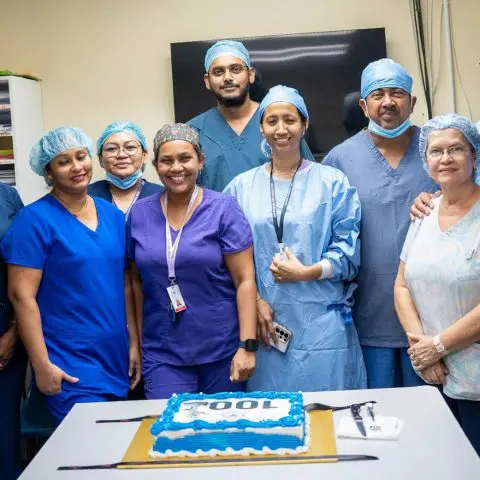
Mentioning doctors of Indigenous background who were present, she said, many children would like to be exposed to the options that would take them back to their communities as many who had schooling in Georgetown do not return to the hinterland because it cannot absorb their professions.
On the decision-making process, she said the APA has been engaged in a picketing exercise for the past three weeks on the MV Barima tragedy to seek a spot in the decision-making process.
The laws and policies governing Indigenous People since Independence, she said were not written by Indigenous Peoples. She recalled the struggle to get the Amerindian Act revised in 2006, but when it was done, it did not include many of the recommendations, or the recommendations in the format recommended.

While provision is made in the Amerindian Act for the protection of land, education, health, governance, she said, the final decision for many of the provisions rests in the hands of the Minister of Amerindian Affairs.
“That is not self-determination. That’s not being part of the decision-making process in the way that a people should be part of making decisions,” she said.
On toshaos not being vocal at the recent National Toshaos Conference, La Rose said, generally Indigenous Peoples are quiet but that quiet personality should not be taken for granted because it does not mean that toshaos are not thinking.
At a forum like the National Toshaos Conference, she said a lot of space is needed for people to talk among themselves, and to share ideas and experiences.
“I get feedback that toshaos are afraid to speak. Why are toshaos afraid to speak? You have the forum there. Use your voices to represent our people. Nobody will eat off your head.”
She is aware that some of the toshaos, communities and village councils were victimised and scared into not speaking, she said adding, “We have to find ways of making our voices heard and representing our people. Use the spaces and forums that you have. We cannot continue to allow decision making happening at the top without us being considered and involved because we are the ones who know our situations in our communities.”
Encouraging toshaos to use the spaces available to them, she also urged Government to make available the spaces so that Indigenous Peoples could exercise their right to freedom of speech and to have their decisions being included in national legislation and national policies.
Extractive sector
On the extractive sector, she said, every day an Australian or a Canadian company gets a land concession for gold mining or more recently for the mining of uranium.
“I don’t know how many of our Indigenous communities know or are aware that uranium mining is a thing that is actively being talked about and in fact there are concessions already out there. I know one community is very concerned that possible uranium mining activity is already taking place in their area,” she said.
She questioned the role of the Environmental Protection Agency in ensuring safe environmental practices in mining and its impact on the environment.
She noted the trickle-down effect that will take place if radioactive waste contaminates the water which is used by animals and humans alike, she said Indigenous Peoples are already coping with problems of mercury contamination in the water and food chain.
Stating that the granting of concessions for mining is frightening and that this was not a matter for only Indigenous Peoples, she asked, “Are we giving away Guyana just like that? What are the systems in place to regulate, to monitor, to even say no to certain activities taking place?”
In responding to a question from the floor on how others can support the Indigenous cause, La Rose said there was need for understanding the Indigenous culture which many non-Indigenous People mock and why the protection of land and land titles are required.
She said that people need to understand the detrimental circumstances communities are placed in when the government must have the say in the interest of the public while disregarding a community’s interest and the victimisation that comes with the lack of protection for the minority. She cited as examples Chinese Landing and Isseneru where mining is taking place. These areas call for policy and legislative reforms, she said.
Noting that over three years ago, President Irfaan Ali committed to revise the Amerindian Act, she said, reforms must address the heavy powers given to the Minister of Amerindian Affairs, land rights, entry and exit from communities among many other areas. APA staffer, Graham Atkinson, from the floor said that any constitutional amendment or reform, must state that English and the nine Indigenous languages are the official languages in Guyana. At present, English is the country’s official language.







Discussion