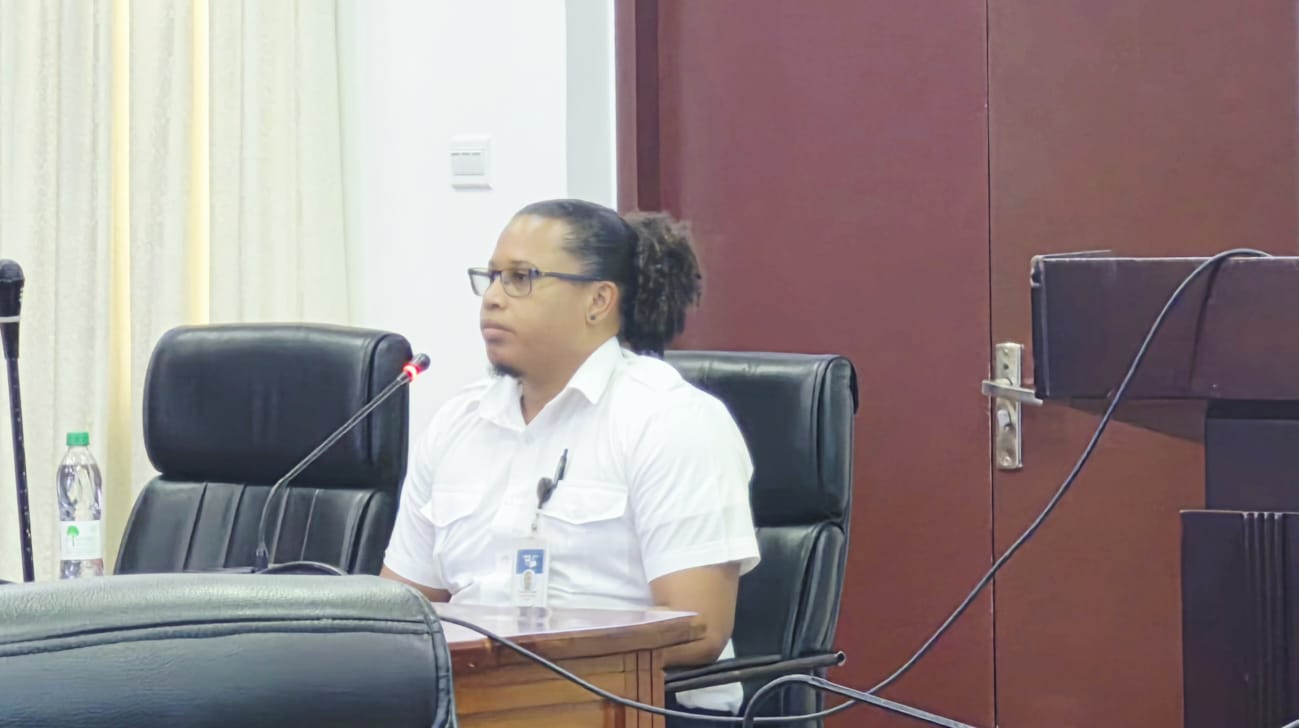
Some passenger ferries inspected by the Maritime Administration Department (MARAD) lacked statutory and safety documents, while life-saving and firefighting equipment required servicing, Inspector of Shipping Michael Carrington told the MV Barima Commission of Inquiry.
Carrington said vessels he inspected were missing documents including registration papers, statutory certificates, load line and tonnage documents, radio licences and certificates of inspection.
He also testified that the vessels did not have stability documentation or loading manuals, and that none had Safety of Life at Sea (SOLAS) certificates.
Carrington, who has worked with MARAD for approximately six years, stressed that he had never inspected the MV Barima and could not say whether it had similar deficiencies.
Asked whether he considered the documents important and would allow vessels to operate without them if the decision were his, he said he would not.
He explained, however, that inspectors submitted their findings to a supervisor, who reviewed the reports and forwarded them, with advice, to the Director of Maritime Safety.
Carrington said he was aware that other inspectors had encountered vessels with missing documents. Inspectors discussed some findings with their supervisor, he added.
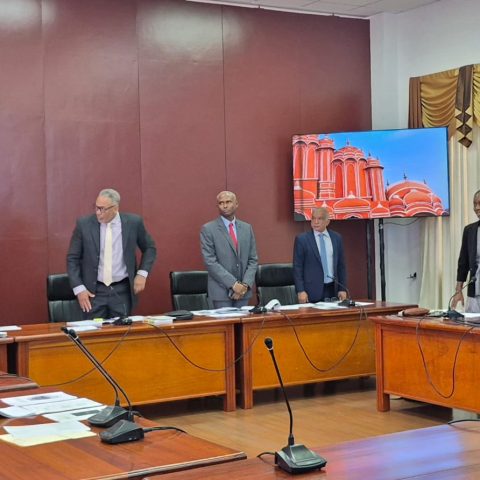
His evidence was heard as the commission continued its examination of the July 18 sinking at the Arthur Chung Conference Centre, Liliendaal.
Carrington also described MARAD’s inspectorate as understaffed. He said there were eight inspectors, including himself, and estimated that three to four times that number were needed to better manage its responsibilities.
The workload continued to grow as more vessels entered service and required inspection and monitoring, he said.
Carrington could not recall who had inspected the MV Barima. He said inspection records were normally maintained and identified the Director of Maritime Safety as the official responsible for them.
Asked whether an investigation had been conducted into the sinking, he said he was not aware of one. He nevertheless expected that an investigation would ordinarily follow a disaster of that scale, given the responsibilities of shipping inspectors.
Carrington said his duties included inspecting vessels, investigating marine incidents and accidents, conducting public outreach and monitoring operations on Guyana’s waterways.
Inspectors carried out random checks by boarding vessels, examining documents and checking navigation, safety and firefighting equipment. Depending on the vessel’s size and circumstances, inspections could be annual, random or prompted by an incident.
Where major deficiencies were identified, he said, vessels were delayed from sailing until these were corrected. Inspectors would then return to check and test the equipment.
Carrington also recounted his involvement in the search-and-rescue operation following the Barima’s capsizing.
He said MARAD Director-General Stephen Thomas contacted him and instructed him to mobilise for the emergency response. He subsequently boarded a vessel and assisted with navigation and plotting coordinates.
While approximately 36 nautical miles from the wreck site, those aboard received information from a fishing vessel about what appeared to be a body floating in the water.
After obtaining coordinates, they headed towards the location and encountered several bodies before reaching the reported position.
Carrington estimated that approximately 15 bodies were recovered during that operation.







Discussion