
`When I call and tell them I think I find the boat, nobody believed that I find the boat’
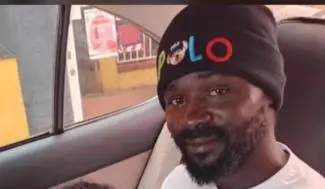
Fisherman Haresh Singh, who located the sunken MV Barima two days after the vessel went down off the Essequibo Coast, has challenged several accounts surrounding the search, insisting that the conditions at the wreck site were far more difficult than publicly portrayed.
Singh, who was among the fishermen involved in the initial rescue effort following the July 18, 2026 disaster, said he and his crew eventually located the vessel after an extensive search of the area, relying heavily on their knowledge and experience of the river.
According to Singh, the search for the wreck began after rescuers were informed that the vessel had sunk.
“After we get a message that the boat sank, from the Region Two chairman and also Minister (in the Ministry of Public Works Madanlall) Ramraj called me and told me,” Singh recalled.
He said three large boats were permitted to go out initially, with his crew rescuing 11 people, while another fisherman rescued two.
“Those 11 persons, we rescued them,” Singh said.
However, Singh expressed frustration over what he described as inaccurate accounts that subsequently emerged in the media about who had rescued survivors.
He said he personally had photographic evidence of the rescue and disputed a claim by another individual who publicly said he had rescued 11 people.
Singh said that after the initial rescue effort, attention turned to locating the sunken vessel.
He said that when rescuers asked whether the boat had been found, they were told it had not been located.
As people continued contacting him for information, Singh said he eventually decided that he would personally search for the vessel.
“So I tell them I going and find it, because I work for over 40 years here in the river and I have the experience with my brother,” he said.
Not straightforward
But locating the wreck was not straightforward.
Singh said rescuers did not initially have an accurate position or depth for the vessel, with different locations and measurements being circulated.
“We never get the real depth of the water or the real spot where the boat was,” he said.
“One time you hear Iron Punt one time you hear from one time you hear outside of Hackney, one time you hear it’s Devonshire Castle.”
He said the search team therefore spread out across a wide area, with boats positioned outside across.
“We were searching the whole entire area,” Singh recalled.
It was during that search that Singh said something unusual caught his attention.
He said the water was relatively high and there was not much floating at the time.
As the crew moved through the area, Singh said he noticed a smell that immediately raised suspicion.
“When we drive down, I get a different smell,” he said.
Watermelon
“I remember the scent, Between when the fish smell, it got like a watermelon smell, you know when there are plenty of fish and so it’s got a watermelon smell, but this smell was not a watermelon”.
“I tell my brother, I said, ‘I think we get to the spot of a boat here”
The brothers then stopped and watched the water.
According to Singh, their suspicion was soon confirmed when debris began surfacing.
“The time we watch a little bit, I see a bottle float out, come up, then I see a life jacket pop up,” he said.
“I see a couple of other things and stuff, rum, perfume and other stuff.”
Singh said he contacted others and told them that he believed they had found the wreck.
But, he said, they initially did not believe him.
“When I call and tell them I think I find the boat, nobody believed that I find the boat,” he said.
To demonstrate that they were indeed at the location of the wreck, Singh said he instructed workers to attach a case of rum that had surfaced to a line.
He said they subsequently spotted what he believed was part of the sunken vessel.
“I see bow line of the boat, what I know is the boat, a fat line, float up, barely float up, and I tell them hook it,” he recalled.
“They hook it and they wrap it and around we boat”
The movement caused by securing the wreck brought even more debris to the surface.
“So after they hook it and , we boat jock it a little bit. And with the jocking, a whole set of things start pop up, float out from the water,” Singh said.
“Like barrel, clothes, different, different things, dead bodies and stuff.”
‘It was terrible out there’
Singh said the conditions at the site made the recovery operation extremely difficult.
He recalled strong waves and winds, while divers attempting to work underwater faced significant challenges.
“But it was terrible out there,” he said. “Because the wave and the breeze and stuff, it was terrible.”
According to Singh, the depth of the water at the location was approximately 55 feet.
“At the time when we measure the water, it was like 55 feet,” he said.
He explained that river conditions could also affect measurements, particularly during periods of high spring tides.
“You got to check on the spring. If the spring is high, the water will be high. If the spring is low, the water will be more low,” Singh said.
“At that time, it was height of spring.”
Singh estimated the wreck was approximately 15 miles from shore and said the location was not an area where vessels would normally travel.
“The mileage, for sure, what we get is like 15 miles out from ship,” he said.
“So it was a high area, where normally the ship doesn’t pass.”
He said the location itself contributed to the difficulty of finding and recovering the vessel.
“But I don’t know how come the boat reached that height out there. I can’t understand how come it reached that height,” Singh said.
“Because the height was too high for them.”
‘It’s not so easy’
Singh also pushed back against suggestions that the vessel could have been easily located and raised.

He said the operation required extensive effort and that the wreck’s location and depth presented serious challenges.
“When everybody says it can come up so easily, it’s not so easy it can come up,” he said.
“From my experience out there with the Coast Guard, because every day we were out there. It’s every possible thing we tried.”
Singh said the recovery effort involved trying every available option.
“That’s what we could have done,” he said.
He suggested that more specialised equipment would have been necessary to carry out the operation, pointing to the possibility of naval assistance and specialised vessels.
Singh said his concerns were compounded by what he described as conflicting information being circulated about the location, depth and distance of the wreck.
“And now for these things they want to put out there with the 20 feet water and all these things, I can show you all these things,” he said.
He also criticised varying reports about how far the wreck was from the Pomeroon mouth and other reference points.
“All the things that was like false things put out,” Singh said.
“I don’t know why… they make things like that.”
He was emphatic about the account he was giving.
“But what I’m giving you here today is the truth,” Singh said.
‘We didn’t come for that’
Despite the risks involved in the search and rescue operation, Singh said financial compensation was not his motivation.
Asked whether he and the other fishermen were compensated for their role, Singh said the group only received fuel from the Government.
“To be honest, we didn’t come for that. We didn’t look for that,” he said.
“Three business persons called me and said, ‘Haresh, we want to give you some money.’ I told them no.”
Singh said he declined the offers because his motivation was to rescue people and assist families affected by the tragedy.
“I told them no. Because I told them I’m not going for that,” he said.
“I went to rescue people and help.”
He said the devastation of the disaster was personal enough to motivate him to continue helping.
“Because the families they want to know about their loved one,” Singh said.
‘The president was very worried’
Singh also recalled the level of concern among officials during the operation including President Irfaan Ali.
He said he was in communication with senior Government officials while the search and rescue effort was underway.
“When I was up there, the president kept calling. The minister kept calling. The chairman, region two chairman,” Singh said.
“All of them. Because the president was very worried.”
Singh said the fishermen and officials worked with the resources available to them and attempted to do everything possible.
“I tried to do all my best,” he said.
He also noted that the section of the river where the vessel went down is regarded as a particularly difficult and dangerous area.
“Because the area where the boats go down, it doesn’t really recover,” Singh said.
“Lots of boats sink already and nobody ever gets back,” Singh said.
Singh maintained that his experience during the MV Barima search reinforced just how difficult the location was.
“It’s a difficult area,” he said.
For Singh, the discovery of the MV Barima was not a matter of luck alone, but the result of experience, persistence and knowledge of the river.
He said while there may have been numerous accounts about the tragedy and the subsequent search, his account is based on what he personally saw and experienced on the water.
“We tried every possible thing,” Singh reiterated.
“And what I’m giving you here today is the truth.”







Discussion