President Irfaan Ali said yesterday that Guyana is seeking a major international aviation player to establish its hub at Terminal 2 of the CJIA, as the country seeks to position itself as a regional and global aviation centre.
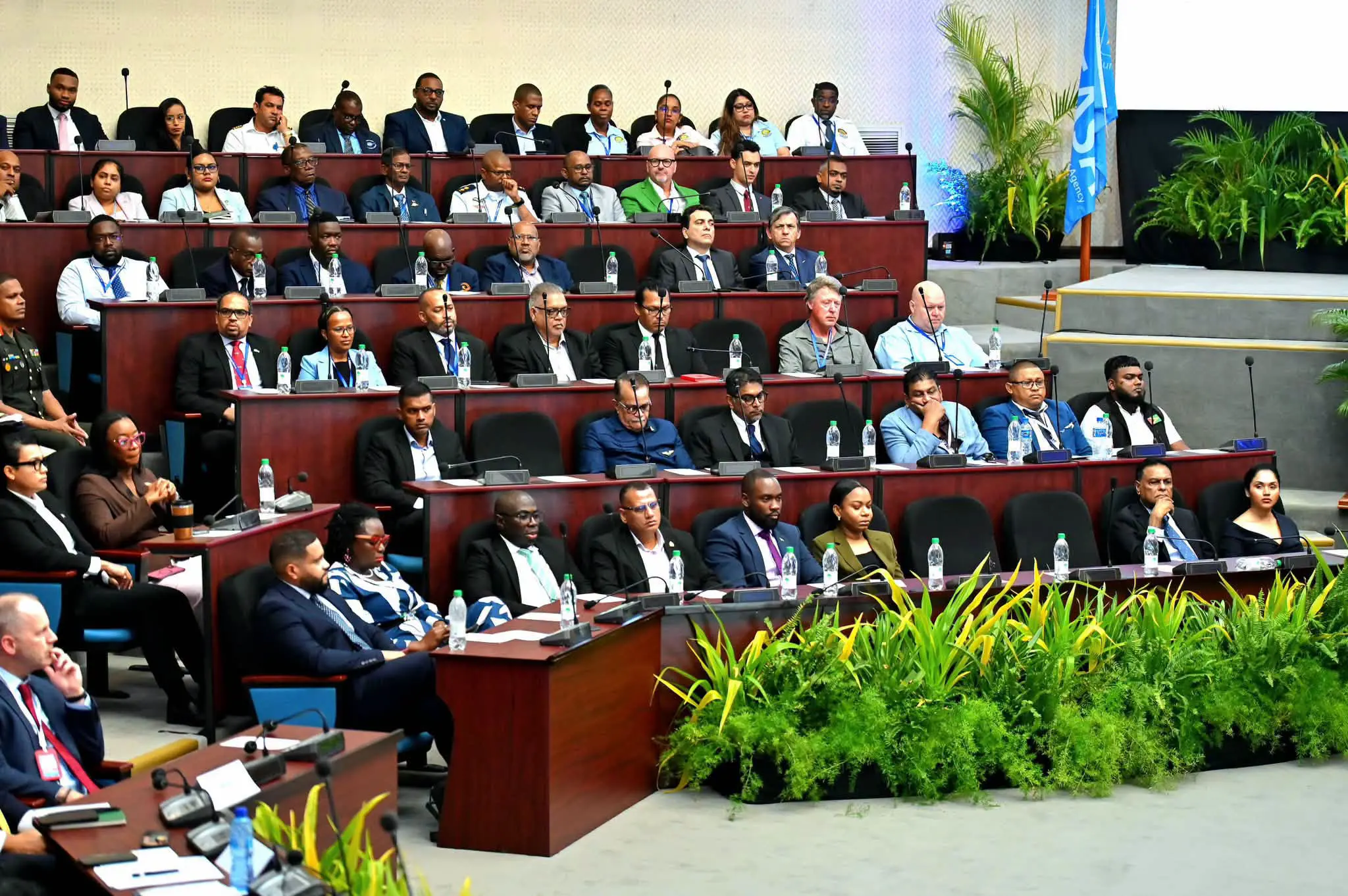
Speaking at the opening of the ICAO/EASA 3rd Global Regional Safety Oversight Organisations (RSOO) and Regional Accident and Investigation Organisation (RAIO) Forum for Aviation Safety, Ali said the government has mandated the ministry responsible for aviation to begin negotiations with major players interested in using Terminal 2 as a hub linking Guyana with several destinations.
Terminal 2 is a new passenger terminal building being constructed at the Cheddi Jagan International Airport (CJIA) in Timehri. It is not a second airport, but will be an additional terminal within the existing complex.
The new Terminal 2, according to the Department of Public Information (DPI), is a 150,000-square-foot facility and is expected to be completed by 2028. It is being developed to increase the airport’s capacity as passenger traffic grows.
“We are looking now for a partner in Terminal 2. Someone who will take Terminal 2 as their hub, their global hub,” Ali said while delivering the feature address at the Arthur Chung Conference Centre, Liliendaal, East Coast Demerara.
He said negotiations are already being pursued and that the government is prepared to finalise discussions with interested companies. “We have mandated the ministry to begin negotiations with all the big players who want to use Terminal 2 as their hub, whether it’s to West Africa, South America, connected to the Caribbean. We are ready to finalise those negotiations.”
Ali said securing a major player to operate from Terminal 2 would be important to Guyana’s plans to expand its aviation sector and strengthen its connectivity with other markets. He said Guyana’s geographical location, infrastructure development, investments, institutional capacity, partnerships, and investment in training and education are central to the government’s plans for the sector.
Ali also called on the aviation safety forum to add artificial intelligence (AI) to its agenda, noting that the technology will have significant implications for aviation safety, regulation and operations. He suggested that the forum begin discussions on an AI strategy for the aviation sector, particularly in relation to safety, regulation, adaptability, equity and integration.
“If you don’t have equity in the build out of AI in the aviation sector, especially for safety, then you will have disparity, you will have unevenness, you will have different rules, and you will have countries being left behind,” Ali said.
He urged the International Civil Aviation Organization and other aviation organisations to develop a shared AI strategy that identifies the opportunities and threats associated with the technology and begins discussions on regulations governing AI and safety in aviation.











Discussion