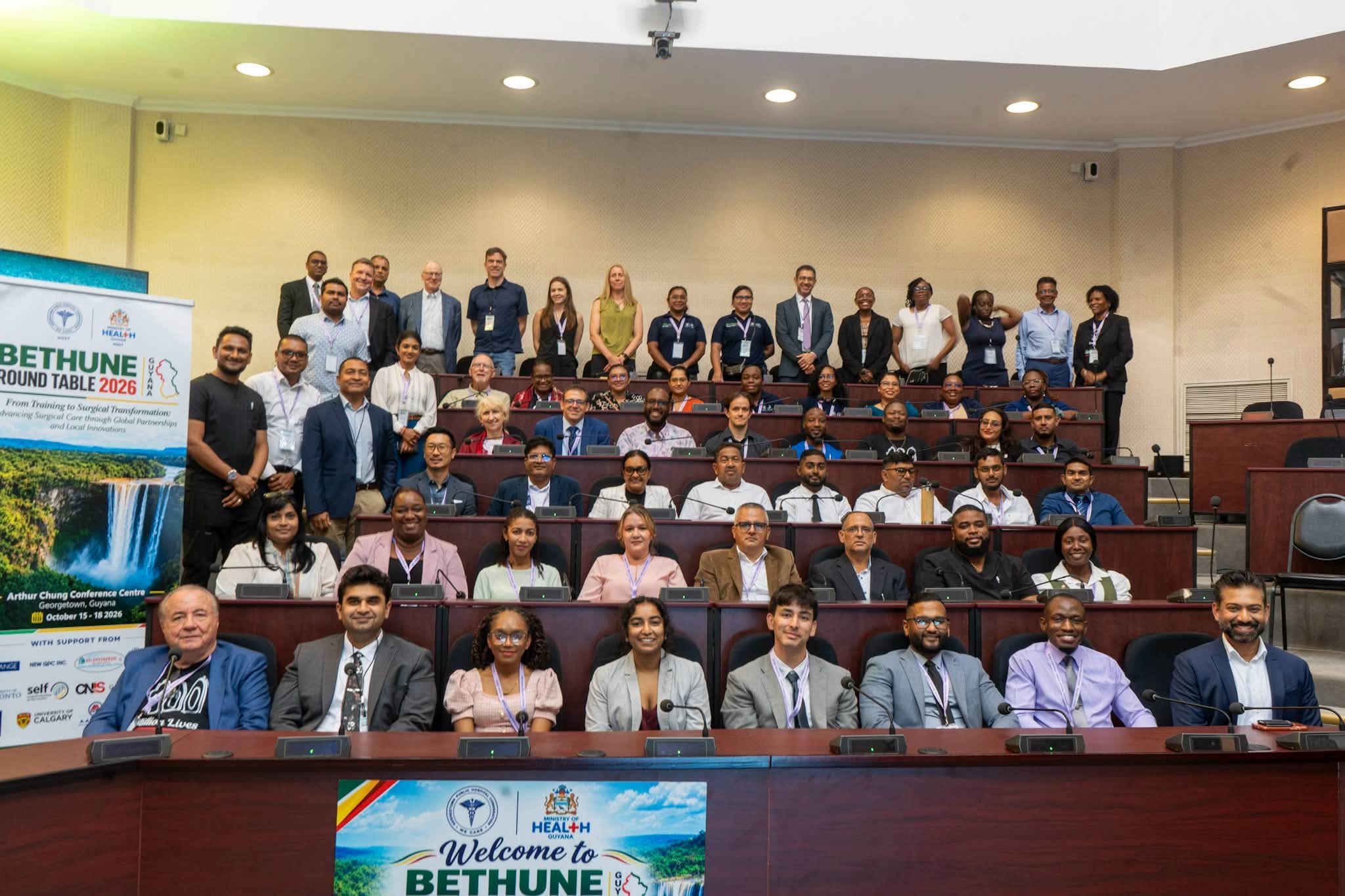
A review presented at the Bethune Round Table 2026 has found that surgical and anaesthesia research publications on Guyana increased after the country’s 2015 oil discovery, but Guyanese researchers held fewer first-author and senior-author positions.
According to a report from the Georgetown Public Hospital Corporation (GPHC), the findings were presented by Dr Ria Jodoh, a Guyanese-born second-year orthopaedic surgery resident at Johns Hopkins University, during the third day of the conference.
Her review recorded 11 publications before 2015 and 30 afterwards, while identifying a decline in Guyanese representation in the two authorship positions. The findings raised questions about local leadership in international research collaborations, GPHC said.
The hospital’s account did not specify the periods covered by the review or provide figures on the decline in first-author and senior-author representation.
The research was among presentations examining access to specialist care, artificial intelligence in cancer research and training to strengthen surgical services in rural communities.
Dr Akesha Murray, a first-year urology resident at GPHC, explored the use of telemedicine to improve access to prostate cancer screening, specialist consultations and follow-up for patients in remote communities.
Her presentation examined how existing telemedicine sites could connect healthcare workers with urologists in Georgetown, facilitating further testing and referrals where necessary.
The proposal comes amid plans to expand the national telemedicine network. DPI reported in February that Health Minister Dr Frank Anthony had announced plans for 50 additional sites during 2026, allowing more hinterland and riverain communities to access consultations with doctors at regional hospitals and in Georgetown. The facilities are also being incorporated into training programmes for healthcare workers.
Dr Hasnan Ahmed, a Canadian general surgery resident and graduate student at the University of Alberta, presented research on the use of artificial intelligence to identify oncology studies among global clinical trials. According to GPHC, the approach could help researchers identify trends and gaps in cancer research and inform future studies.
Vanderbilt University medical student Sebastian Henestrosa, meanwhile, presented an educational intervention involving nurse anaesthetists in Tanzania. His presentation examined how simulation-based training, qualified educators and the development of non-physician anaesthesia providers could strengthen surgical capacity at rural hospitals while maintaining or improving patient outcomes.
A panel discussion, “Developing Leaders in a Changing Healthcare Era,” considered Guyana’s medical workforce, including the effects of migration and past shortages of surgeons and other specialists.
According to GPHC, panellists discussed expanded opportunities for doctors to specialise locally. The hospital reported that Guyana now has 23 postgraduate training programmes and that the number of surgeons practising locally had increased by more than 90 per cent. It did not identify the period or baseline used for that increase.
The discussion also addressed retaining skilled professionals and ensuring that expanded training results in better patient care.










Discussion