
Justice Simone Morris today sentenced Anil Sancharra and Vinod Gopaul to life imprisonment, with no possibility of parole until after serving 35 years, for the slaying of cousins Joel Henry and Isaiah Henry.
The two men were found guilty of the murders on June 9th
The verdicts were returned after more than two hours of deliberations by a 12-member jury following a month-long trial before Justice Morris.
Following the verdicts, the judge ordered psychiatric evaluations and probation reports for both convicted men and adjourned the matter for a sentencing hearing.
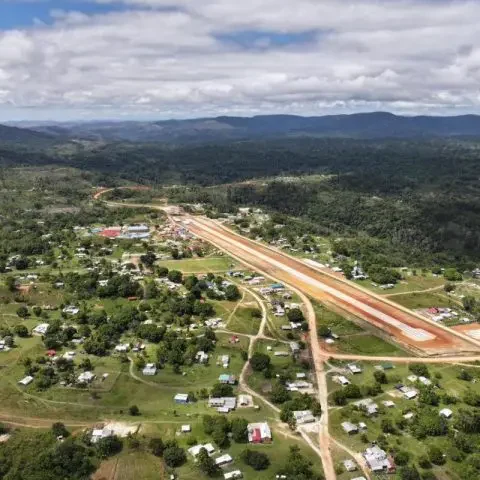
Isaiah Henry, aged 16, and Joel Henry, aged 19, disappeared on September 5, 2020, after heading into the Cotton Tree Backlands, West Coast Berbice. The following day, their mutilated bodies were discovered, sending shockwaves throughout Guyana and attracting international attention.
The killings sparked days of protests and unrest across West Coast Berbice as residents demanded answers and justice for the two cousins. Those demands culminated on Tuesday when jurors unanimously convicted Sancharra and Gopaul on both murder counts.
State’s case
The State’s case, led by State Counsel Marisa Edwards, was built around the testimony of Akash Singh, who became the prosecution’s principal witness.
Singh, was initially considered a suspect during the investigation, but, later emerged as the State’s key witness and the only person who claimed to have been present when the killings occurred.
Throughout the proceedings, it became clear that the prosecution’s case would largely succeed or fail on whether jurors accepted Singh’s account.
According to Singh, he travelled into the Cotton Tree Backlands with Sancharra and Gopaul, where the men maintained a marijuana farm. He testified that the group had established a makeshift camp using branches, bushes, and cut manure bags, and spent time there tending crops.
Singh told the court, that on a later occasion they returned to the area and discovered that marijuana plants and nearby crops had been damaged or destroyed. According to his testimony, discussions were taking place about the destruction when Isaiah Henry and Joel Henry approached.
The witness said an exchange followed and one of the teenagers laughed.
What happened next formed the foundation of the State’s case.
Singh testified that Gopaul attacked one of the cousins with a cutlass while Sancharra attacked the other. He told jurors that both teenagers attempted to flee but were overtaken.
The witness described seeing repeated blows being inflicted and told the court there were “plenty chops.”
According to Singh, the attack was relentless. His evidence was that both cousins suffered multiple injuries before collapsing.
The witness further testified that after the killings, the bodies were tied onto horses and removed from the area. He said that Gopaul instructed him to mark an “X” on the foreheads of the victims before the bodies were transported away.
“I don’t know what the ‘X’ was for,” he told the court.
Singh also described what he said occurred after the killings. According to his evidence, he later disposed of cutlasses and bloody clothing by throwing them into a canal before changing his own clothes.
The witness said both accused threatened to kill him if he revealed what had happened. He said that fear caused him to remain silent for months.
Singh told jurors that he eventually informed his sister and two other persons about the incident, although they reportedly did not believe him.
After his arrest in January 2021, Singh provided information to police investigators and later accompanied officers into the backlands. According to his evidence, he directed investigators to locations connected to the killings.
The prosecution argued that Singh’s testimony provided jurors with a direct account of what happened in the Cotton Tree Backlands. However, prosecutors did not ask the jury to rely solely on Singh. Instead, the State contended that his evidence was supported by medical findings, police testimony, and other witnesses, who testified throughout the trial.










Discussion