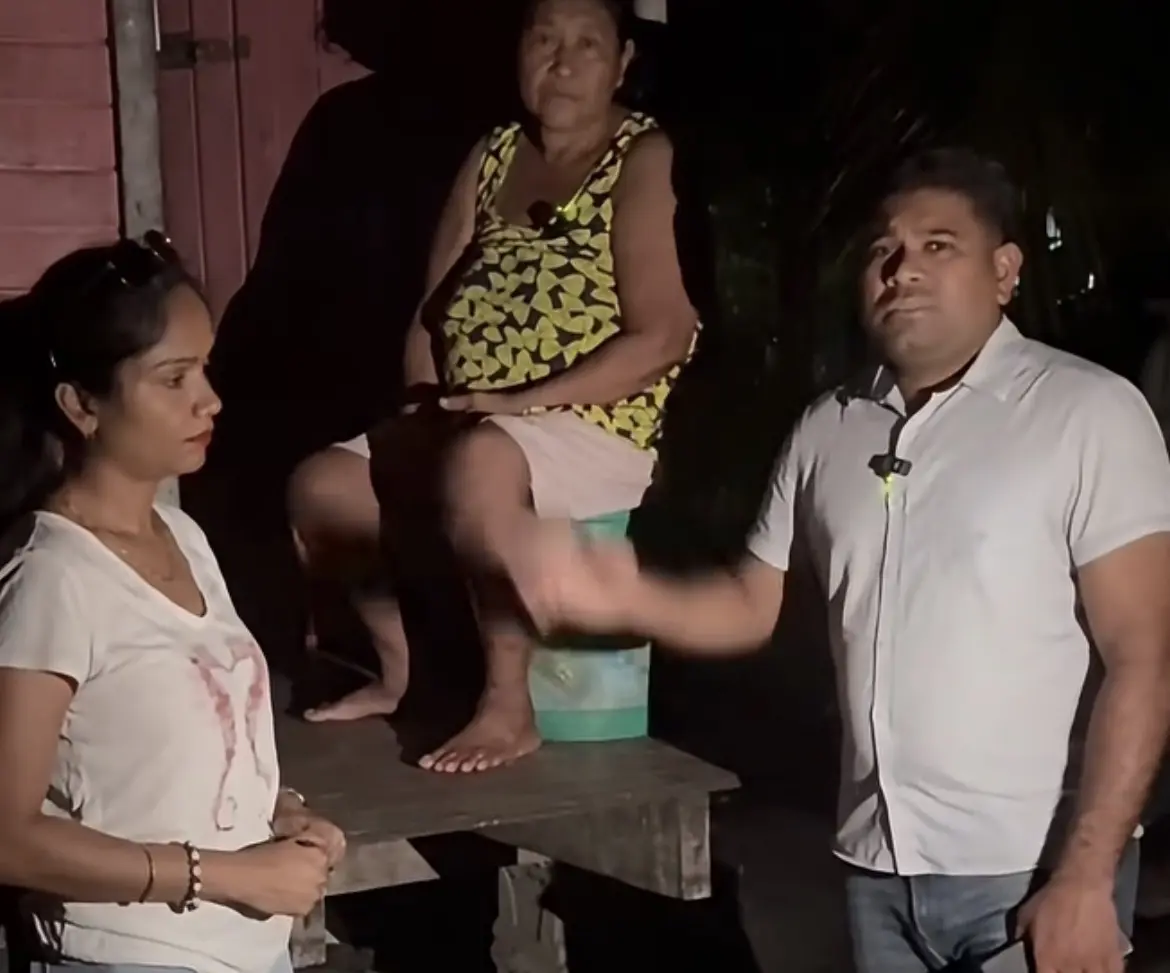
Opposition Leader Azruddin Mohamed has called for residents of Swan to be provided with access to electricity and water, following a visit to the small community on the Linden-Soesdyke Highway where villagers complained of living for years without consistent access to basic utilities and formal documentation for the lands they occupy.
Mohamed visited the community on Thursday evening and met with residents, several of whom outlined the difficulties they face as a result of the lack of basic infrastructure and land tenure.
Swan, according to Mohamed, has a population of approximately 500 residents.
During the visit, Mohamed said he believed the community should be considered under the Government’s model village development initiative, noting that residents should have access to basic amenities, including electricity and water.
“Make Swan one of the model village initiatives to ensure that Swan must have water and electricity,” Mohamed said during the visit.
One elderly resident, who said she has lived in the community for more than 20 years, described the challenges facing residents, particularly after electricity services to some homes were disconnected.
The woman said that residents were now forced to rely on phone lights at night and faced further difficulties because, without electricity, they were unable to charge their phones.
She said many residents could not afford the cost of purchasing replacement electrical wires.
“We’re poor people here,” she said, describing the situation as one of continued struggle.
According to the resident, government officials had previously visited the community and informed villagers that Swan would receive electricity and water. She said residents were subsequently told during another meeting that they would be required to pay for water services, to which they agreed.
However, she complained that electrical wires were later removed, leaving households without electricity.
The woman said she questioned officials about why the wires were being removed without prior notice to the community and expressed concern about elderly persons, children and other vulnerable residents being left without basic services.
“We have senior citizens without water and electricity. This is the basic you should provide for the people,” the resident said.
Mohamed also highlighted the plight of an elderly woman whom he said was unwell and living without electricity, while children were also residing in the household.
He argued that access to electricity and water should be treated as basic necessities and criticised the conditions under which residents were living.
The Opposition Leader suggested that authorities explore the possibility of providing residents with prepaid electricity meters, even where questions remain over land ownership or documentation.
Under such an arrangement, he suggested, residents would be able to purchase electricity before using it, while the authorities could address land tenure issues separately.
Some residents, however, said their lack of formal leases and land documents continued to present a major challenge.
The elderly resident said that despite living in the community for more than two decades, she had not received a lease for the land she occupies, describing the area as a squatting settlement.
She also raised broader concerns about access to land within the community, particularly for younger residents and families who depend on farming for their livelihoods.
The resident said that while houses were important, many residents also needed access to agricultural land to sustain themselves and their families.
“We know about farming. We don’t have no farming land,” she said, arguing that access to land was necessary for residents who could not depend solely on office-based employment.
Residents also used the opportunity to raise concerns about development priorities within the community.
One resident questioned the expenditure on an incomplete community guest house, stating that residents had previously suggested that some available funding be directed towards addressing the community’s electricity problems and other pressing needs.
According to the resident, concerns were raised during community meetings about whether the guest house would directly benefit residents, particularly while some households continue to struggle without electricity.
The resident said the community had suggested that funding be directed towards initiatives for young people, elderly residents and other urgent needs, including assistance with restoring electricity services.
“Right now our children [are] living in the dark,” the resident said, pointing to the challenges families face with cooking, washing, preparing children for school and carrying out other daily activities without electricity.








Discussion