The Public Accounts Committee (PAC) has adopted a proposal to examine the Auditor General’s reports for 2020 through 2024 simultaneously, a move expected to help clear its longstanding backlog and bring parliamentary scrutiny of public spending up to date.
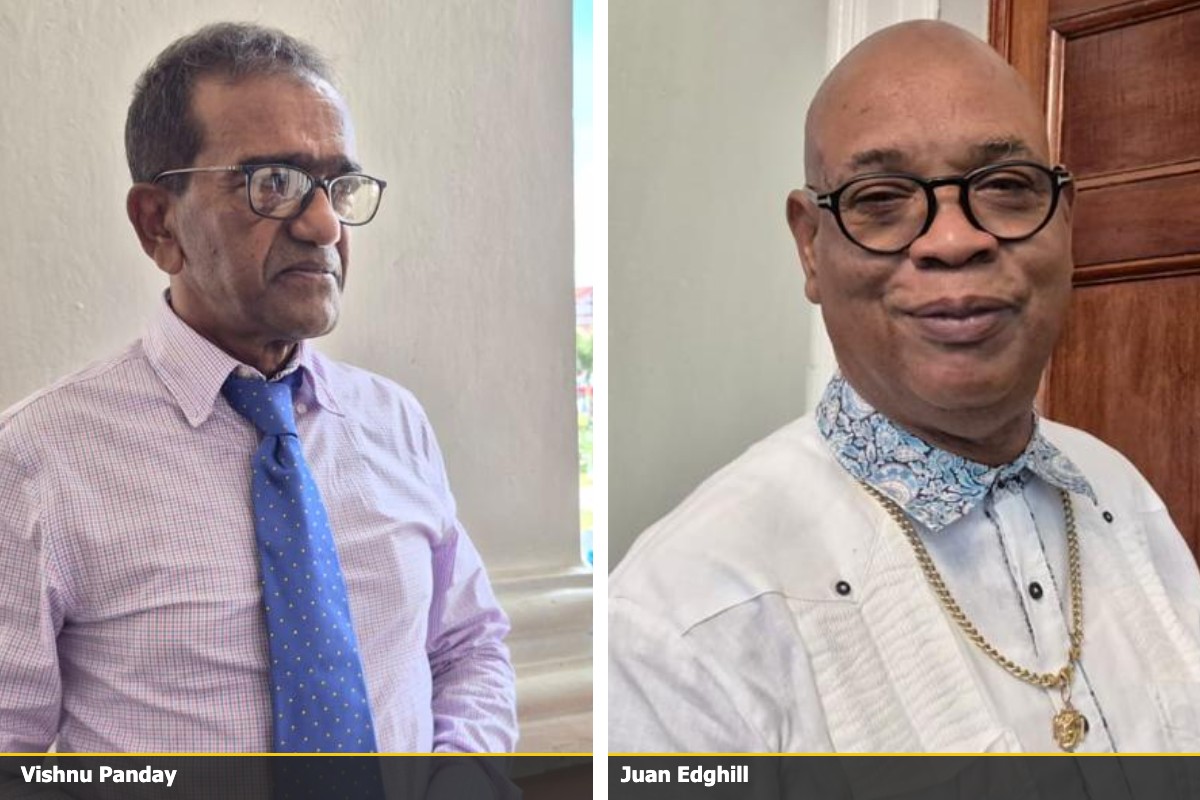
The proposal, presented by Public Works Minister Juan Edghill at the committee’s latest meeting yesterday at Parliament Building in Georgetown, was adopted despite previous objections from government members to the side-by-side examination approach advocated by A Partnership for National Unity (APNU).
Opposition parliamentarian Ganesh Mahipaul said the approach had been advanced by APNU since 2021, but had faced resistance from Edghill and other government representatives. He welcomed the committee’s decision, describing it as a long-awaited acceptance of a proposal the opposition had repeatedly argued would improve efficiency without compromising accountability.
“Today in the Public Accounts Committee, Bishop Juan Edghill piloted a motion asking for a simultaneous examination of the Auditor General’s report from 2020 through 2024,” Mahipaul said, adding that the proposal would reduce the resources and time required for accounting officers to attend hearings, while allowing the committee to address outstanding queries across multiple financial years in a coordinated manner.
Under the arrangement, the PAC will examine the reports for 2020, 2021, 2022, 2023 and 2024 side by side, rather than completing scrutiny of each year before moving to the next.
Mahipaul said the approach would help the committee address the backlog and move towards examining the 2025 Auditor General’s report, which was recently handed over but had not yet been tabled in the National Assembly. He said the process would not mean that outstanding queries would be overlooked or that accounting officers would be allowed to avoid providing explanations. “The same queries that are there in 2020 will be examined paragraph by paragraph,” he said.
Mahipaul explained that accounting officers would be required to prepare for questions relating to all five reports during the relevant sitting. Where an officer could not adequately answer a query, the committee would leave the relevant paragraph open and require the officer to return with the necessary information. “It is an opportunity for us to clear the backlog. It is a welcomed opportunity. It is something that we support and something that we have been fighting for the longest while,” he said.
Meanwhile, Edghill told Kiskadee Watch that the proposal was intended to move the committee beyond repeated discussions about the backlog and towards a practical plan for resolving it.
He noted that the number of outstanding audit queries had declined significantly, from approximately 800 in 2019 to about 179, making it more feasible to examine several years of reports during the same sitting.
The minister said the previous approach often required accounting officers to attend separate hearings to answer queries relating to different financial years, even when information supplied in a subsequent year had already resolved some outstanding matters. Under the new arrangement, accounting officers would be able to address outstanding queries across the relevant years at once, reducing the need for repeated appearances and travel.
Edghill said the Audit Office and the clerk of the committee would prepare a matrix setting out the agencies to be examined and the outstanding matters each would need to address.
The committee would then review the matrix and allocate time for each agency based on the number of outstanding paragraphs requiring examination. He said the aim was to ensure that the process was organised and that each agency received sufficient time to respond to the queries raised.
Asked how quickly the backlog could be cleared, Edghill expressed confidence that it could be eliminated within a year if the committee committed to longer sittings. “If we do that once a month, you know how many agencies we will get out of the way? We can finish all the backlog within a year. That is my belief,” he said.
He rejected concerns that the simultaneous examination of five reports would result in rushed proceedings. “No rushing. We don’t want any rushing,” Edghill said, adding that the committee would determine the time required for each agency after reviewing the proposed schedule.
He said the reduction in outstanding queries and the closure of some matters in subsequent audit reports would help make the process more manageable.
PAC Chairman Vishnu Panday had raised concerns that an accelerated approach could undermine detailed scrutiny of public accounts.
In September, Panday told Kiskadee Watch that he was awaiting the details of Edghill’s proposed plan but would not automatically support combining the outstanding reports if doing so compromised the committee’s oversight responsibilities.
“Edghill’s statement on fast-tracking the backlog of work has to do… to avoid scrutiny and extensive details on the AG’s report for the backlogged years,” Panday said at the time.
He had also indicated that he would not be inclined to support a combined approach unless he was satisfied that it made sense, insisting that every report must be examined in sufficient detail to meet the public’s expectations.
Panday had pointed out that the PAC was approximately six years behind in examining the Auditor General’s reports. Based on the committee’s historical pace of completing roughly one year’s reports annually, he said the backlog could persist until 2032 if the existing approach continued.
The chairman had also identified infrequent meetings and the unavailability of committee members as factors contributing to the delays.
In a statement following the decision yesterday, APNU said the PAC had adopted a recommendation the opposition had advanced for years as a means of addressing the backlog and strengthening parliamentary oversight.
The party said its parliamentarians had previously argued that examining the reports side by side would allow the committee to review several years of public accounts simultaneously, saving time and resources while helping to address concerns about delays in accountability for older expenditure.
APNU also pointed to previous resistance from government representatives, including objections to a similar proposal in 2022 to examine the 2019 and 2020 reports together.
The party said the latest decision represented a significant procedural development, allowing the committee to move away from a system in which outstanding reports accumulated faster than they could be examined.
Mahipaul, meanwhile, said APNU remained committed to ensuring that the new approach delivered results without sacrificing the committee’s responsibility to question accounting officers and scrutinise public expenditure.










Discussion