-warns of costs of going green
President Irfaan Ali has called for a coordinated regional plan to attract investment in ports and shipping, while warning that the Caribbean must carefully assess the costs of maritime decarbonisation and the consequences for consumers and businesses.
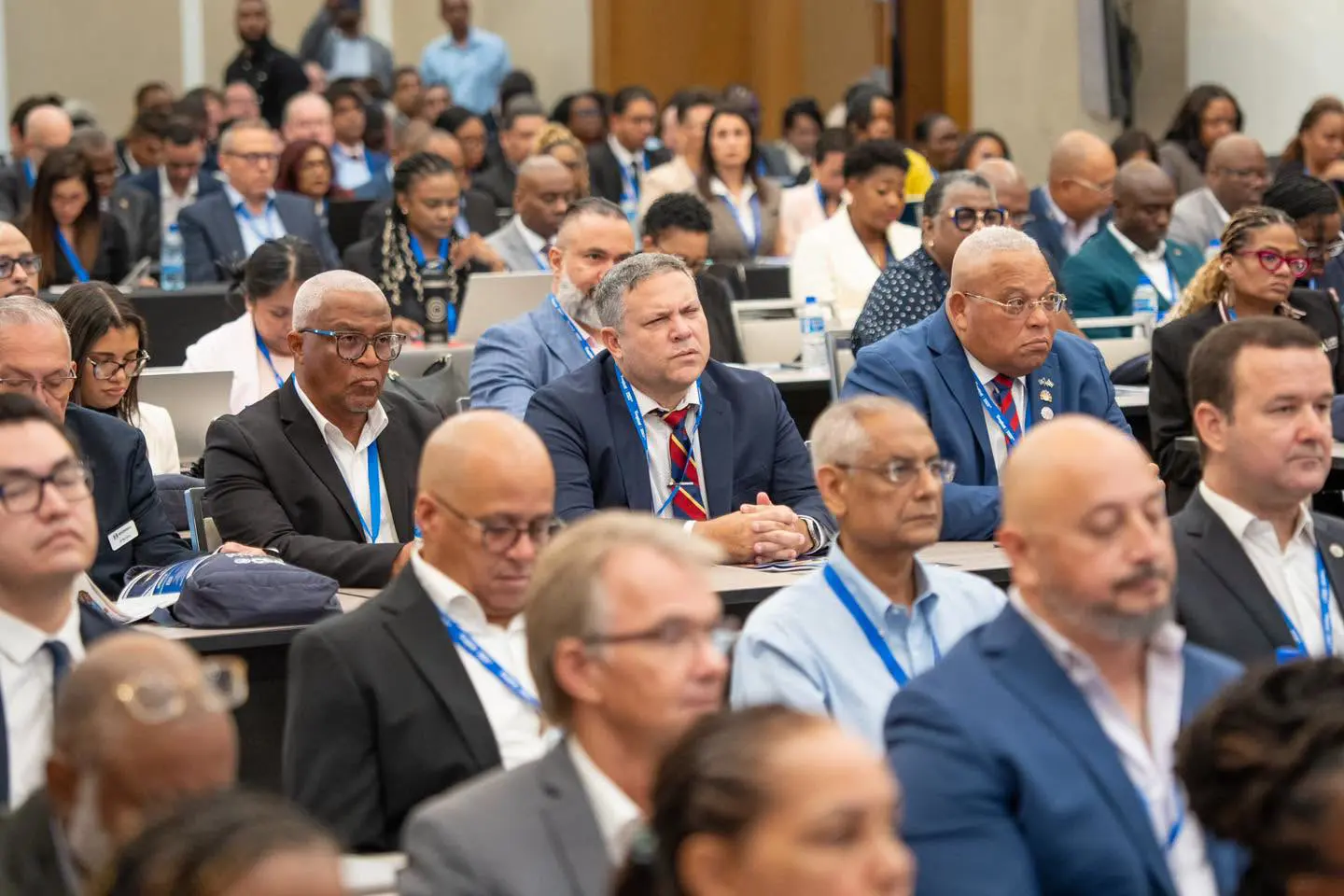
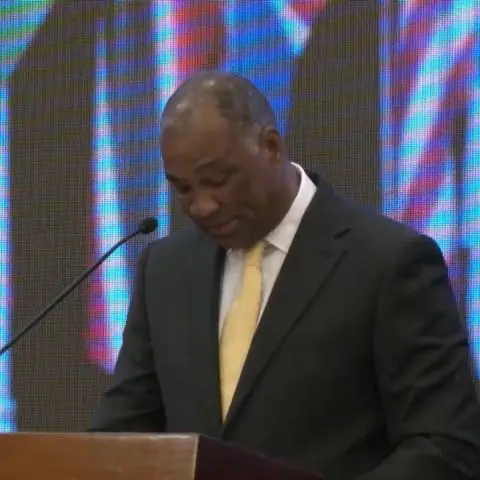
Addressing the opening of the Caribbean Shipping Association conference in Guyana at the Marriott Hotel in Kingston, Ali said high freight costs, ageing port infrastructure and unreliable connections were undermining regional competitiveness and contributing to the cost of living.
He urged shipping operators, governments and development banks to move towards a comprehensive policy and financing framework capable of attracting the capital needed to modernise the sector.
“Ultimately, high shipping costs become a cost of living problem for people and a competitiveness problem for businesses,” Ali said.
The President also challenged participants to examine how the transition to cleaner shipping fuels would affect Caribbean economies, including who would bear the cost of new infrastructure and more expensive fuels.
While supporting decarbonisation, he said the region needed independent analysis to guide its positions on global policies.
“This net zero conversation must not just be a sexy conversation for you. It must be a practical conversation,” he said.
Ali argued that investment in facilities to receive, store and distribute cleaner fuels would carry substantial costs which would eventually have to be recovered through the logistics system.
“No one is taking that cost as a social good. That cost has to be passed on to someone,” he said.
He also pointed to uncertainty over which fuels would become commercially viable, citing biofuels, green methanol, green ammonia, hydrogen, battery electricity and liquefied natural gas among the options being considered.
Shipowners, he said, faced difficult investment decisions without sufficient certainty about fuel availability, production locations, prices and the security of future supplies.
Ali urged the industry to support policies which balanced environmental protection with the interests of Caribbean businesses and consumers.
Investment and connectivity
The President identified five principal challenges facing regional shipping: high costs and expensive connections, uneven port development, weak trade between Caribbean countries, climate-related disasters and geopolitical instability.
Small markets and limited cargo volumes made direct shipping services difficult to sustain, he said, while imbalances between imports and exports meant vessels often carried substantially less cargo on return journeys.
Dependence on transshipment added further costs and exposed the region to delays beyond its control.
Ali called for closer cooperation among shipping lines, port operators and cargo owners to coordinate schedules, reduce unnecessary handling and improve service reliability.
On port infrastructure, he said shortcomings extended beyond physical capacity to equipment, storage, navigational depth, security, technology and safety.

“We cannot aspire to world-class maritime connectivity while accepting the destructive bottlenecks that prevent our ports from operating at their full potential,” he said.
Turning to Guyana, Ali said the government was advancing plans for a deep-water port linked to Brazil and the wider region. He also pointed to the need for dredging and improvements to maritime access as economic activity expanded along both banks of the Demerara River.
He estimated that private investment in shore bases, laydown yards and other port facilities along the river over the past four to five years exceeded US$1 billion.
Further expansion, he said, would require substantial capital and appropriate public-private partnerships. He urged participants to focus on financing mechanisms and investment models that could turn regional ambitions into projects.
Trade barriers
Ali said better ports and additional vessels would not, by themselves, resolve the obstacles to trade within the Caribbean.
Customs procedures, differing regulatory and documentation requirements, and non-tariff measures continued to frustrate the movement of goods, he said.
“Our producers cannot take advantage of regional market opportunities if they cannot secure affordable transportation and cold storage,” he said.
He called for stronger cooperation among customs administrations, governments, shipping operators and port authorities to simplify procedures and harmonise documentation where possible.
Ali also outlined opportunities arising from Guyana’s plans for cold storage, a food terminal and increased livestock production. These developments, he said, needed to be integrated with regional shipping services.
He suggested that the region examine how its natural gas resources could support lower energy costs and the development of refuelling facilities.
On climate risks, Ali urged investment in stronger port facilities, drainage, coastal protection and resilient electricity and communications systems, alongside emergency plans to restore operations after disasters.
Climate resilience, he said, should be incorporated into the design of new facilities.
The President also called for greater storage capacity for fuel and other essential supplies, and more diverse sources of imports, to reduce exposure to conflict and disruptions in global shipping.
Bulk storage could provide a buffer when deliveries were delayed or prices rose sharply, giving governments time to respond without resorting to costly emergency purchases, he said.
Ali urged the association to lead efforts to improve efficiency, expand capacity and secure financing and technical support for more resilient regional shipping infrastructure.











Discussion