
We Invest in Nationhood (WIN) has drafted legislation which would bring the appointments of all members of the Constitution Reform Commission (CRC) to an end and reconstitute the body to reflect the parties currently represented in the National Assembly.
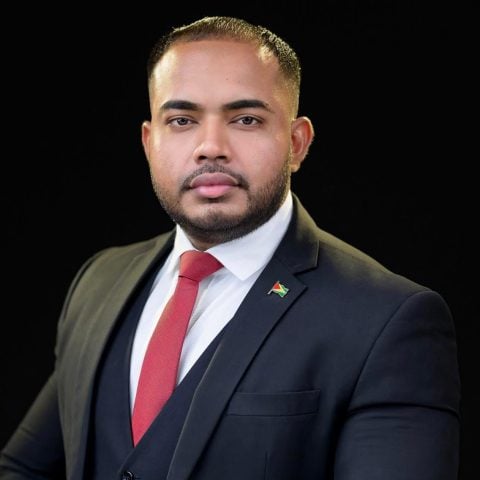
The proposed Constitution Reform Commission (Amendment) Bill 2026, in the name of Opposition Chief Whip Tabitha Sarabo-Halley, would replace references to named political parties in the existing law with the categories of government and non-governmental parliamentary parties.
Under the proposal, the President would nominate six members, five representing the government and the other serving as chairperson.
The Leader of the Opposition would nominate another five members after “meaningful consultation” with the other non-governmental parties represented in the National Assembly.
Of those five, three would be selected by the Leader of the Opposition and two by the parliamentary opposition parties other than the party which nominated the Opposition Leader.
The civil society representation prescribed by the existing legislation would remain.
The proposed legislation defines the government as the party or coalition forming the government and represented in the National Assembly. A non-governmental political party would be any parliamentary party which does not form part of the government.
This would remove the present law’s reliance on the parties which comprised the National Assembly when the Constitution Reform Commission Act was passed in 2022.
WIN won 16 seats at the September 2025 elections and became the main parliamentary opposition, but it has no representative on the CRC.
The Commission still includes a representative nominated under the former list joinder comprising A New and United Guyana, the Liberty and Justice Party and The New Movement, although none of those parties returned to Parliament in 2025.
Attorney Nigel Hughes, who was appointed under the APNU+AFC allocation, resigned from the Commission after the Alliance For Change failed to win a parliamentary seat.
The proposed amendment contains transitional provisions under which every existing appointment would end when the new law came into operation. All seats would be declared vacant and the Commission would then be reconstituted under the revised formula.
However, the bill seeks to preserve all work already undertaken by the Commission, including its decisions, reports, consultations, proceedings, submissions, minutes and other records.
According to its explanatory memorandum, the amendment is intended to provide an adaptable framework which would allow the Commission’s political membership to reflect changes in Parliament after elections without requiring parties to be identified by name.
The proposal comes days after Attorney General Anil Nandlall SC disclosed that he had abandoned a government plan to amend the legislation.
Nandlall had told Stabroek News in October 2025 that the Act would have to be amended to reflect the new parliamentary configuration. He said then that adjustments had already been made to a draft bill.
Last week, however, Nandlall said that “upon mature reflection” he had concluded that no amendment was necessary because the Commission had been properly constituted under the law in force when its members were appointed.
“The commission was constituted at the time when it was constituted in accordance with its governing legislation, and I persuaded myself thereafter that there is no need to modify or alter the legislation,” he said.
In July, Nandlall similarly told Kiskadee Watch that the Commission was properly constituted and would continue its work despite WIN’s absence.
Sarabo-Halley had argued that a commission charged with recommending changes to the supreme law should not operate as though the 2025 elections had never occurred.
“There is a fundamental difference between being consulted and being represented,” she said, noting that members of the public could submit proposals but only commissioners would deliberate and determine the recommendations ultimately sent to Parliament.
She maintained that the proposed change was not designed solely to secure representation for WIN but to ensure that future commissions reflected the parliamentary configuration resulting from each election.
CRC Chairman, retired Chancellor Carl Singh, previously acknowledged that altering the membership would require legislative intervention since the Act identified specific parties entitled to nominate members.
The Carter Center, in its report on the 2025 elections, also recommended that the Commission’s composition be reviewed to reflect the post-election political landscape and ensure that all parliamentary parties participated in the reform process.
The 21-member Commission was sworn in during April and May 2024. It is chaired by Singh and includes government and opposition nominees as well as representatives of labour, Indigenous organisations, the private sector, women, youth, farmers, religious organisations and the legal profession.
Its work was suspended during the 2025 election campaign. The Commission has since invited written proposals on constitutional reform, with submissions open until December 31 and public consultations expected to follow.
Attorney and chartered accountant Christopher Ram has criticised the pace and composition of the process and called for the Commission to be dissolved, with constitutional reform returned to the Parliamentary Standing Committee established under Article 119A.
The WIN bill would instead retain the Commission but replace its entire membership under the proposed new formula.










Discussion