Last week, we began a discussion of the 2006 Mid-Year Report on the performance and state of affairs of the economy. The report is, however, yet to be laid in the National Assembly although Section 67 of the Fiscal Management and Accountability Act requires this to be done within 60 days of the close of the half-year. This is because the Assembly was in recess from 10 August to 9 October. It is unclear when it will resume sitting to enable the report to be laid. The 2025 Auditor General’s report on the public accounts is also due for presentation to the Assembly.
We pointed out that by the time the Assembly reconvenes it will be too late for legislators to consider the report and to take appropriate action based on any significant variance in relation to planned performance as reflected in the National Budget, or any new developments that might have emerged since the approval of the Budget. Additionally, in the past, there was no discussion or debate on the report in the Assembly, which is significant shortcoming in our system of public financial management and accountability. In this regard, we suggested that the Minister consider presenting to the Assembly future Mid-Year Reports at the end of July to enable the Assembly to consider them. We also stated that it seems inappropriate for the Assembly to spend approximately three weeks every year to consider a draft National Budget before approving it but the half-yearly results on its execution is not made available to them in a timely manner.
Former Minister of Finance Winston Jordan in a text message to me pointed out that the mid-year reports for 2016, 2017 and 2018 were all presented to the Assembly within the statutory deadline of 29 August. The 2019 report was, however, not presented until 9 September 2020 but was prepared and released on 9 August 2019. There was no mid-year report for 2020. The former Minister acknowledged the need for the report to be debated in the Assembly as in the case of Trinidad & Tobago and Jamaica. We again call on the authorities to ensure that all future mid-year reports are prepared, tabled and discussed/debated on by the Assembly before it goes into recess.
So far, we dealt with the real growth in the Gross Domestic Product (GDP), sectoral performance and the performance of the extractive industries. The overall real GDP growth was 33.3 percent, while the non-oil economy grew by 10.1 percent. In terms of sectoral performance, the agriculture, forestry, and fishing sector contracted by 0.5 percent, while the sugar and rice growing subsectors expanded by 19.3 percent and 4.4 percent, respectively. Similarly, the livestock, fishing and forestry subsectors grew by 17.5 percent, 4.1 percent and 15.4 percent, respectively. The other crops subsector, however, contracted by 6.4 percent.
The mining and quarrying sector grew by 40.7 percent, with the oil and gas industry expanding by 41.3 percent. The bauxite and gold mining subsectors also expanded by 7.3 percent and 11.3 percent, respectively, while the manufacturing, services and construction sectors grew by 3 percent, 7.2 percent and 24.7 percent, respectively.
Since the extraction and production of crude oil in 2020, there has been a significant emphasis on total GDP growth when in fact 87.5 percent of that growth relates to oil production that leaves our shores since it belongs to ExxonMobil and its partners. That apart, crude oil is a finite resource that is subject to fluctuation in production and volatility in prices, especially considering the war in the Middle East. In the circumstances, a more realistic measure for the long-term growth and development of the country is the non-oil GDP growth. Greater emphasis should therefore be placed in having a sufficiently diversified economy to cushion possible adverse effects as regards oil production. As the saying goes, ‘do not put all your eggs in one basket’.
In today’s article, we conclude our discussion of the 2026 Mid-Year Report.
Balance of Payments
The Current Account recorded a surplus of US$3,340.3 million, compared with US$197.9 million in the first half of 2025. This was mainly due to an increase in merchandise trade. Crude oil earnings expanded by 82.1 percent on account of increases in world market prices, while non-crude oil exports increased by 24.6 percent. On the other hand, there was a significant increase in the deficit in the Capital Account from US$175.1 million in the first half of 2025 to US$3,624.7 million. This was due mainly to a net increase in foreign direct investment outflows arising from an increase in cost recovery from the Stabroek Block on account of higher oil prices and increased production.
Taking the above into account, the overall Balance of Payments recorded a deficit of US$293.9 million in the first half of 2026, compared with a surplus of US$10.3 million for the corresponding period last year.
Inflation
The inflation rate was 4.0 percent in June 2026, compared with 4.2 percent in June 2025. Food prices increased by 6.7 percent, due mainly to imported inflation, increased demand for food supplies, retail markups, and unfavourable weather conditions. The end-of year inflation is projected at 4.3 percent. The reality on the ground, however, tells a different story with the unprecedently high cost of living. While the cash grants offer some measure of relief, it is a stop-gap approach to dealing with the rising cost of living and is not sustainable.
Interest rates
Interest rates remained stable at the end of the first half of the year, compared with the position at the end of 2025. The yields on 91-day, 182-day and 364-day Treasury Bills were 1.10 percent, 0.99 percent, and 1.09 percent, respectively. At the commercial banks, the savings rate and the weighted average lending rate were 0.81 percent and 7.72 percent, respectively.
Exchange rates
The official exchange rate of the Guyana dollar to the US dollar remained at $208.5. However, the market mid-rate from $220.6 to $223.7 over the period under review. Recently, there has been a significant shortage of foreign currencies, with commercial banks rationing whatever little they had. Such shortages have the effect of increasing the exchange rates – arguably a devaluation of the Guyana dollar – and the continued increase in the cost of goods and services which the consumer ultimately has to bear. All of this is happening at a time when the value should have appreciated, considering the significant increase in foreign inflows arising from Guyana’s share of oil production. Are we not therefore witnessing the reverse effects of the Dutch disease as it relates to exchange rates?
Central Government revenue
Current revenue collections for the first half of the year, inclusive of Natural Resource Fund (NRF) withdrawals, GRIF inflows and carbon credits, amounted to $493.9 billion, slightly less than the amounts collected for the corresponding period last year. Tax and non-tax revenue accounted for $279.5 billion, an increase of $44.1 billion compared with the corresponding period last year. NRF withdrawals amounted to $212.1 billion, compared with $249.6 billion in the first half of 2025, a decrease of $37.5 billion. The projection for revenue for 2026 remains the same at $1.067 trillion, as per the original budget.
Central Government expenditure
Total Central Government expenditure increased by 11.5 percent from $537.8 billion to $599.8 billion in the first half of 2026, compared with the position in the corresponding period last year. Current expenditure was $351.0 billion while capital expenditure accounted for $248.8 billion. Total expenditure is projected to reach $1.574 trillion by the end of the year, exceeding the budgetary allocation of $1.519 trillion. It therefore means that a supplementary estimate of $55 billion will have to be approved by the Assembly later in the year.
Employment costs amounted to $77.8 billion, an increase of 18.8 percent. This was due mainly to the eight percent salary increase as well as additional recruitment. Expenditure on goods and services was $107.3 billion, an increase of 22.5 percent resulting mainly from the payment of the $100,000 cash grant and additional spending on goods and services.
In relation to capital expenditure, amounts totalling $248.9 billion were expended, representing a marginal increase compared with the corresponding period last year. Total expenditure for 2026 is projected at $829.7 billion, an increase of $50.1 billion on the original budget. This is due to additional investment in power generation and distribution, housing, and public infrastructure projects.
Taking the above into account, the fiscal deficit for the first of 2026 was $195.9 billion and is expected to reach $507.4 billion at the end of the year.
Public debt
The total public and publicly guaranteed debt was US$8.573 billion at the end of June 2026. The external debt amounted to US$3.306 billion, accounting for 38.6 percent of total debt. The domestic debt was US$5.267 billion, or 61.4 percent of the total debt, of which Treasury Bills accounted for about 84.4 percent. There was, however, no mention of the debt-to-GDP ratio which is a measure to assess the sustainability of the debt.
In past reports, this ratio was calculated using the total GDP which resulted in a lower debt-to-GDP ratio compared with a situation where the non-oil GDP is used instead. Knowledgeable persons have calculated the debt-to-GDP ratio using the non-oil growth and came up with a ratio of 150 percent, raising serious questions about the sustainability of the debt should oil production as well as oil prices decline significantly in the medium- to long-term.
Natural Resource Fund
During the first half of 2026, Guyana received US$1.779 billion and US$218.4 million in oil revenues and royalties, respectively. The balance on the NRF at the end of June 2026 was US$4.294 billion, after taking into account withdrawals totalling US$1.020 billion.
According to the report, ‘rapid development and elevated crude oil prices accelerated cost recovery in the Stabroek Block… As gross revenue increases and the cost bank reduces, the cost-oil deduction falls toward current operating costs. Guyana will receive more profit oil, consistent with the Agreement’. The report, however, emphasised that the clearing of the historical cost bank balance does not by itself deliver a 50 percent share of gross revenue to the Government, and that the Stabroek Block partners would continue to recover current costs, lower than 75 percent of gross revenue, with the Government receiving more than 12.5 percent of gross revenue in profit oil.
With the additional lifts and higher crude oil prices, petroleum deposits for the year are projected to be US$6.498 billion. Guyana is expected to earn US$5.973 billion from the sale of its share of profit oil, and US$508.1 million in royalties. Withdrawals are expected to be US$2.374 billion in accordance with the NRF Act 2021.
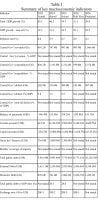
Summary of key macroeconomic indicators
Table I provides a summary of the key macroeconomic indicators for the years 2023 to 2025 along with the results for the 2026 half year and projections for 2026.







Discussion