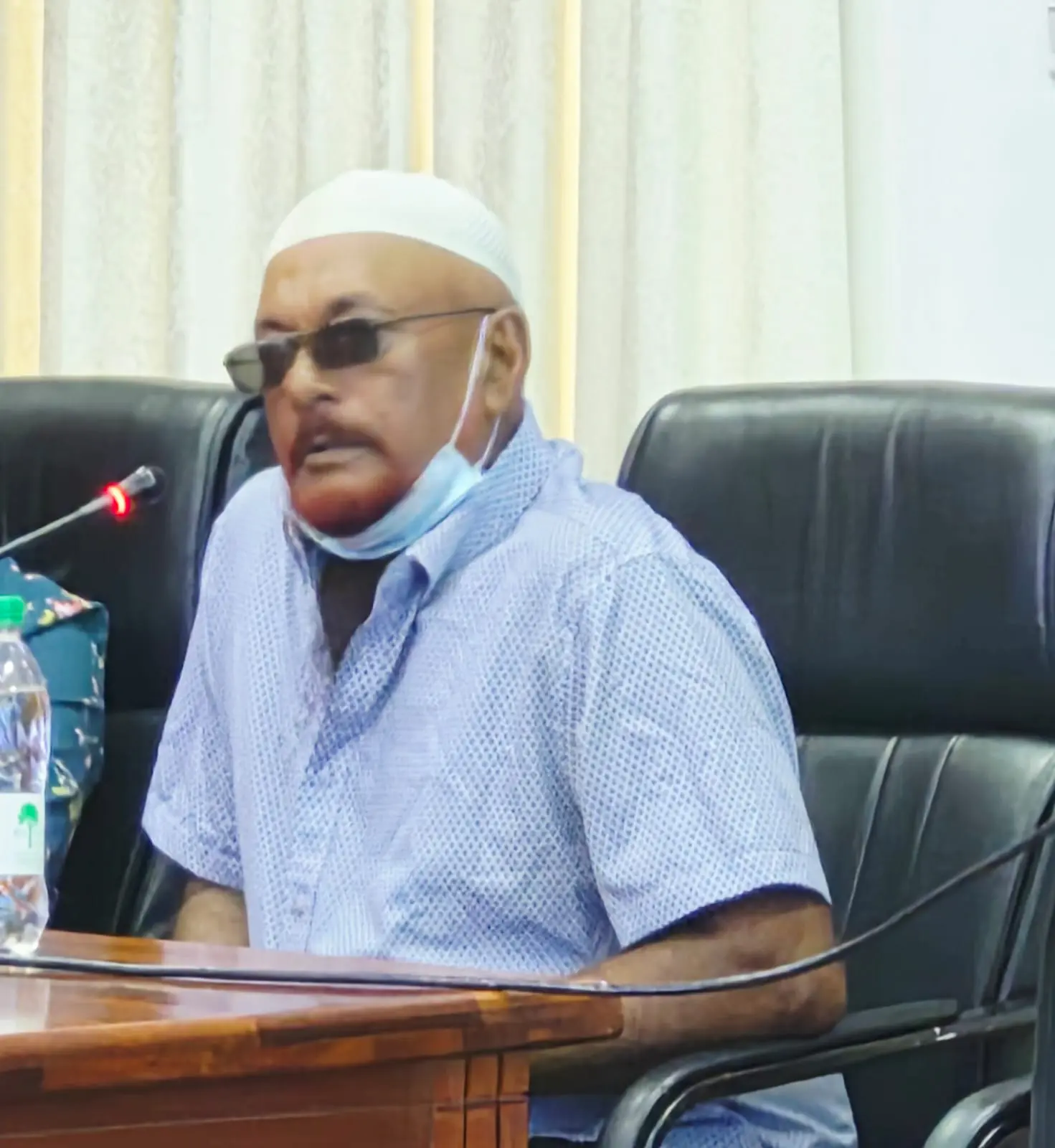
Ramratan Singh Doodnauth, a passenger on the ill-fated MV Barima recalled yesterday how he warned the boat’s marine superintendent last July 18 that cargo was obstructing passageways and passengers could become trapped in an emergency, but no goods were moved despite his concerns.
Seventy-three persons died and another 30 are missing and presumed dead after the ferry capsized. Seventy-six persons were rescued.
Doodnauth, a Port Kaituma businessman who had travelled on the boat every fortnight for more than 15 years, told the Commission of Inquiry (CoI) that the last trip was significantly more heavily loaded than previous trips and that there was barely enough room for passengers to move around.
He said he specifically approached the Transport and Harbours Department’s marine superintendent and warned that passengers could be trapped if an emergency occurred. He even asked that some of the cargo be moved to create more passageways.
However, responding to Commissioner Nyree Dawn Alphonso, Doodnauth shared that nothing was moved and the goods remained in place.
Doodnauth described the passenger accommodation as extremely congested, with groceries, including onions, potatoes and garlic, piled around seating areas and along the railings. Wooden poles had also been installed to secure cargo and prevent it from falling overboard, further restricting the available space.
He said goods were stacked so high that there was insufficient clearance to hang hammocks comfortably, while cargo had also been placed in front of the washroom entrance. “I already knew we were going to be trapped in here,” he told the commission, reiterating that he had anticipated the danger because of the way the boat was loaded.
Doodnauth said he was positioned at the stern, or rear, of the vessel when it began to capsize and believes he was among the first passengers to escape because he was near the railing, while others were trapped between the groceries and other cargo.
He said those caught among the goods had difficulty getting out and recalled that a man and two of his children died after becoming trapped.
Doodnauth also described the amount of cargo loaded onto the vessel as far greater than what he had experienced during his previous journeys. He recalled seeing groceries placed inside the vessel’s hatch, on the passenger deck, near the captain’s bridge and on the roof. Forklifts were continuously moving goods at the wharf, while pipes, tanks, other materials and a generator were also loaded.
He said the generator was strapped down, but he believed the securing arrangements were insufficient for its weight. He further recalled hearing a cracking sound as the vessel tilted, which he believed came from the railing or side of the vessel being struck by shifting cargo.
Doodnauth also called attention to the number of passengers aboard, recalling that a security officer had indicated that approximately 144 people were already on the vessel, with another 40 expected to board.
Commissioner Andrzej Jasionowski also questioned Doodnauth about his 15 years of experience travelling aboard the MV Barima, seeking to establish whether the conditions on the July 18 voyage differed from previous journeys.
Doodnauth confirmed that although he had previously experienced rough seas, during which water washed onto the deck and goods occasionally fell overboard, he had never feared that the vessel would sink. However, he said this last trip was different because of the excessive amount of cargo and the restricted space available to passengers.
Doodnauth told Commissioner Hayden Pritchard that both engines had shut down while the vessel was midstream, leaving it without propulsion or control. He said the vessel subsequently began moving from side to side before tilting sharply and capsizing.
Doodnauth further recalled that he managed to grab a yellow container after reaching the surface of the water and held onto it while repeatedly pouring water out of it to stay afloat. He said he was eventually rescued by Coast Guard personnel after sunrise and transferred to another vessel before being taken towards the Pomeroon area.
He told the commission that he sustained lung damage during the incident and was receiving medical treatment.
Doodnauth, who said he travelled to Georgetown every two weeks to purchase goods for resale in Port Kaituma, testified that he had frequently observed the MV Barima carrying heavy loads on previous journeys. However, he stressed that the July 18 trip was exceptionally overloaded.
He also questioned the response to survivors during the rescue operation, alleging that personnel were not adequately prepared to treat those recovered from the water.








Discussion