
Vendors welcomed the reopening of the Kitty Municipal Market yesterday, nearly eleven years after rehabilitation began, expressing hope for improved business while some raised concerns about stall rents and space.
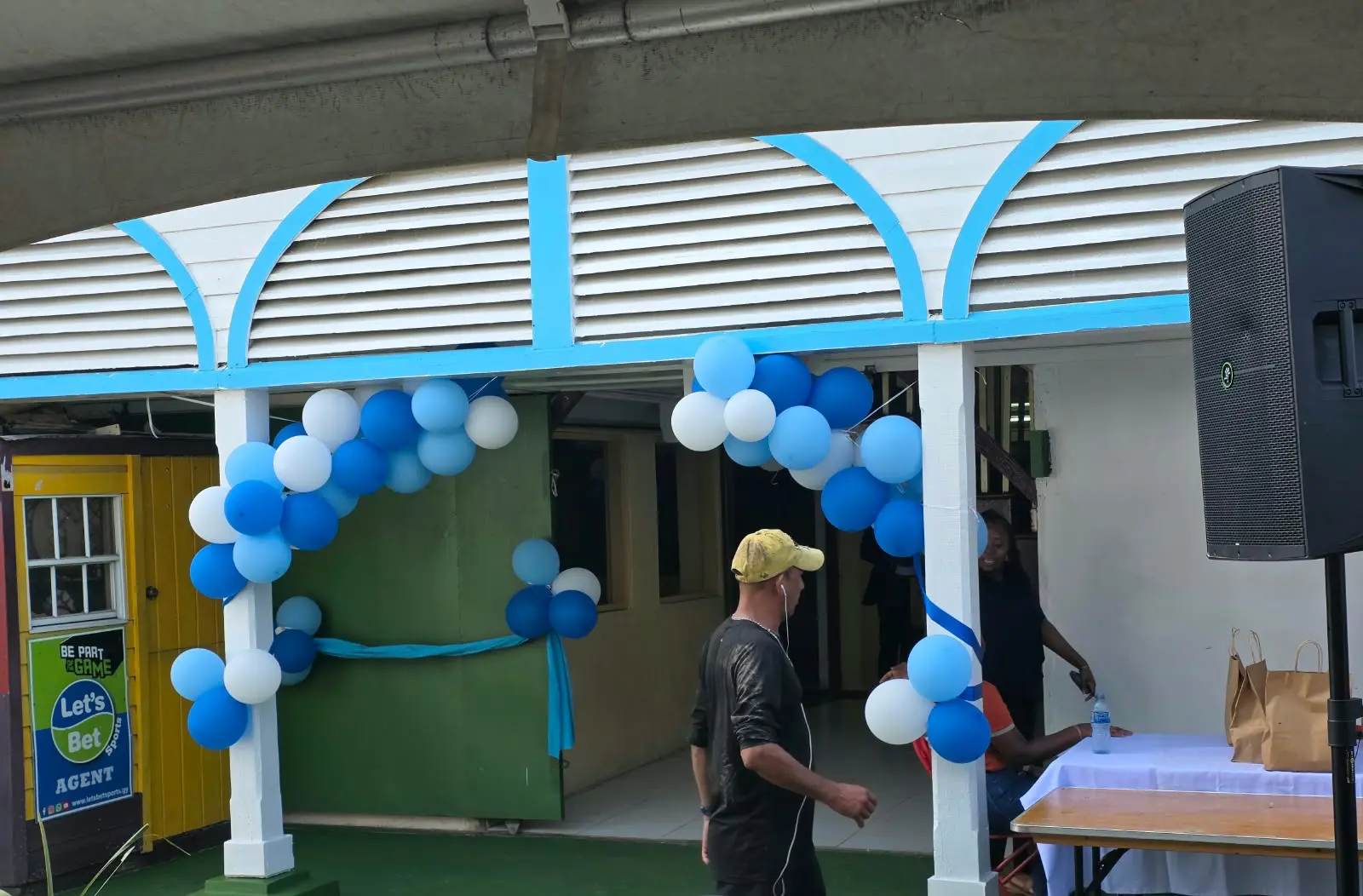
Several vendors had already moved into their stalls when Kiskadee Watch visited, while others were preparing to begin trading.
Jacklyn Richmond, who lives in Guyhoc Park, said she had waited years for the market to reopen and had been selling on nearby streets in the meantime.
“I’m keeping a positive outlook. I’m actually from Guyhoc Park but I’ve been waiting for the market to open to sell right here in Kitty,” she said.
A footwear vendor said he had been trading for approximately two decades and looked forward to developing his business in the refurbished building.
“I intend to have my business coming new and improved, bigger things coming,” he said.
“We’re happy we have this space now and we want to keep it maintained so we can make a living.”
Another vendor, who gave her name only as Singh, said she had been vending for 23 years and began selling at Kitty Market in 2003. Her main concern was the monthly rental charge.
“The only thing I really studying is the rent, the rent is a bit high, my stand I paying $32,200,” she said.
However, a pharmacist preparing to operate a drugstore said he was comfortable with his $28,000 rental charge, although space was a concern.
“I’m bringing my drugstore. If I could’ve set up today and had my stuff to show I would’ve,” he said, adding that the reopening would make it easier to sell his products.
The stalls observed by Kiskadee Watch face one another across walkways and are equipped with individual ceiling lights, three shelves and shutter doors. They appeared relatively similar in size to stalls at Bourda Market.
Difficulties
At yesterday’s opening ceremony, City Engineer Kabila Hollingsworth acknowledged that procurement difficulties, successive evaluations and inspections had contributed to delays.
“Our challenges ranged from the issue of procurement of materials and time and also from the issues dealing with new evaluations, new inspections from time to time,” he said.
Hollingsworth said opening dates had been revised as the department sought to ensure the facility met the required standard. He credited Mayor Alfred Mentore with pressing for a high standard of work and thanked staff of the General Works Section for their contribution.
He expressed hope that the completed market would benefit stallholders and other users.
City Councillor Clayton Hinds called for the market to be a place of togetherness and integrity.
Mentore, addressing residents and vendors, described the reopening as the restoration of an important community institution and a renewal of economic opportunity.
“Today is more than a reopening of this municipal facility. It is the restoration of an important community institution, the renewal of economic opportunity for our stallholders and traders,” he said.
The mayor said the occasion reflected years of anticipation, planning and investment, alongside a commitment to preserving Georgetown’s architectural heritage and improving citizens’ quality of life.
“It’s a moment that belongs not only to the Mayor and Councillors of the City of Georgetown but equally to the stallholders, the residents and generations of families who have regarded this market as an integral place in their community,” he said.
Interrupted
The reopening follows years of interrupted work, funding shortages and missed completion dates.
Stabroek News reported on February 13, 2016 that rehabilitation had begun earlier that week and was expected to take three to five months. The original project estimate was $240 million, with vendors temporarily accommodated on pavements adjacent to and opposite the market while work proceeded in phases.
By July that year, work had been suspended for approximately a month because of financial difficulties and problems sourcing materials. Then Town Clerk Royston King subsequently announced a November 1, 2016 reopening date, but the anticipated reopening did not occur.
In June 2018, Stabroek News reported that interior stalls and electrical installations remained incomplete. A $25 million contract funded through the Ministry of Communities covered other works, including external stalls, a sanitary block and an administrative office, but the council’s financial constraints left the completion date uncertain.
A further $17.7 million contract was awarded to BML Architects and Engineers in August 2019 to complete stalls, floor tiling and the ceiling on the lower flat. Those works were then expected to take six to eight weeks.
Concerns about rents and stall sizes also featured during the prolonged rehabilitation. In September 2018, displaced vendors told Stabroek News they were dissatisfied with proposed rental fees. A year later, vendors were still seeking a firm return date, with one grocery vendor questioning whether the new stalls provided sufficient storage space.










Discussion