Guyana’s reliance on one of the two Turkish power ships is expected to come to an end later this year as the government looks to the Gas-to-Energy project to provide cheaper replacement generation.
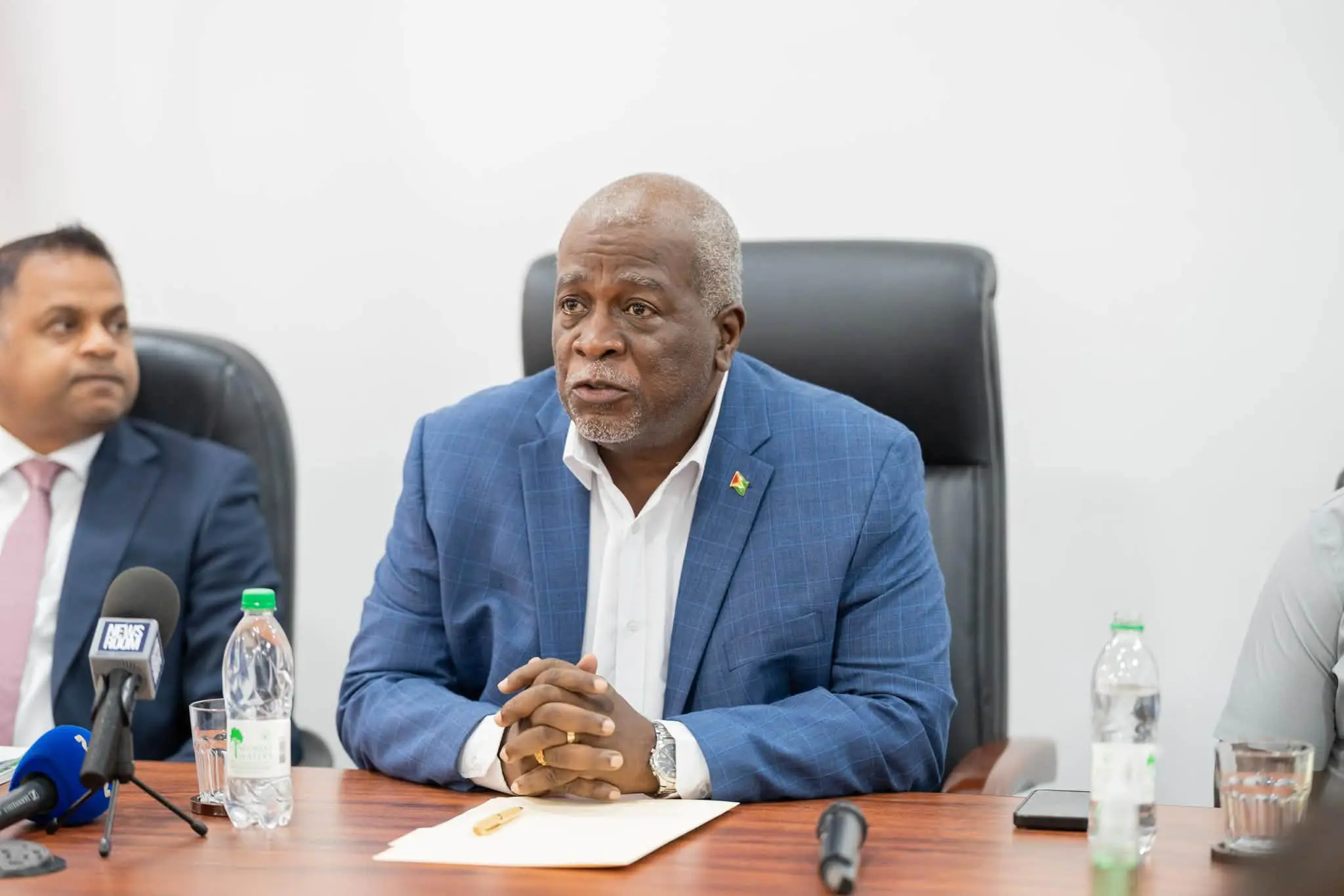
The disclosure came on Friday at a press conference hosted by Prime Minister Mark Phillips after questions were raised by Kiskadee Watch about when the contracts for the two power ships would end and what their continued use has been costing the country.
Officials said the power ship currently providing up to 75 megawatts is expected to leave the system once sufficient generation from the Gas-to-Energy project becomes available.
The vessel was initially contracted to provide 60 megawatts, but an additional 15 megawatts is being added. Ten megawatts of that additional capacity is already being taken, with the remaining five megawatts expected to come on stream by the end of August.
The government said the current arrangement remains necessary because removing the power ship before replacement generation is available could put the national electricity supply under pressure.
Minister of Public Utilities and Aviation Deodat Indar said the power ship is currently costing Guyana about 9.5 US cents per kilowatt-hour, comprising capacity and energy charges.
The rate is significantly higher than the cost expected from the Gas-to-Energy project, which will use natural gas as its fuel source.
The government said electricity generated through Gas-to-Energy is expected to cost about five US cents per kilowatt-hour, compared with the heavy fuel oil used by the Turkish power ships.
The Prime Minister said that once sufficient generation becomes available from Gas-to-Energy, the government will be in a position to review the power ship contracts based on their termination provisions.
He maintained, however, that the vessels cannot be removed prematurely.
“If we don’t have those two, this whole country will be in trouble,” he said.
The government has also indicated that the power ships are only a temporary measure while the country transitions to the Gas-to-Energy system.
First Gas-to-Energy power expected this year
The government is projecting that the first electricity from the Gas-to-Energy project will be generated before the end of this year.
Officials said at least one turbine is expected to begin producing approximately 57 megawatts by the end of 2026. Completion of this project has been delayed since December 2024.
The first phase of the project is expected to eventually deliver up to 228 megawatts by the end of the fourth quarter of 2027. This seems to be a further delay in the project.
In February this year, the project lead, Winston Brassington said that the project would reach full operational capacity in mid-2027.
“By the middle of next year, we’re going to have the combined cycle fully completed so, all 300 megawatts will be completed. So, that is what is being built right now,” Brassington, who is also a Ministry of Natural Resources Consultant, said during a panel discussion at the Guyana Energy Conference.
The government has linked the project directly to its promise to slash electricity rates by 50 per cent.
Asked on Friday whether the reduction would be 50 per cent of the existing subsidised rate or the market rate, the Prime Minister said households would pay half of what they currently pay.
He pointed to the current household rate of approximately $43.43 per kilowatt-hour, meaning consumers would ultimately pay about half that amount once the promised reduction takes effect.
The government said the 50 per cent reduction was first included in its 2020 manifesto and repeated in its 2025 manifesto. The reduction was meant to have already been in place.
Officials have maintained that the Gas-to-Energy project is expected to significantly reduce the cost of electricity generation by replacing expensive fuel oil with natural gas-generated power.













Discussion