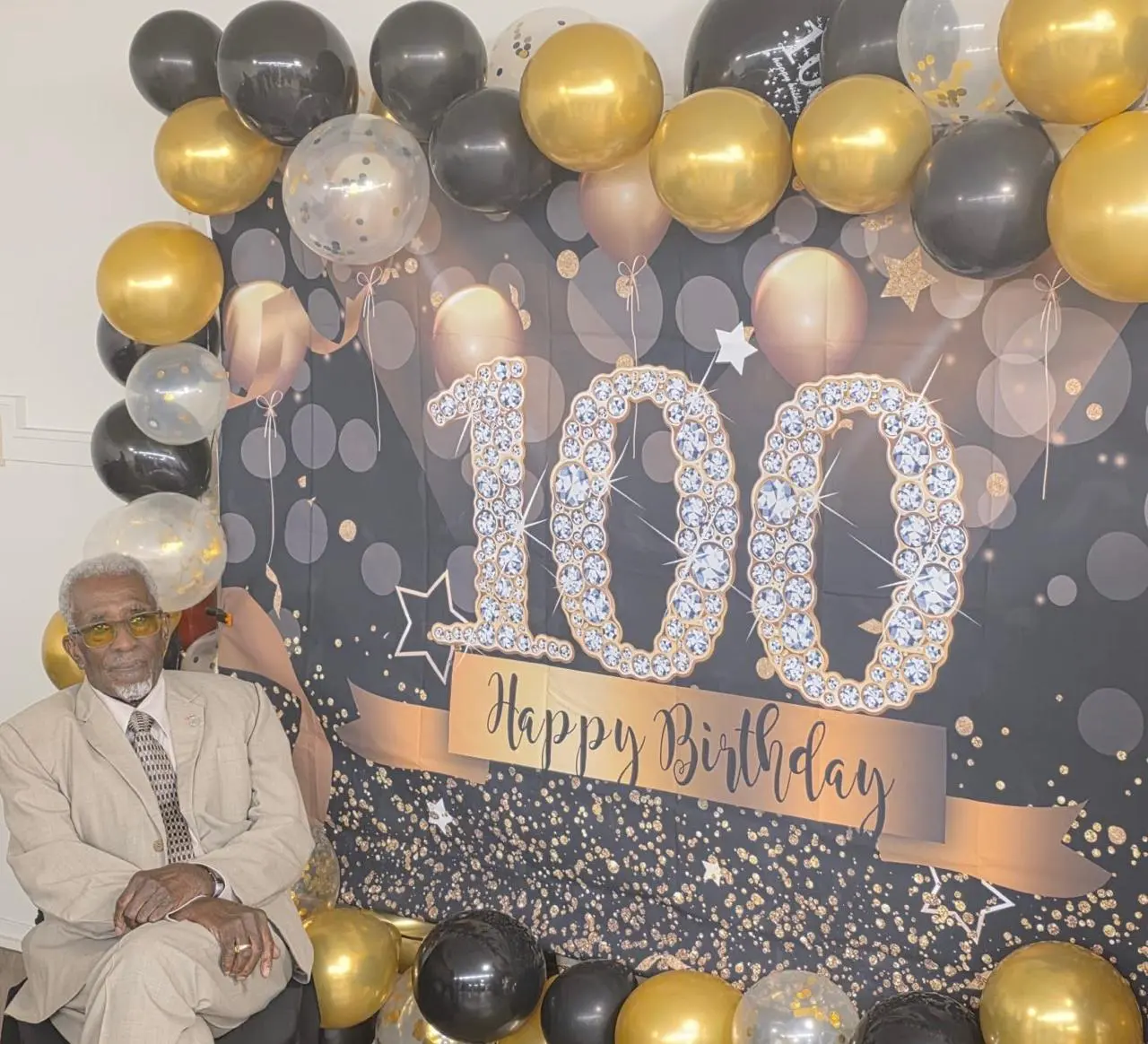
Samuel Adolphus Jordon was 18 when he left British Guiana in December 1944 to join the Royal Air Force. He remembers people lining the seawall and the groyne at the mouth of the Demerara River to wave goodbye as his troopship headed for Trinidad.
Now 100 and back in Georgetown on a visit from Canada, Jordon says he seldom tells people he served in the Second World War. For years he went to the Cenotaph to pay his respects to those who died, though he never marched in the parades.
His visit coincided with that of King Charles III. Jordon said he had come to Guyana unexpectedly and would have welcomed the chance to meet the King.
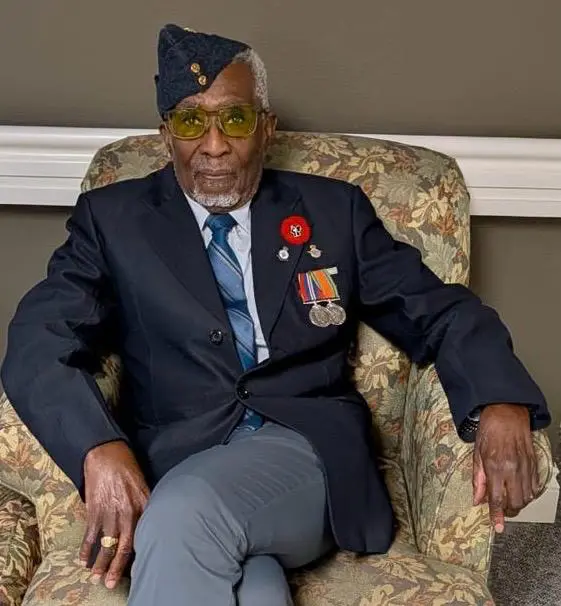
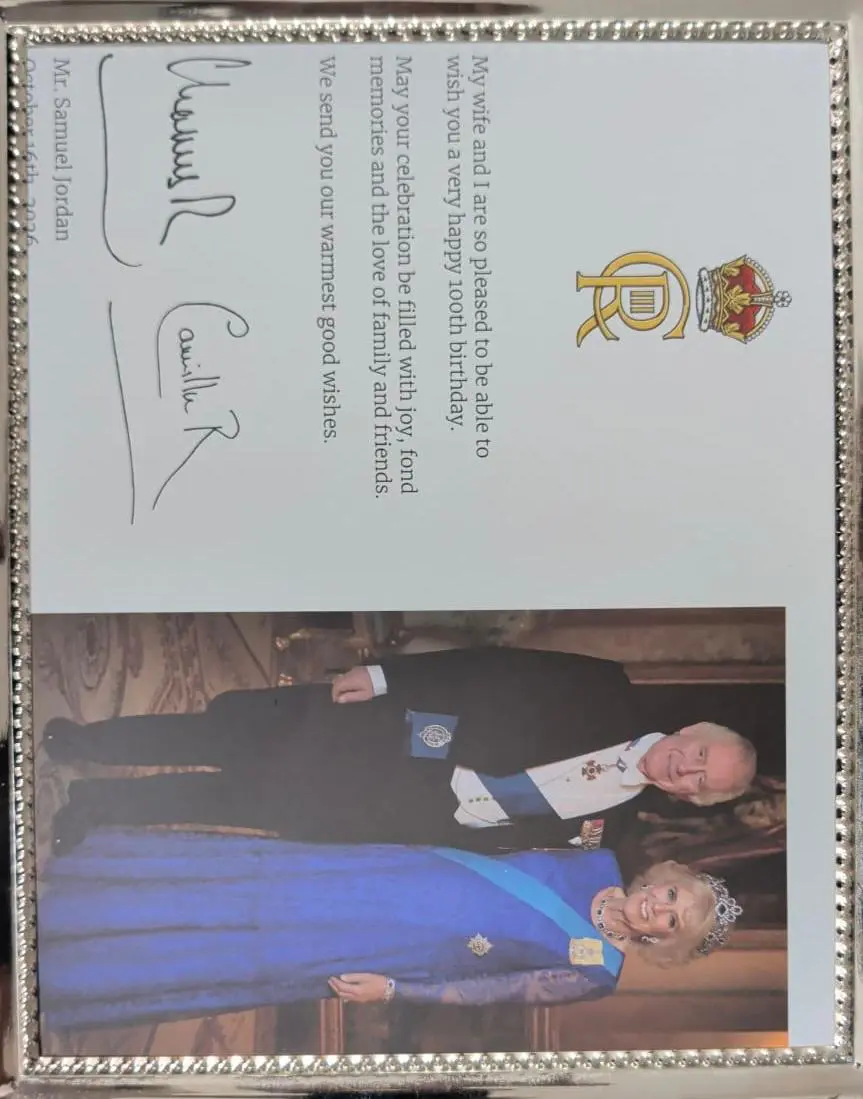
“It would have been a pleasure if I had contacted the Legion, told them I was here in Georgetown when King Charles III was here and met with him,” he told Kiskadee Watch in an interview in Queenstown. The King and Queen Camilla sent him a certificate marking his 100th birthday.
Jordon turned 100 on October 16. He celebrated with friends in Vancouver and then with family in New York, where some of his grandchildren and great-grandchildren met for the first time. When his daughter Andy and son Rawle were returning to Guyana after the celebrations, he decided to go with them.
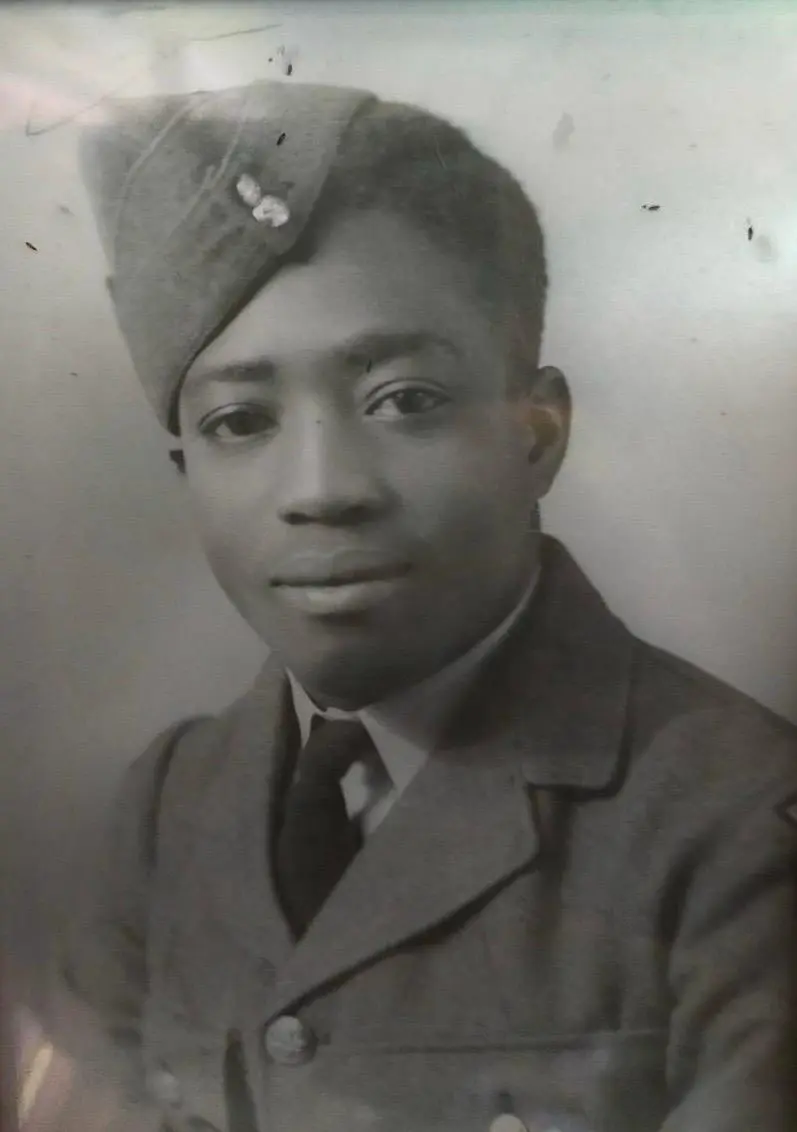
Joining the RAF
Jordon grew up in Charlestown. He had completed primary school, received some secretarial training and had just started working for a Canadian gold mining company when he applied to join the RAF. He kept the application from his mother until he had been accepted. His father had died when he was two.
“She cried and did not stop until I left the country,” he recalled.
Jordon said he was among 200 recruits selected from thousands of applicants after an intelligence test, a medical examination and an interview. The British Guiana recruits spent about two weeks at the Eve Leary barracks before sailing. They were joined by recruits from Trinidad and Tobago, Barbados and Jamaica before crossing the Atlantic from Bermuda in a convoy.
For two weeks they saw no land. Jordon recalled learning why troopships, oil tankers and cargo vessels travelled in the centre of the convoy. The ships around them offered protection against enemy submarines.
They landed at Greenock, Scotland, and travelled by train to Wiltshire, where they underwent military training. Jordan had joined hoping to fly. With the war drawing to a close, he was assigned to payroll and training duties after an aptitude test.
“I wasn’t in armed combat. Not everyone shoots guns. However, I had to learn to shoot guns and do whatever soldiers do,” he said.
One of his more vivid memories of military life began with a football match. The Jamaican recruits lost to a combined team from Barbados, British Guiana and Trinidad and Tobago. The winners teased them in the canteen afterwards and a fight broke out. The trouble continued for days, Jordon recalled, and he and others slept on the floor to avoid being struck by glass when bricks came through the windows.
The RAF brought in West Indian officers, including Trinidadian airman Ulric Cross, to meet with the groups and restore order. That was how Jordan met Cross, whom he remembered as a Pathfinder who helped identify bombing targets.
Before his discharge, Jordon was selected for a year of study in business administration and commerce at Plymouth and Devonport Technical College. He returned to British Guiana in 1949.
Back in Georgetown
Jordon said he experienced no discrimination at RAF headquarters or at college. One of his last nights in England, however, left a different impression. He and two Jamaican servicemen arrived after midnight at a Paddington hotel where a service club had arranged accommodation for them.
“When we arrived at the hotel after midnight this guy saw three Black men walking in and he wasted no time in telling us there was no accommodation,” he recalled.
The manager eventually offered places for two. The three men turned them down and left with their suitcases. A policeman directed them to accommodation used by West Indian students, where they spent the night before taking the train to Liverpool.
Back home, Jordon declined an offer from the colonial government to join the police force. He worked first at Booker’s Sugar Estates and later at Booker’s Rum Company. He recalled being the only Black employee at the sugar company’s headquarters and said a job with Booker’s could open doors in a society where class distinctions were rigid.
After leaving Booker’s, he headed the Shipping Association of Guyana and went on to work in personnel management with the Commonwealth Development Corporation. He continued in that role after the timber operation was nationalised and became Guyana Timbers Limited, where he also served as a director.
Jordon recalled resisting pressure to reinstate a worker dismissed for fraud. A party official intervened and the matter reached then Labour Minister Winslow Carrington. Jordon said he told Carrington that he could not recommend reinstatement to the company.
“You cannot keep bending the rules to suit yourself,” he said.
Jordon was dismissed from Guyana Timbers in 1977. His eldest daughter had just started at St Rose’s High School and his other children were still in primary school. He said he spent six months without work before Charles Quintin, the managing director of Demerara Tobacco Company, called to offer him a personnel job. He remained with Demtoco until his retirement in 1986.
He later headed the proofreading department at the now closed Stabroek News for about a year. He remembered going for a drink with colleagues close to midnight, once the paper was ready for printing. He said he was “terribly disappointed” when the newspaper closed.
Jordon was a Boy Scout, served on the board of the Ptolemy Reid Rehabilitation Centre and was a member of the Prison Aid Committee and the Guyana Legion.
‘I would want the same life again’
Jordon and his wife moved to Canada in 1995 after their children, who were living overseas, encouraged them to settle closer to them. He now lives in Surrey, British Columbia. The father of seven said he continued cooking and shopping for himself after his wife died in 2016, stopping last year at his children’s urging after a spell of illness.
He prefers freshly cooked meals and credits that habit with helping him stay healthy. He also speaks of his faith. In 2004, he developed a lung infection and was put on oxygen. He said his family was told he might have only three months to live, something he learnt after he was able to breathe on his own. He used oxygen until 2008 and said he has had no breathing problems since.
“Don’t ask me how I did it. I believe in God,” he said.
He also recalled with amusement that he had probably had a drink in almost every rum shop in Georgetown. As a personnel manager, he said, he never let employees buy him a drink because he did not want to compromise his position.
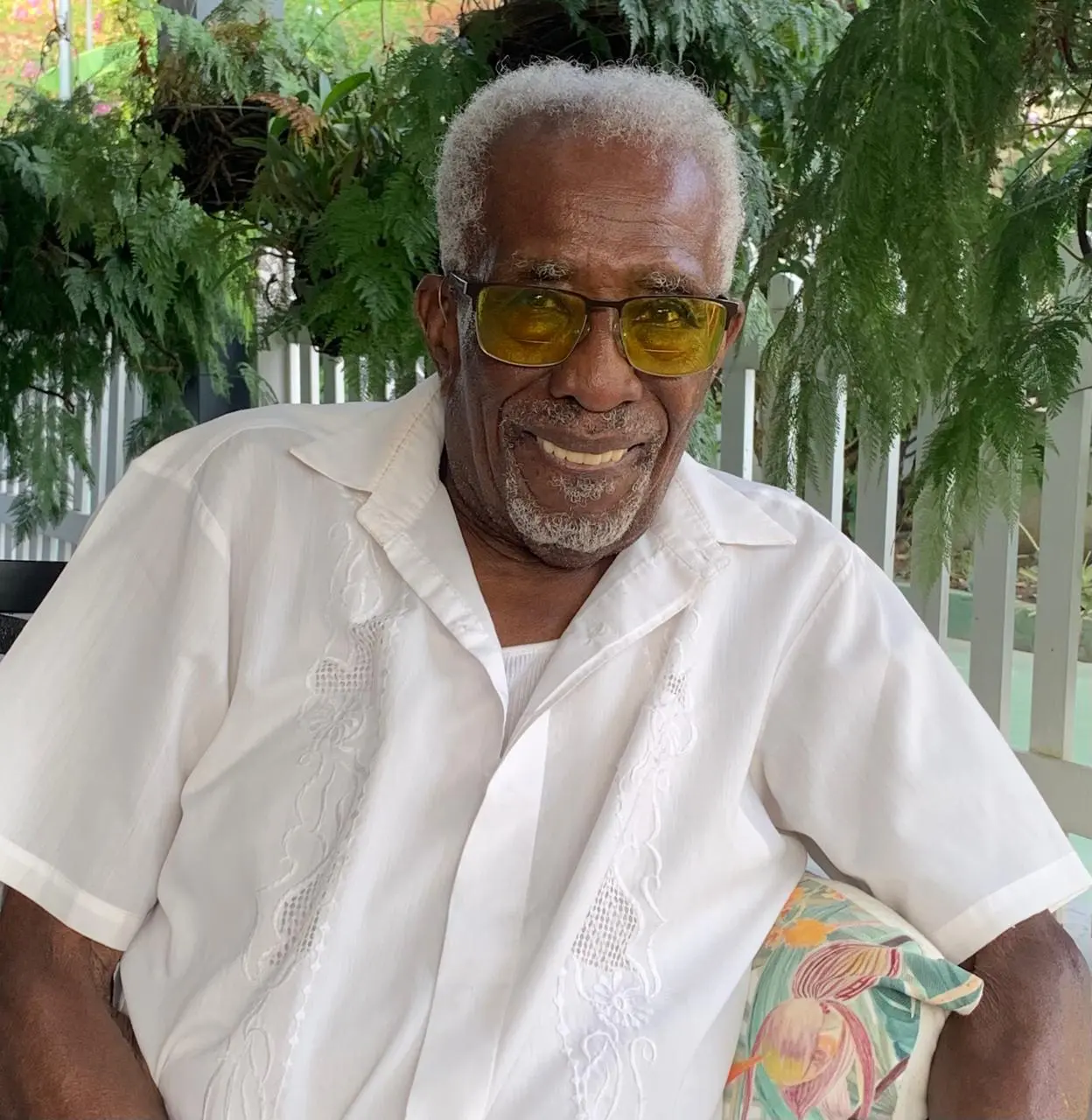
“I really enjoy living,” Jordon said. “I’ve had a great life and if I am to come back in another life I would want the same life again.”









Discussion