
By Nigel Westmaas
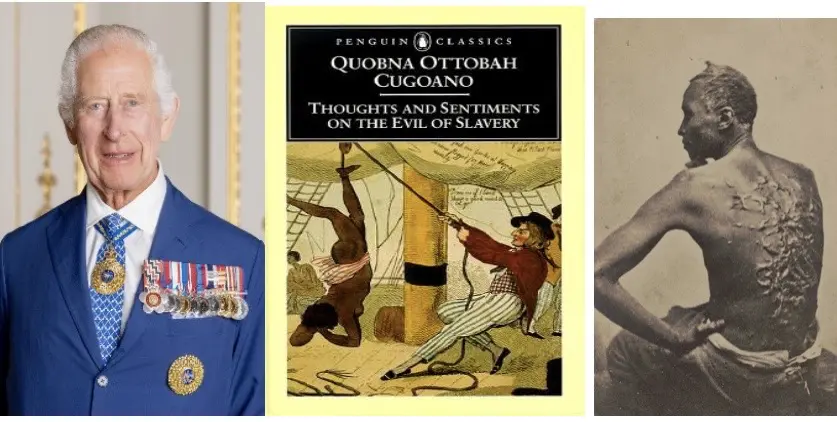
King Charles III’s forthcoming visit to The Bahamas, Guyana, and Antigua and Barbuda brings an old question into an updated diplomatic setting: how long can Britain acknowledge the suffering caused by slavery while refusing the obligations of apology and reparations? As widely reported, Buckingham Palace indicated that the King would address the history of enslavement during his tour but would offer no formal apology on Britain’s behalf. The monarchy’s involvement took specific institutional forms. Charles II granted the Royal African Company its charter in 1672, including a monopoly over trade in West Africa. James, Duke of York, later James II, was closely connected to the company. These were identifiable royal connections to an organised commercial enterprise.
Modern expressions of sorrow, facilitated by relentless public exposures and struggle in renewed calls for reparations over the last twenty odd years, leave the central question unresolved: what does Britain owe to the societies whose exploitation contributed to its wealth? That question belongs to a struggle much older than the current reparations campaign. Its history begins with the resistance of enslaved Africans themselves. The plantation complex joined African captivity, Atlantic shipping, appropriated indigenous land, coerced labour, European consumption, and metropolitan finance in a single system. The plantation was simultaneously a horrific workplace, a regime of punishment, and an instrument for concentrating wealth. Its profits traveled far beyond the plantation. Merchants, creditors, insurers, and manufacturers all participated in an economy whose central resource was the compulsory labour of people legally treated as property at that time.
The monarchy’s racial exclusions also extended well into the 20th century. As the British Guardian newspaper revealed, the queen’s staff barred “coloured immigrants or foreigners” from clerical roles in the royal household until at least the late 1960s. This policy exposes the long reach of structural racism within the institution now offering expressions of sorrow over slavery. The economic interests that sustained enslavement and the doctrines of “scientific racism” that justified racial hierarchy left enduring marks on British institutions. Reparatory justice is bound to confront those institutional legacies in the present alongside the original crimes.
Eric Williams’s Capitalism and Slavery, in 1944, challenged the comforting separation of British economic development from colonial enslavement. He placed slavery within the history of capitalist accumulation and examined the economic interests shaping abolition. Historians continue to debate aspects of his explanation, particularly the relationship between plantation profitability and abolition. His fundamental challenge remains indispensable: Britain’s enormous prosperity and the Caribbean’s exploitation must be studied together. Walter Rodney extended that perspective in How Europe Underdeveloped Africa. European development and African underdevelopment, he argued, were connected historical processes. Wealth accumulated in one part of the world through relationships that weakened productive capacity and autonomy elsewhere. Reparations follow naturally from this relational understanding of history. They concern the distribution of benefits and injuries produced by a system rather than an isolated catalogue of past cruelties. Rodney also directed attention to finance, including the Barclays Bank interests and Lloyds of London. These references require careful institutional history rather than a sweeping claim that every modern bank began as a slave-trading enterprise. Lloyds of London, the insurance market, must also be distinguished from Lloyds Bank. Lloyds itself acknowledges its participation in insuring the slave economy and apologized in 2020. If financial institutions can recognize historical responsibility, Britain’s refusal to move beyond royal sorrow becomes harder to defend.
Freedom, whatever the concept and practice meant at the time, was never simply a hand down from Westminster, as some pundits contend. Maroon communities, everyday enslaved resistance, small and large rebellion, and revolution made the plantation order costly and unstable. A briefchronology reveals the persistence of that struggle: the Berbice Revolution of 1763, the Haitian Revolution beginning in 1791 and culminating in independence in 1804, the Barbados Bussa Rebellion of 1816, the Demerara Rebellion of 1823, and Jamaica’s Baptist War of 1831-32 helped and forced the needle forward. Britain’s abolition of the slave trade in 1807 followed a long and sustained campaign by white and black abolitionists, alongside economic pressures and resistance by enslaved Africans. The struggle in England belongs within this Atlantic story, or history. Olaudah Equiano, Ottobah Cugoano and Mary Prince had confronted the British public with slavery’s violence.
Cugoano, in particular, gave this resistance an explicit political and moral foundation. Having been an enslaved person himself, he argues in his 1787 Thoughts and Sentiment on the Evil and Wicked Traffic of the Slavery and Commerce of the Human Species that enslaved Africans were justified in resisting their captors and enslavers. In essence, he connected Black abolitionist thought in Britain to the struggles of enslaved people across the Atlantic, placing their agency at the centre of the argument for emancipation.
Their interventions worked alongside petitions, religious organizing, women’s activism and boycotts of slave-produced sugar. Remembering them changes a familiar picture of abolition as the achievement of the few benevolent white parliamentarians and do-gooders. Black testimony and political organization were essential parts of the movement within Britain itself, and many of the benevolent humanitarian abolition activists also held racist views about black people.
As we all know, Parliament reallocated or allocated 20 million pounds to compensate slave owners. More specifically closer to home, John Stewart, probably the first man of colour to become an MP, was a slave-owner in then British Guiana and was awarded compensation for the enslaved people on his Annandale estate.Meanwhile, the formerly enslaved received no corresponding compensation for their stolen labour, violated bodies and destroyed family lives. Britain did not reject compensation as a principle; it applied that principle to those who claimed ownership of other human beings. This is the dialectic of the long struggle: resistance forces a concession, while established power attempts to determine its limits. Abolition ended legal slavery but preserved plantation dominance. Independence established national sovereignty but left inherited inequalities and external dependencies across time and space. Recognition of historical wrongdoings now coexists with resistance to material repair. Each victory changes the ground of struggle without necessarily removing the structures that made the struggle necessary.
British opposition to Reparations: Four arguments and their illogic
But back to the King. British opposition (and by extension some descendants of the victims and others) to the notion of apology, and reparations, draws on four main arguments: slavery happened too long ago for current day obligations; Africans also sold Africans; reparations are impractical; and Britain has already discharged its obligations through abolition, subsequent imperial development and/or charity.
Let’s first examine the question of responsibility for the trade itself. The familiar assertion that “Africans sold Africans”contains historical truth.African rulers, merchants, and intermediaries participated in capturing and selling people. But shared participation does not eliminate the responsibility of the main beneficiaries. Establishing that some African rulers and merchants were implicated does not absolve British merchants, plantation owners, financial interests, or the state. In any event, “Africans” were not a single collective actor. The term collapses diverse societies and unequal positions into one false notion of continental identity. To use Walter Rodney’s phrase, there was “resistance and accommodation” on the African continent to the slave trade. The case of the Kingdom of the Kongo illustrates these complexities. In letters to the Portuguese king in 1526, Afonso I protested the kidnapping and sale of his own subjects, including nobles and members of his own family. But Afonso also sought to regulate the sale of captives rather than consistently rejecting every form of enslavement. Queen Nzinga of Angola in the 17th century was also emblematic of these tensions between selling of captives and resistance to the Portuguese. While these positions of African rulers might not be akin to later abolitionism, it demonstrates that African engagement with the trade involved contestation, participation and resistance, rather than unilateral consent implied by the phrase “Africans sold Africans”.
The second of these counterarguments or deflections is that “Slavery happened a long time ago,” that its perpetrators and immediate victims are long gone, and that present generations should not be held responsible for actions they did not directly commit. Reparations, according to this view, impose inherited guilt and distract from present issues. Reparations rests on the continuing responsibilities of states and institutions, the transmission of benefits, and identifiable consequences of past wrongdoing. Individuals die, but governments, universities, banks, churches, and the monarchy retain institutional continuity, and their assets, authority, and advantages do not fade away when the people who accumulate them die. The appropriate question is therefore not simply, “Who alive today owned slaves?” It is, “which institutions benefited, what became of those benefits, and what harms remained unaddressed?” The fact that the formerly enslaved survived slavery and built institutions like the Guyana village movement among other successes does not cancel out or mitigate the injustice.
This too often reduces it to the question: How can you compensate someone for something that happened 200-400 years ago? That formulation misunderstands the claim. Reparations are not an attempt to calculate a monetary price for every whip stroke, every separated and broken family, or every stolen life and the labour lost to capitalist slavery. No conceivable payment could accomplish that. Reparatory justice asks instead what institutions benefited, what societies and peoples were disadvantaged, what consequences survived emancipation and colonialism, and what forms of repair are now necessary.
The third defense response that pops up when reparations are invoked is that “Reparations are impractical”, that is, it is impossible to identify all descendants, calculate losses across centuries, determine which institutions should pay, or distribute compensation fairly.
The quest for reparations does not require one universal formula. It can involve negotiated combinations of financial compensation, public investment, debt relief, educational support, institutional reform, historical disclosure, and formal apology.
Two modern practical examples can help confront the objection.
In 2019, the University of Glasgow committed to raising and spending £20 million over twenty years through a reparative programme and partnership with the University of the West Indies (UWI). This is a defined institutional commitment, although the announcement should not be confused with proof that the entire sum has already been delivered. In 2013, the British government announced a settlement covering 5,228 claimants who suffered during the colonial emergency in Kenya. The total was £19.9 million, including legal costs. This involved living claimants and different legal circumstances from slavery reparations, but it demonstrates that historical colonial wrongdoing can be addressed through negotiated redress. The earlier compensation of slave owners supplies another pointed comparison. Britain established a commission and administrative machinery when it decided their losses required compensation. That does not make present reparations straightforward, but it undermines the claim that historical losses are inherently beyond administrative treatment.
The fourth argument and this has become common in current British counter narratives after the gains made by the reparations call in recent decades is that “Britain abolished slavery first and subsequently gave back through empire and charity.”
This argument combines three separate claims: chronological priority, moral credit for abolition, and compensation through later imperial activity or assistance. The facts dispute the general claims. Firstly, Britain was not the first to abolish either the Atlantic slave trade or slavery. Denmark announced a prohibition of its transatlantic trade in 1792, effective in 1803. France abolished slavery in 1794, although Napoleon reversed that decision in 1802. Haiti established the most qualitative independence when it abolished slavery, after a thirteen-year war, in 1804, becoming the first country to establish a constitutional order that prohibited slavery and rejected racial hierarchy. These different measures and achievements should not be collapsed into a single chronology. And yet, for many formerly enslaved people, compulsory unpaid labour continued under “apprenticeship” until 1838. Even after apprenticeship, poll taxes and new coercive and exploitative labour practices continued alongside racial exclusion. Abolition should therefore not be narrated as an exclusive gift from Britain. It emerged through struggles involving enslaved people, black activists, and metropolitan abolitionists.
Reparations in the now
Historian and vice-chancellor of the University of the West Indies (UWI) Hilary Beckles and the CARICOM Reparations Commission have helped translate historical scholarship into a regional program of action. Established in 2013, the commission has insisted that reparatory justice concerns the continuing consequence of indigenous genocide, African enslavement and colonial rule. CARICOM approved a revised ten-point reparations manifesto in July 2026 and reaffirmed collaboration with the African Union. The political significance lies in the movement from remembrance towards an organized demand for redress. Jamaica’s recent initiative nevertheless opens an important legal front. Its government has petitioned King Charles in his capacity as King of Jamaica to refer questions to the Judicial Committee of the Privy Council. These concern the legality of chattel enslavement, relevant international obligations and whether Britain owes a reparatory remedy. Yet, reparations diplomacy must remain answerable to popular struggle. In his recent essay, “A Ruling class that Fears the Reckoning: Jamaica and Reparative Justice”, Horace Campbell distinguishes grassroots, scholarly and governmental traditions within the movement. He warns that political elites can adopt reparations language while leaving domestic structures of exclusion intact. His argument asks the central question: who will control repair and whose lives will it change? An international settlement that fails to reach workers, women, dispossessed communities and young people would reproduce the distance between official freedom and lived freedom. And as WPA co-leader David Hinds has recently warned, the government of Guyana and its leaders “cannot champion Reparations abroad while ignoring Africans at home.”
Recent African initiatives have widened the challenge of and from the continent. On 25 March 2026, the UN General Assembly adopted an African-backed declaration identifying the trafficking of enslaved Africans and racialized chattel slavery as the gravest crime against humanity. The vote was 123 in favour, three against, and 52 abstentions. The declaration strengthens the political case for reparatory justice, although it does not itself establish an enforceable right to compensation.
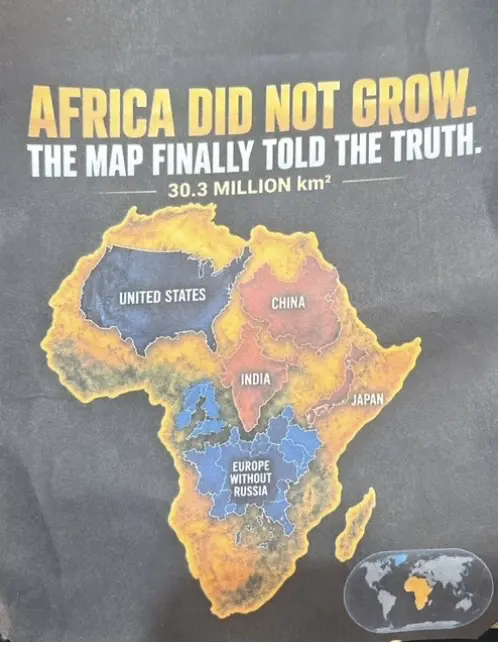
The campaign to correct the map of Africa challenges another imperial inheritance: the ways in which the world is represented. Supported by the African Union, it contests map projections that visually diminish Africa relative to regions nearer the poles. On 4 September 2026, the UN adopted a resolution supporting fairer cartographic representation. Changing a map cannot repair dispossession, but the campaign challenges assumptions that have diminished Africa’s place in the world. Alongside the reparations movement, it asks who has the power to represent Africa and define its historical significance.
Changing geopolitical alignments do not automatically dismantle inherited financial power, diplomatic influence, or control over legal remedies. Former imperial powers retain considerable capacity to acknowledge historical suffering while resisting the costs of redress.
King Charles’s visit should be judged against the long history of resistance, concession, and unfinished reparations. Expressions of sorrow cannot discharge obligations rooted in royal and British power, parliamentary decisions and the accumulation of wealth through enslavement. Caribbean societies and African societies and their movements and peoples are entitled to determine the terms on which their history enters the conversation.
The descendants of the enslaved, their organisations and governments have no reason to feel guilty or timorous about demanding reparations. Britain found the money and built the machinery to compensate those who claimed ownership of human beings. Its refusal to repair the injuries inflicted on those human beings and their descendants is a political choice that sustained struggle must overturn. The demand carries forward the unfinished work of emancipation. The reckoning is overdue. Britain, in the case of the Caribbean must move beyond sorrow to apology, and from apology to material repair.












Discussion