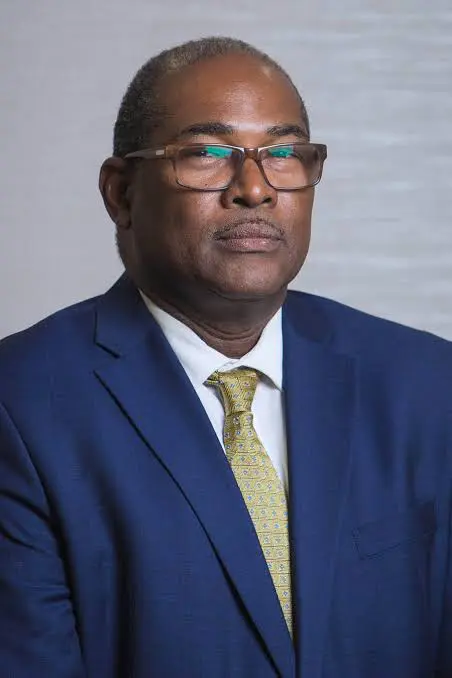
Attorney Nigel Hughes says the Regional Judicial and Legal Services Commission (RJLSC) cannot investigate or discipline CCJ President Justice Winston Anderson, arguing that any formal inquiry into his conduct must be initiated by at least three regional Heads of Government.
Hughes made the assertion amid mounting calls for an investigation into allegations concerning the administration of the Caribbean Court of Justice (CCJ) and the independence of its judges. The allegations emerged from media reports based on leaked internal correspondence among members of the Court.
In an examination of the Agreement Establishing the CCJ, Hughes said the treaty deliberately treats the president differently from the Court’s other judges.
“The RJLSC does not have the legal power to do so,” Hughes said in response to questions about why the Commission had not launched an investigation into Justice Anderson.
He pointed to Article V of the agreement, which gives the Commission disciplinary authority over judges “other than the President.” He said Article XXXI similarly restricts the Commission’s power to make disciplinary regulations to judges other than the president.
Hughes said the distinction was significant because the CCJ president also serves as chairman of the RJLSC.
“The treaty framers recognised that a body cannot fairly discipline its own Chairman,” he said.
According to Hughes, the Commission acknowledged this limitation months before the present controversy.
He said that on December 22, 2025, the RJLSC responded to a complaint filed by the Caribbean Guyana Institute for Democracy against Justice Anderson. Hughes quoted the Commission’s response as stating: “The Commission wishes to advise that it does not possess jurisdiction over the President of the Caribbean Court of Justice, under the Agreement Establishing the Caribbean Court of Justice, in relation to the matters raised.”
That letter was signed by RJLSC Secretary Gabrielle Figaro-Jones.
RJLSC calls for independent review
In an official statement dated August 10, 2026, the RJLSC acknowledged the seriousness of the current allegations and their potential effect on public confidence in the regional court.
The Commission said the concerns were best addressed through “the established internal governance mechanisms of the Court and the Commission” and through a “transparent and independent review undertaken in the best interest of the Region.”
It cautioned that no conclusions should be drawn until the allegations had been examined fairly and objectively.
The RJLSC also said it was responsible for appointing CCJ judges and staff, setting their terms and allowances, overseeing disciplinary action and protecting the Court from political interference. Its published description of those functions, however, specifies that its disciplinary control over judges does not extend to the president.
Hughes said the Commission’s call for a transparent and independent review was consistent with that limitation.
“The Commission can facilitate, but it cannot investigate or punish the President,” he contended.
Three leaders needed
Hughes said the applicable procedure is found in Article IX of the CCJ Agreement.
Under that article, at least three Heads of Government of the contracting parties must jointly represent to the other Heads that the possible removal of the president ought to be investigated.
The Heads of Government must then appoint an independent tribunal consisting of a chairman and at least two other members. Those members must be serving or former senior judges drawn from eligible courts in the Commonwealth or jurisdictions sharing the civil-law tradition of contracting parties.
The tribunal would investigate the allegations and advise whether the president ought to be removed. The only grounds specified by the agreement are inability to perform the functions of office or misbehaviour.
Removal would ultimately require the qualified majority vote of three-quarters of the contracting parties, acting on the recommendation required under the agreement.
Hughes stressed that the special procedure cannot be initiated by a single government, an individual judge or a member of the public acting alone.
The Heads of Government may also suspend the president while the tribunal conducts its inquiry. The agreement permits that suspension to be revoked and provides for it to cease if the tribunal advises that the president should not be removed.
Conflict concerns
Hughes also identified a possible conflict arising from Justice Anderson’s simultaneous roles as CCJ president and RJLSC chairman.
The removal framework requires the tribunal’s advice to pass through the institutional process involving the Commission. The agreement does not expressly explain how the Commission should proceed when its chairman is the person under investigation.
“Basic principles of fairness — the right not to be a judge in one’s own cause — clearly require the President to step aside from those deliberations,” Hughes said.
He noted that the treaty allows the Commission’s deputy chairperson to preside in the chairman’s absence, but maintained that the lack of an express provision dealing with this particular situation could create room for dispute.
Hughes said the removal procedure was designed to balance judicial independence with accountability by ensuring that no single government, political group or dissatisfied litigant could remove the head of the region’s highest court.
At the same time, he said the mechanism provides a lawful avenue for examining serious allegations.
“If three or more Heads of Government believe these allegations warrant investigation, they have the legal authority and the collective responsibility to initiate the process under Article IX,” Hughes said.
“The Caribbean public is entitled to an independent tribunal inquiry conducted by senior judges, not to political posturing or institutional paralysis.”
He added: “The CCJ belongs to the people of the Caribbean. Its credibility depends on the rule of law being applied to its leaders with the same rigour it is applied to everyone else.”









Discussion