
A Partnership for National Unity (APNU) yesterday called for formal negotiations between Guyana and the United Kingdom on reparations for slavery, proposing financial compensation alongside long-term investment in education, healthcare, economic opportunity and cultural preservation.
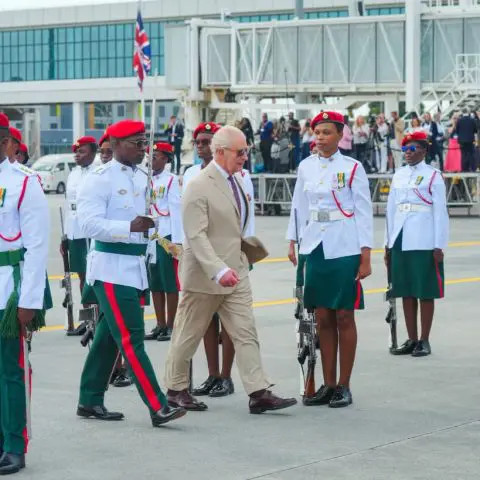
In a statement issued during King Charles III’s visit to Guyana, APNU said negotiations should be coordinated with the wider Caribbean reparations effort and include meaningful participation by affected communities.
It argued that emancipation had not repaired the economic, cultural and social damage inflicted on enslaved Africans and their descendants.
“Abolition ended legal ownership of human beings; it did not restore the wealth, opportunities, family connections and cultural inheritance taken from them,” the statement said.
APNU said slavery had forcibly removed Africans from their homelands, separated families, suppressed languages and traditions, and subjected generations to violence and compulsory unpaid labour.
That labour generated wealth for others while denying enslaved people wages, property, inheritance and the freedom to determine their futures, it stated.
The resulting disparities in wealth and opportunity, APNU argued, required redress.
The partnership pointed to Britain’s allocation of £20 million to compensate slave owners following the passage of abolition legislation in 1833, while those who had been enslaved received no compensation under that settlement.
Citing HM Treasury, APNU said government borrowing associated with financing the compensation was finally repaid in 2015. It argued that Britain had therefore sustained a financial commitment to compensating enslavers across successive generations.
APNU also cited the indemnity imposed by France on Haiti in 1825 as the price of recognising its independence, which Haitians had secured in 1804.
Under threat of French naval force, the statement said, Haiti accepted a demand for 150 million francs, later reduced to 90 million francs, to compensate former colonists for losses following the revolution, including claims arising from slavery.
APNU condemned that demand, saying its relevance was that European powers had treated financial claims arising from slavery and emancipation as obligations enforceable beyond independence.
It stressed that the Haitian indemnity was being cited as a precedent for sustained financial obligations, rather than as justification for enslavement or the indebtedness of any people.
On the calculation of reparations, APNU proposed consideration of unpaid labour, extracted profits and wealth, lost opportunities to acquire and pass on assets, and the continuing effects of displacement, cultural destruction and exclusion.
It said inflation adjustments, earnings comparisons, national-income measures and assessments of lost investment could help inform negotiations.
“No single calculation can capture the full injury, but differences over valuation must not become an excuse for refusing redress,” it stated.
The proposed settlement, APNU said, should combine compensation with investment in education, healthcare, economic opportunity, historical research, cultural institutions, heritage preservation and the recovery of ancestral connections.
Its administration should be transparent, accountable and responsive to the intended beneficiaries.
“The scale and form of its contribution must reflect that responsibility and the economic, cultural and heritage losses suffered,” APNU said of the United Kingdom.
The partnership maintained that its demand rested on the principle that all people were entitled to dignity, justice and the opportunity to overcome the consequences of exploitation.
“Reparations offer an opportunity to honour responsibility, repair enduring harm and build a more equitable relationship between our peoples,” it said.











Discussion