
Caribbean newsrooms are increasingly adopting artificial intelligence (AI) tools to support journalistic work, but the technology is being introduced at varying speeds and without comprehensive policies governing its use, research presented at the 57th Caribbean Broadcasting Union (CBU) Annual General Assembly has found.
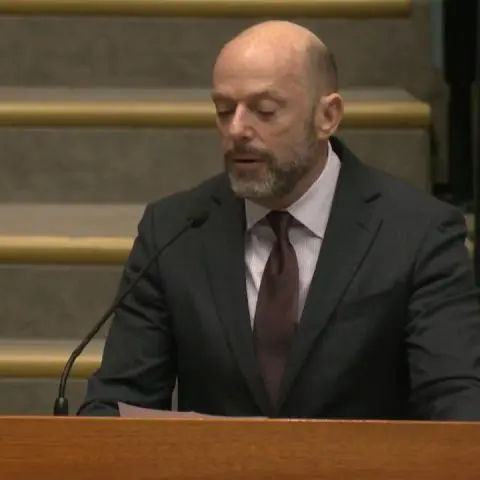
Dr Patrick Prendergast, Director of the Caribbean School of Media and Communication (CARIMAC) at the University of the West Indies, presented preliminary findings on AI procurement and use in Caribbean media organisations during the conference last week at the Arthur Chung Conference Centre in Georgetown.
The research, conducted at an exploratory stage, examined how news media organisations across the Caribbean are using AI, the purposes for which the technology is being deployed, and the concerns and challenges emerging from its adoption.
The 57th CBU Annual General Assembly, held in Guyana from August 17 to 19 under the theme “Caribbean Media and Artificial Intelligence”, brought together media professionals, policymakers, academics and other stakeholders to examine the opportunities and risks associated with AI.
According to Prendergast, eight respondents representing six media organisations participated in the initial survey conducted between June 1 and July 16. He stressed that the small sample means the findings are preliminary and should not be viewed as representative of the entire Caribbean media sector.
Nevertheless, the responses indicated that AI adoption is already taking place across different sections of the media industry, including television, radio, print and online platforms.
All of the respondents reported using AI tools in production, with ChatGPT among the most commonly used platforms.
The research found that ChatGPT was being used for purposes including idea generation, text editing, translation and transcription support. Other AI tools, including Microsoft Copilot and tools for text, design and production, were also being used by some organisations.
The findings suggest that AI is primarily being used to support journalists rather than replace them.
Among the uses identified were research and information gathering, transcription, content generation, copy editing and, in some cases, administrative tasks.
Prendergast said the findings also pointed to a growing need for media organisations to establish clear governance frameworks around the procurement and use of AI.
Only one of the organisations surveyed had a formal approval process for AI use, while others had varying forms of vetting procedures or draft guidelines.
The absence of comprehensive policies, he said, raises questions about data protection, privacy, transparency, procurement and the responsibilities of journalists and media managers when using AI-generated material.
Accuracy was another major concern.
Respondents highlighted the problem of AI “hallucinations”—instances where AI systems produce information that is inaccurate or unsupported—and the need for journalists to verify AI-generated material before publication.
The research also identified concerns specific to Caribbean media, particularly the ability of AI systems to accurately process local content, accents and vernacular.
Respondents questioned whether training data used by AI systems adequately reflects Caribbean societies and cultures, while noting difficulties with transcription of local accents and languages.
There were also concerns about AI-generated voices and voice-over features, including whether pronunciation and delivery are appropriate for Caribbean audiences.
Technical limitations were identified as another challenge, including difficulties integrating AI tools with existing content management systems.
Prendergast said the findings point to the need for training and institutional support as media organisations move beyond experimentation and begin developing more structured approaches to AI.
The research identified several areas for further work, including AI governance, procurement, training, platform integration and the development of policies suited to the Caribbean media environment.
It also suggested that future research should move beyond surveys and examine specific newsroom experiences in greater depth.
Despite the challenges, Prendergast said the preliminary findings indicate that Caribbean media organisations are embracing AI, although at different levels of maturity.
The emerging approach, he noted, is largely one in which AI is used to assist journalists in completing their work rather than to eliminate the human role in journalism.
The findings reinforce a central issue raised throughout the CBU conference: as AI becomes increasingly embedded in Caribbean media, news organisations will need to balance efficiency and innovation with accuracy, privacy, ethical journalism and public trust.
CARIMAC has described Prendergast as having more than three decades of experience in media production, creative and cultural arts, teaching and educational administration. He was appointed director of the institution in 2024.












Discussion