
Robert Corbin was remembered at his funeral as a formidable political opponent and mentor, while his children recalled a generous father whose lessons on integrity and character outlasted the public offices he held.
President Irfaan Ali and PNC/R Leader Aubrey Norton paid tribute to Corbin’s decades of political service, as Chaka Corbin and Justice Fidela Corbin-Lincoln shared memories of family journeys, quiet acts of generosity and a father who proudly declared himself Guyana’s best pepperpot maker.
Ali, who extended condolences on behalf of the government and the PPP/C, recalled serving across the parliamentary aisle from Corbin and described him as a formidable rival whose contributions to debates were always interesting.
“Robert Corbin was, in my estimation, a self-made politician who rose through the ranks of the Young Socialist Movement, the YSM, and the PNC by his work on behalf of the party,” the President said.
He said Corbin’s experience encompassed significant changes in Guyana’s political and economic life, giving him a broad perspective on the country’s development and the challenges facing its people.
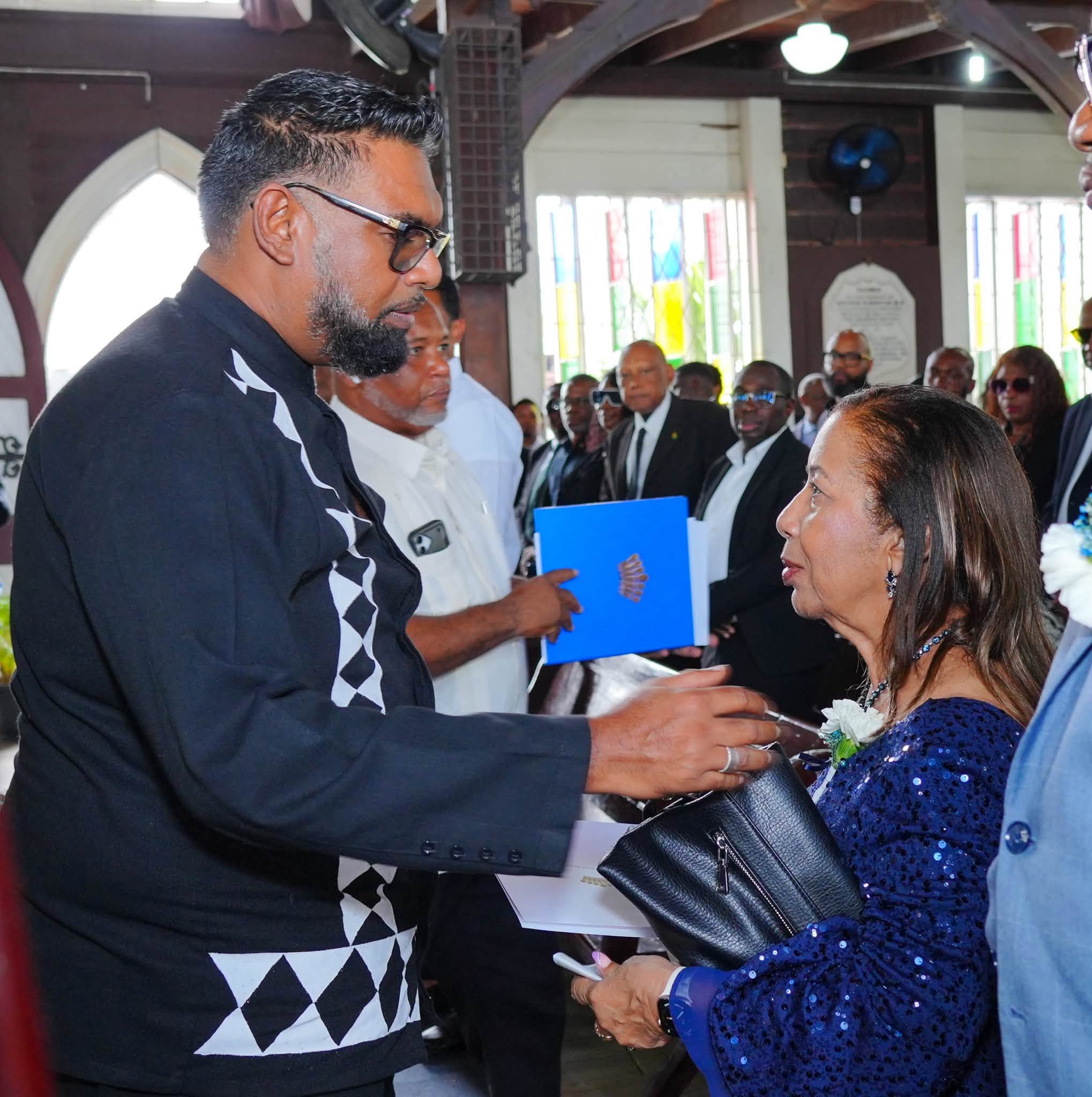
That experience, combined with his knowledge of Parliament, made him one of the most skilled parliamentarians of his generation, Ali said.
“Few could match his commitment to the party and its government,” he added, describing Corbin’s elevation to Deputy Prime Minister as the result of sustained service rather than privilege or luck.
Norton remembered Corbin as a mentor whose work with young people helped shape generations of party members.
He said Corbin’s influence during the 1960s and 1970s earned him the name “Chief”, and credited him with training thousands of young people who went on to serve the party.
His progression through the PNC and his service in government reflected discipline, loyalty, commitment and resilience, Norton said.
The PNC/R leader also highlighted Corbin’s commitment to coalition politics and constructive engagement across the political divide, describing an approach that encouraged cooperation in addressing national problems.
Reflecting on their relationship, Norton acknowledged that they had disagreements, but recalled Corbin’s ability to convey his disapproval through silence.
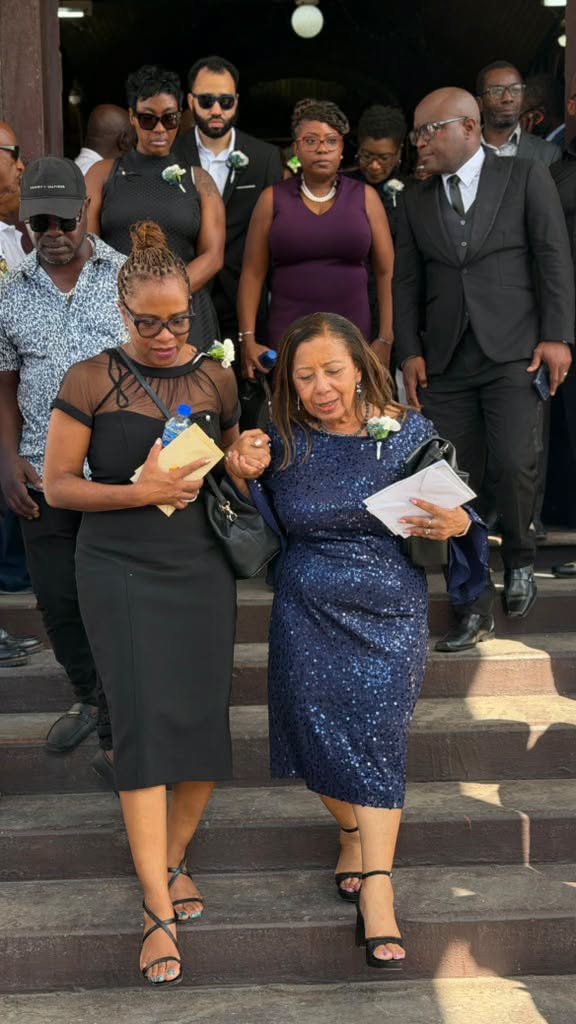
The family’s tributes offered a more private view of the former Opposition Leader.
“My father … was many things. But to me, he was always Daddy,” Chaka Corbin said.
He recalled family road trips, being awakened early with his brother to milk cows on a farm, watching his father ride a horse and finding his first ten-speed bicycle hidden in the house.
There were trips to Chinatown during visits to New York and, later, occasions when father and son shared cigars.
Much of his father’s love was expressed through actions, Chaka said. He taught his children to listen carefully, speak less, keep confidences and give generously.
“He did not believe in gossip, and you knew that anything you told him was in a vault.”
His father had also told him that integrity, character and a good name would eventually mean more than millions of dollars.
“Thankfully I listened, and I can attest to my own life experience, that is really true,” he said.
Corbin’s pursuit of a second career as an attorney-at-law also showed his children that age need not prevent someone from beginning again.
Justice Corbin-Lincoln recalled a father who could engage people from all walks of life in public, but who sometimes required considerable effort to draw into conversation at home.
As the talkative child, she was regularly enlisted by her siblings to approach him with requests.
His love for Guyana was evident in journeys to Aishalton and other hinterland communities, through which he introduced his children to the country’s vastness and diversity.
“He wanted us to see our country, to know our country, and I believe to understand why it was worth loving,” she said.
There was humour in her recollection of his cooking, particularly the annual preparation of pepperpot.
“Daddy bestowed upon himself the title of the best pepperpot maker in Guyana,” she said, noting that no national survey appeared to have established the claim.
The careful selection and seasoning of meat, followed by the preparation of separate pots for different people, became a family tradition.
“Daddy did not simply make pepperpot; he presided over an annual culinary event.”
Among his most enduring lessons, she said, was the distinction between recognition and identity. He had experienced applause and criticism, but never allowed his titles or positions to become the entirety of who he was.
“Recognition is what others give you. It can be generous, but it can also be fickle,” Justice Corbin-Lincoln said, reflecting that identity rested more deeply in values, character and an understanding of one’s worth.










Discussion