
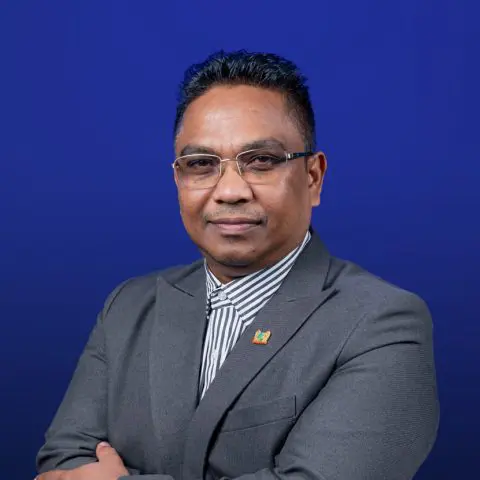
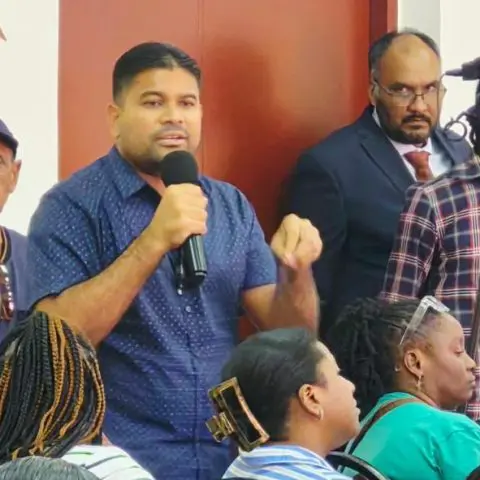
Opposition MPs Sherod Duncan and Amanza Walton-Desir have called on the government to publish its migration agreement with the United States, saying the reported arrival of six third-country nationals before the full terms were disclosed raises serious questions about transparency, parliamentary oversight and Guyana’s capacity to manage the arrangement.
In separate statements, the two parliamentarians said the government had not disclosed the maximum number of persons Guyana could receive, their legal status, whether they would be permitted to work or what would happen if they could not return to their countries or relocate elsewhere.
The government announced on Saturday that it had concluded a one-year migration cooperation framework with the US to receive a “limited, vetted number of skilled and non-criminal individuals” through the International Organization for Migration’s Assisted Voluntary Return Programme.
However, six persons—four Cubans and two Afghans—reportedly arrived on Friday, before the agreement was publicly announced.
Forward Guyana Movement MP Walton-Desir said the arrangement reportedly permits Guyana to receive as many as 12 persons monthly for 12 months, with no rollover of unused allocations. This, she said, would amount to a maximum of 144 persons during the year.
The government’s statement did not disclose that figure, and Walton-Desir did not identify the source of the information.
“The Government’s language of a limited and vetted number should not obscure that this is a defined and substantial annual figure, and the public is entitled to be told plainly what it is,” she said.
Duncan similarly argued that implementation had begun without the country receiving a meaningful explanation of the agreement.
“We still do not know the maximum number Guyana has agreed to receive, their precise immigration status, whether they will be permitted to work, what independent screening Guyana conducts, what reporting requirements apply, what happens if onward relocation is impossible, or what obligations and liabilities Guyana has accepted,” the APNU parliamentarian said.
He said the issue should not be reduced to hostility towards migrants or the nationalities of those admitted. His concern, he maintained, was the government’s conduct and its obligation to account to citizens and Parliament.
Duncan called for the agreement to be published in full, except for narrowly defined redactions required to protect individual privacy or operational security. He also wants the responsible ministers to explain its legal basis, numerical limits, screening procedures, residency and employment rights, monitoring arrangements and termination provisions.
Walton-Desir raised questions about which domestic agencies would be responsible for the admission, legal stay, protection and eventual removal of the migrants.
The government has said that while the IOM will implement the programme, the arrangement does not transfer those state responsibilities to the organisation.
Walton-Desir argued that the government must therefore identify the agency exercising each function, the legal authority under which it operates and the procedures to be followed.
She also contended that Guyana is not a party to the 1951 Refugee Convention or its 1967 Protocol and has no national asylum legislation. This, she said, underscores longstanding gaps in the country’s migration-management system.
“A framework of this consequence should have followed legislative reform, not preceded it,” Walton-Desir said.
She questioned whether the migrants would be classified as refugees or guests, whether any could qualify as Commonwealth citizens, whether they could apply for residency or citizenship and whether they would be allowed to work or operate businesses.
Walton-Desir also called for the agreement to be laid in the National Assembly and for the government to identify the local coordinating body and the office responsible for each person admitted.
Duncan said he had previously raised parliamentary questions about migration management, work permits, foreign workers and security at Guyana’s riverine and other ports of entry.
“As Guyana’s economy expands and migration increases, Government cannot continue managing immigration, naturalisation, work permits and border entry through fragmented announcements and administrative discretion,” he said.
The government has maintained that Guyana retains full discretion to screen and reject anyone proposed by the US. It also said only persons who voluntarily choose relocation, possess needed skills and have no criminal record would be accepted.
Under the arrangement, the US will bear the relocation expenses, while the IOM will cover the cost of receiving, housing and supporting the migrants. The government said Guyana would incur no financial costs.
The migrants are to remain here while their immigration status is determined. Depending on the outcome, they could return to their countries of origin or relocate elsewhere.
They will also be allowed to seek international protection, with the IOM supporting referrals to the United Nations High Commissioner for Refugees in collaboration with Guyanese authorities.
In January, Stabroek News reported that the two governments were nearing an agreement under which Guyana could receive refugees or non-felons from third countries, with Georgetown retaining the right to reject proposed individuals.
Kiskadee Watch reported on Saturday that the matter had been discussed during the second Trump administration, including during US Secretary of State Marco Rubio’s visit to Guyana. The newspaper noted that Washington had been pressing several CARICOM countries to accept persons it wanted removed from the US.
“Guyana should always treat migrants humanely and uphold its international obligations, but humanitarianism and transparency are not competing principles,” Duncan said. “Migration must be managed, not improvised.”








Discussion