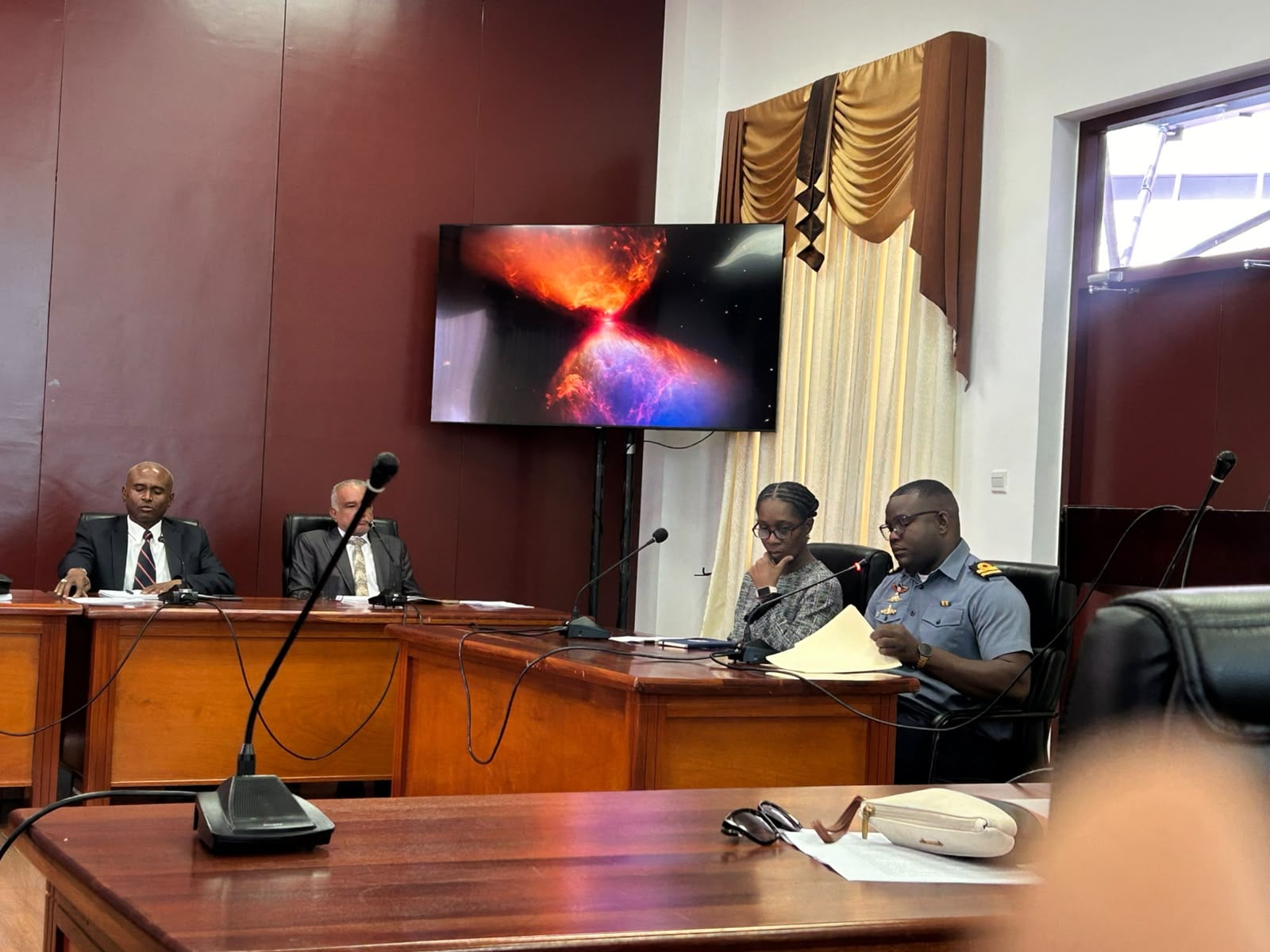
Coast Guard Lieutenant Rolwyn Heywood has told the MV Barima Commission of Inquiry that even 32 vessels would not have been sufficient to effectively cover the search area under the conditions encountered, stressing that aircraft were also needed to support the operation.
Approximately 18 vessels—six Coast Guard and 12 civilian—participated in the search on July 19, the day after the ferry sank, Heywood testified.
He said heavy mist restricted visibility at sea to about one mile during the day, while visibility at night was approximately 500 yards. Rough seas presented further challenges.
According to Heywood, the number of vessels required depended on the emergency position-indicating radio beacon (EPIRB) signals received, as well as weather and visibility conditions.
He stressed that the response required coordinated air and maritime resources.
“Land assets alone would not, and sea assets alone would not suffice for this operation,” he told the commission.
Heywood said the Coast Guard received the initial distress alert at approximately 10.51 pm on July 18. He analysed the chart and plotted the coordinates using software at Coast Guard headquarters before forwarding his findings to his commanding officer at about 11.10 pm.
He subsequently joined the GDFS Shahoud as a navigation officer and proceeded to the search area.
The commission is examining the circumstances surrounding the July 18 sinking of the state-operated Barima while travelling from Georgetown to Port Kaituma, including the effectiveness of the search, rescue and recovery response.








Discussion