
-no explanation given on Brazil cattle
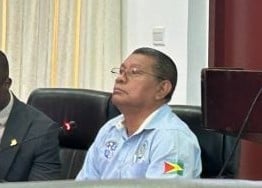
The Chief Executive Officer of the Guyana Livestock Development Authority (GLDA), Dr Dwight Waldron, yesterday once again defended the operation of the approximately $800 million Onverwagt abattoir, dismissing allegations that the facility is underutilised or has been plagued by corruption.
He, however, made only a passing reference to the controversial issue of Brazilian cattle being slaughtered there. It is unknown how many media entities were invited to the press conference.
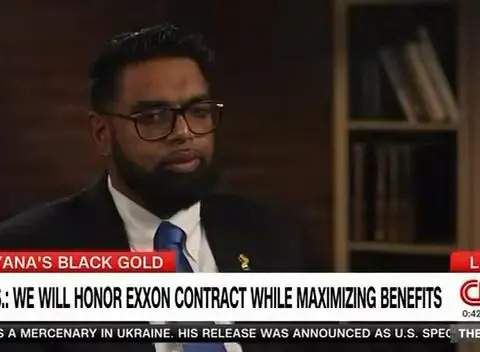
Waldron’s press conference appeared to be in response to a series of Facebook posts by Opposition Leader Azruddin Mohamed over the past week, although Mohamed was not mentioned by name. In the most recent post, Mohamed shared photographs of dead and emaciated cattle, accused the GLDA of abandoning cattle farmers affected by flooding and renewed allegations that cattle from Brazil were being brought into Guyana for slaughter at the Region Five facility.
Reading from a prepared statement during the press conference which was aired live on YouTube and shared on the Ministry of Agriculture Facebook page, Waldron said there had been “a deliberate attempt by political actors to mislead the Guyanese public” about the operations of the Onverwagt abattoir.
“The claims that the Onverwagt abattoir is not functioning, is underutilised because of corruption, or has been abandoned, are completely false and are intended to create unnecessary alarm and undermine public confidence in the agriculture sector,” he said
According to Waldron, the abattoir remains operational and continues to provide slaughtering and related services to livestock farmers from across the country.
He said the facility has produced more than 112,000 kilogrammes of beef since becoming operational and that butchers are charged a minimum fee of $3,000 per head.
Waldron said cattle processed at the facility was supplied mainly by farmers from Regions Four, Five, Six, Nine and Ten “and also limited supplies from Bonfim, Brazil, through approved lawful importation channel.”
However, despite the Brazilian cattle issue becoming a central point of public controversy in recent days, Waldron offered no further details on the arrangement during his prepared remarks.
He said the utilisation of the facility varies according to market demand, seasonal livestock supply and periods when meat consumption declines because of religious observances.
Fumigation
Responding to questions from one reporter, Waldron explained that the abattoir had temporarily ceased slaughtering while fumigation was being carried out but insisted the facility had “never stopped” operating.
“What transpired…was during the period when the facility was fumigated,” he said, adding that animals would again be accepted later this week and slaughtering would resume on Friday.
Waldron also rejected claims that the GLDA had neglected livestock farmers whose animals were affected by recent flooding.
He said the authority maintains an active veterinary surveillance programme, provides extension services, disease monitoring, vaccination campaigns, diagnostic support and emergency responses throughout the country.
According to him, during the past month GLDA officers provided surveillance services to 1,137 farmers, while more than 34,000 animals received veterinary interventions and relief assistance.
He said the authority distributed 17,500 bags of total mixed ration feed, along with molasses and veterinary supplements, to livestock owners in Mahaica Creek, Mahaicony Creek and Abary, while separate teams continued relief work in other flood-affected areas.
Priority, he said, was given to pregnant cows in their final trimester and calves, which were relocated to higher ground where possible.
Asked whether the authority had received reports from farmers whose dead cattle were photographed and circulated on social media, Waldron said no complaints had been received through official channels but maintained that every complaint reported to the GLDA had been addressed.
He also suggested that one of the dead animals photographed may not have died because of flooding, saying it could instead have succumbed to a snakebite as reptiles move to higher ground during flooding.
Renewed
The press conference followed renewed criticism from Mohamed, who on Monday again accused the government of failing local cattle farmers and alleged that, despite promises that the abattoir would purchase locally reared cattle for export, farmers said this had not happened.
The controversy first arose last week after Mohamed posted a video on Facebook showing repeated visits to the Onverwagt facility over several days. He described the abattoir as an “$800 million white elephant” and alleged that cattle was being transported from Brazil under cover of darkness, slaughtered at the facility and sold on the local market while Guyanese cattle farmers received little benefit.
The GLDA subsequently denied allegations that cattle was being secretly imported for the benefit of public officials but acknowledged that “limited quantities” of cattle from Bonfim, Brazil had been processed at the facility through what it described as approved and lawful channels.
In a separate interview with Kiskadee Watch published yesterday, APNU Region Five Member of Parliament Vinceroy Jordan described the Brazil-Guyana cattle arrangement as a “backdoor deal” that “stinks with corruption” and argued that the Onverwagt abattoir was severely underutilised.
Jordan maintained that inadequate policies and support for livestock farmers had prevented the facility from meeting its intended purpose and questioned why Brazilian cattle was being transported to Region Five rather than being slaughtered closer to the Guyana-Brazil border.
Following the GLDA’s initial statement acknowledging that Brazilian cattle had been processed at the abattoir, Kiskadee Watch submitted a series of questions to Waldron on June 24 seeking further details.
Among the questions were exactly how many cattle had been imported from Brazil and processed at the facility since it became operational, who imported them, what percentage of the abattoir’s total throughput they represented, which companies or individuals were responsible for the imports and who ultimately purchased or benefited from the meat.
Up to yesterday, those questions remained unanswered.








Discussion