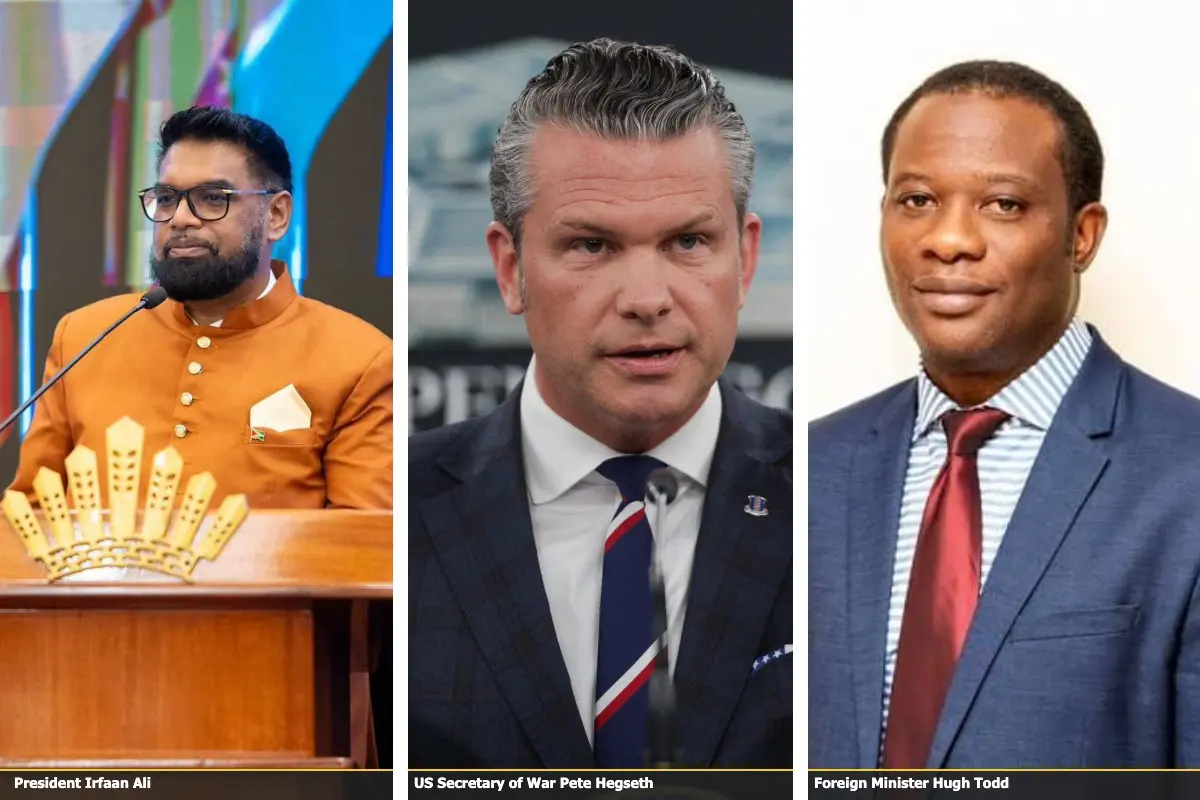
President Irfaan Ali has reiterated that Guyana’s territory is not negotiable and that none of Essequibo will be surrendered, while pointing to Washington’s reaffirmation of support for the 1899 Arbitral Award amid concerns over recent US statements concerning Venezuela.
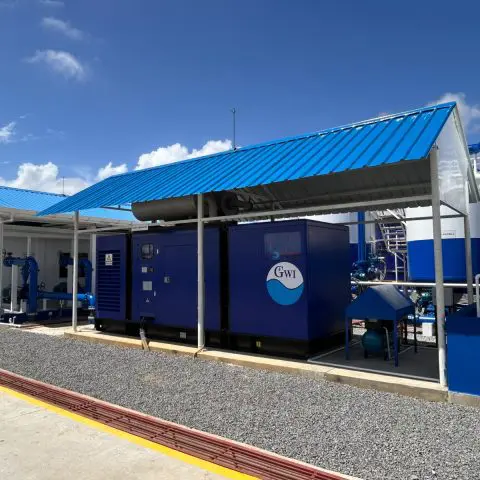
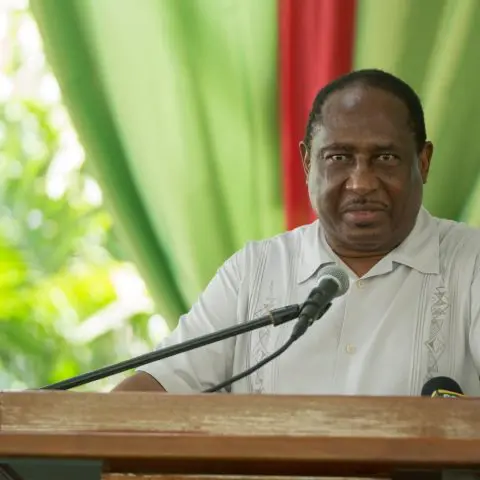
Speaking at the commissioning of a water treatment plant on Leguan yesterday, Ali said Guyana would abide by the impending International Court of Justice’s (ICJ) ruling and urged Venezuela to make the same commitment.
“Leguan is Guyanese, Essequibo is Guyanese, and Essequibo shall remain Guyanese. There is no debate about that,” the President declared.
“Our sovereignty and territorial integrity are not matters for negotiation, they are matters of national patrimony. That is why my government remains committed to defending every square inch of Guyana’s territory. All of Essequibo belongs to Guyana. None of it will be surrendered.”
His comments follow public concern over a reported suggestion by a former senior US official that Guyana consider territorial concessions to Venezuela, and qualifications in the US Embassy’s subsequent statement supporting the 1899 Arbitral Award.
Ali said Guyana had submitted itself to the ICJ as a responsible, law-abiding nation and was confident in its case.
“Now, what did the US say recently? They said that they respect and honour the 1899 Arbitral Award. What does the Award say? That it is a full, final, and complete settlement of our land boundary,” he said.
“I don’t know what else I need to say on this matter.”
The President did not specifically discuss the Embassy’s references to the possibility of a new boundary being established by a competent legal body or with both countries’ consent, or remarks by US Secretary of War Pete Hegseth about assisting Venezuela to “recover” territory.
Ali added that sovereignty must extend beyond preserving geographical boundaries to improving the lives of those who inhabit the country, including ensuring access to essential services and the benefits of national development.
Foreign Affairs Minister Hugh Todd, in a video statement on Friday night, separately maintained that Guyana would not enter bilateral negotiations with Venezuela over the controversy concerning the Award.
“Guyana has been very clear and very firm that we will not hold any bilateral discussions with Venezuela with regard to the controversy over the 1899 Arbitral Award,” Todd said.
“We remain committed to the process. We remain committed to the rule of international law.”
Todd said a judgment from the ICJ could come as early as the first quarter of 2027.
He maintained that Guyana regarded the Award as a full, perfect and final settlement and had repeatedly stated at the highest level that it would abide by the ruling.
Addressing the September discussions between Foreign Secretary Robert Persaud and a former US State Department representative, Todd said Persaud had been definitive when asked whether Guyana would pursue other options.
The Foreign Secretary had made clear that Guyana would pursue the outcome of the court process, according to Todd, who said the discussions were limited and that the ministry possessed notes of them.
Todd characterised the US Embassy’s subsequent statement as supporting the judicial process, while acknowledging that its wording referred to two possible routes: determination by a competent authority and bilateral discussions.
For Guyana, he said, the competent authority was the ICJ, consistent with Article IV(2) of the 1966 Geneva Agreement. He expressly rejected the bilateral route.
“Guyana will not waver from our position,” he said, urging citizens to remain patient and focused on the country’s future as a sovereign and independent state.
Facilitate
The controversy arose after Reuters reported that then State Department policy chief Jeremy Lewin had offered to facilitate territorial discussions during a September meeting with Persaud in Washington and had floated the possibility of Venezuela taking partial control of Essequibo. Kiskadee Watch reported on November 20 that the disclosure raised questions about the discussions and Guyana’s response.
The Embassy subsequently reaffirmed support for the Award but qualified that position by referring to the possibility of a boundary change through a competent legal body or mutual consent. Kiskadee Watch’s reporting highlighted concerns over those qualifications, given Guyana’s rejection of territorial negotiations and its reliance only on the ICJ.
Separately, Hegseth’s remarks during his November 18 visit to Caracas attracted calls for clarification.
The Washington Post reported Hegseth discussing “security and defence reforms where necessary to recover Venezuela’s territory” during his November 18 Caracas visit.
The US Department of War’s account, published the following day, placed his remarks within a discussion on confronting narcoterrorism and other security threats. It also quoted him as saying that peace would require Venezuela to “regain its borders and territory”.
Forward Guyana Movement leader Amanza Walton-Desir, responding to questions from Kiskadee Watch through a statement, acknowledged the security context but called for an explanation of the references to Venezuelan borders and territory. She also urged meaningful consultation with the opposition.
APNU leader Aubrey Norton, asked the same questions, declined to interpret the Embassy’s wording as evidence of a policy change, but rejected bilateral negotiations. In the interview, Norton argued that Guyana would face an unequal power relationship in such discussions and urged the government to stay the course at the ICJ.
Kiskadee Watch had sent Todd and Persaud questions seeking clarification of the Embassy’s wording and whether Washington had confirmed that it would neither promote territorial concessions nor pursue negotiations outside the judicial process. The messages and follow-up calls received no response before its November 21 report.
Todd’s Friday-night statement subsequently explained Guyana’s interpretation of the Embassy’s reference to a competent authority and reiterated its rejection of bilateral talks. It did not say whether Washington had provided the specific assurances sought in those questions or address Hegseth’s remarks.









Discussion