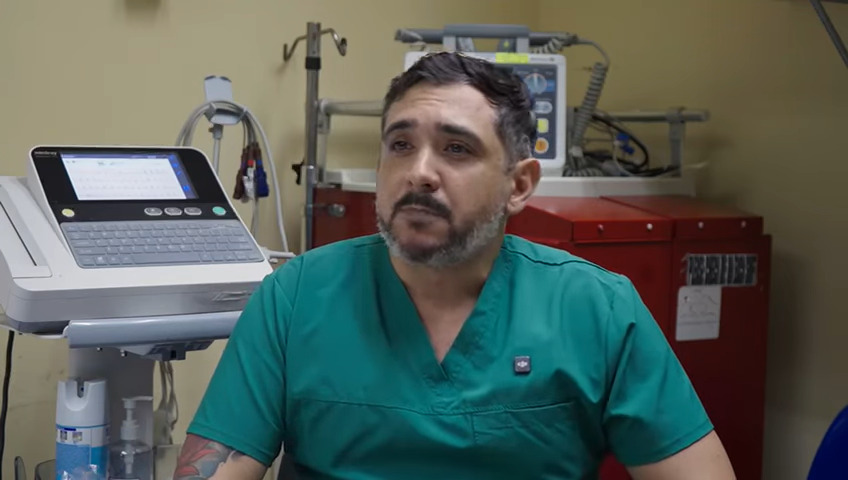
A normal electrocardiogram does not always mean a patient has no heart problem, a Georgetown Public Hospital Corporation (GPHC) doctor has cautioned in a video explaining how the test is used.
Dr Jesus Valdes Alvarez said an electrocardiogram, or ECG, records the heart’s electrical activity and helps medical staff assess whether it is beating too quickly, too slowly or irregularly. The recording can also provide information when a patient is being assessed for a suspected heart attack or angina.
In the video posted on GPHC’s Facebook page, Valdes Alvarez demonstrated a machine used to carry out the test. Small electrodes placed on the patient’s skin pick up electrical signals, which the machine records for clinical assessment.
He stressed, however, that a normal ECG does not provide a 100 per cent assurance that the heart is free of problems. Symptoms remain important to the assessment, he said, and a patient may sometimes need more than one ECG.
According to the Mayo Clinic, an ECG is a quick test that can help identify irregular heartbeats and signs of a heart attack. However, if symptoms come and go, a standard ECG may not capture a change in the heartbeat. In such cases, a healthcare professional may recommend a portable monitor, such as a Holter monitor, which records the heartbeat during daily activities.













Discussion