
The Office of the Leader of the Opposition has circulated a briefing note to diplomatic missions and international organisations over the continuing impasse at the Guyana Elections Commission (GECOM), warning that almost a year after the 2025 elections, the country’s electoral institutions still do not reflect the new parliamentary configuration.
The August 19 briefing note, titled Guyana’s Electoral Institutions at a Crossroads: GECOM Representation and the 2025 Political Transition, also raises concern that none of the 69 opposition scrutineers currently being paid by GECOM represents We Invest in Nationhood (WIN), now the largest opposition party.
According to the document, the Office is not seeking international intervention in Guyana’s constitutional processes but wants the country’s international partners to continue monitoring the impasse and encourage its resolution in keeping with the Constitution and the rule of law.
“The 2025 elections changed the political landscape, but some institutional arrangements remain rooted in an older political configuration,” the note said.
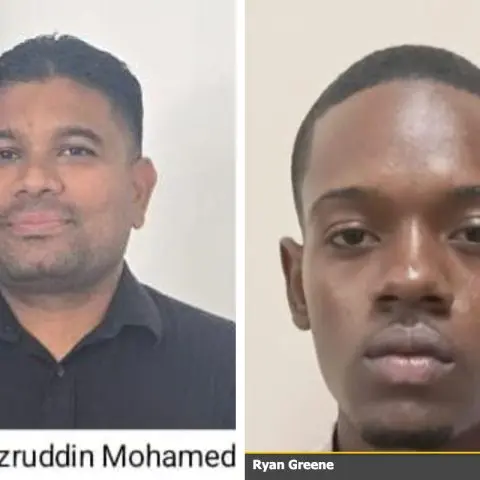
WIN emerged from the September 1, 2025 general elections as the principal opposition party and Azruddin Mohamed was elected Leader of the Opposition on January 26, 2026. The party secured 16 seats, while APNU won 12 and the Forward Guyana Movement one.
Despite that change, GECOM’s three opposition-nominated commissioners—Vincent Alexander, Charles Corbin and Desmond Trotman—remain in office. They were appointed under the previous parliamentary configuration and have maintained that there is no legal mechanism for their removal merely because the opposition leadership has changed.
Stabroek News had reported in January that Mohamed and WIN executives met GECOM Chairperson, retired Justice of Appeal Claudette Singh, to discuss representation on the commission. Mohamed subsequently said the three commissioners should resign to allow the new parliamentary opposition to be reflected at GECOM.
According to Stabroek News, the commissioners later declined an invitation to meet Mohamed at WIN’s headquarters. They referred to what they described as a hostile public campaign by the party and rejected an agenda which included discussion of their tenure.
The dispute has since prevented GECOM from holding substantive meetings.
The briefing note said Singh publicly stated on May 26 that the commission could not move forward until the new Opposition Leader submitted the names of his nominees. The issue was also linked to preparations for Local Government Elections.
Under Article 161 of the Constitution, three members of GECOM are appointed by the President acting on the advice of the Leader of the Opposition after meaningful consultation with non-governmental parties represented in the National Assembly.
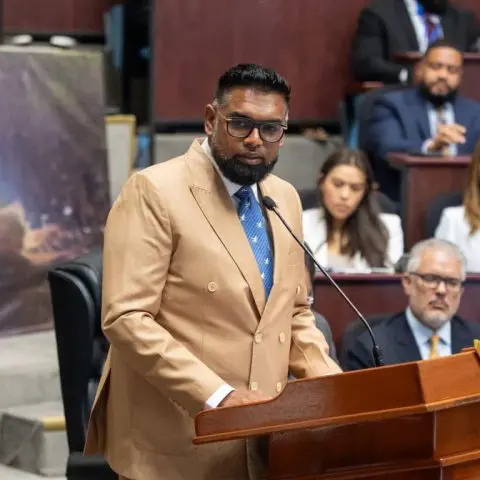
The Office said Mohamed sought legal advice and consulted the other parliamentary opposition parties before formally advising President Irfaan Ali on June 30 to appoint attorneys Roysdale Forde SC, Siand Dhurjon and Damien Da Silva as commissioners.
It maintained that the consultations satisfied the constitutional requirements.
According to the briefing note, the Opposition Leader wrote the President again on August 7 after receiving no substantive response, but the matter remains unresolved.
The document did not state whether Ali had acknowledged the nominations or indicate what legal position the government had taken on the status of the incumbent commissioners.
The issue is legally complicated since the Constitution protects the tenure of GECOM commissioners and does not expressly provide for their replacement following a change in the identity or composition of the parliamentary opposition.
However, the Opposition Leader’s Office argued that electoral and constitutional bodies must reflect voters’ choices rather than the identities of particular political parties.
“Governments change. Oppositions change. Political parties change. The constitutional framework must endure,” it said.
The Carter Center earlier this month expressed “considerable concern” about the impasse after holding discussions in Guyana with Ali and members of his Cabinet, Mohamed, GECOM, other opposition parties, civil society groups and members of the international community.
It warned that without a fully functioning commission, GECOM could be unable to conduct Local Government Elections within the statutory period or implement reforms before the next general elections.
The Center called for the recommendations in its final report on the 2025 elections to be implemented. Those recommendations included reforms to election-management bodies, campaign-finance legislation, the media environment and measures to improve transparency and confidence in the voters’ list.
The Center also called for the Constitutional Reform Act to be amended to reflect the current configuration of parliamentary parties. It said Attorney General Anil Nandlall SC had acknowledged the need for such an amendment following the elections.
The Opposition Leader’s Office said the Center’s intervention demonstrated that the issue was no longer merely a disagreement among political actors, as it could affect the country’s electoral calendar and public confidence in GECOM.
Scrutineers
The briefing note also raised a separate dispute over the appointment and allocation of scrutineers representing the combined opposition under Section 33D of the Representation of the People Act.
Scrutineers participate in and oversee the registration process on behalf of political parties.
According to the Office, Mohamed consulted the parliamentary opposition parties, nominated persons for the positions and communicated the resulting allocation to GECOM.
It said subsequent correspondence from Chief Election Officer Vishnu Persaud questioned whether that exercise amounted to “meaningful consultation” and whether GECOM had the authority to determine the adequacy or validity of the process.
The Office contended that GECOM should give effect to appointments made through the statutory process rather than substitute its own assessment for that of the constitutional office holder responsible for conducting the consultations.
It said none of the 69 scrutineers being remunerated by GECOM on behalf of the opposition is from WIN or the Forward Guyana Movement. All are reportedly drawn from APNU, although it is now one of three parliamentary opposition parties and no longer the principal opposition.
The note called on international partners to support inclusive electoral and constitutional reform, the statutory participation of parliamentary parties and efforts to strengthen GECOM’s independence, transparency and effectiveness.
“GECOM must ultimately be trusted by the people of Guyana and all legitimate participants in the democratic process,” it said.
Kiskadee Watch yesterday contacted Singh, Persaud and GECOM Public Relations Officer Yolanda Ward for responses to the allegations.
They were asked to confirm whether GECOM is remunerating 69 opposition scrutineers, provide a breakdown of their party affiliations and explain the legal or administrative basis for retaining the current allocation if none represents WIN or the Forward Guyana Movement.
GECOM was also asked to identify any deficiencies it found in the Opposition Leader’s consultation and nomination process and the statutory authority under which it could determine whether that process was adequate or valid.
The officials were further asked what steps were being taken to resolve the impasse over the opposition-nominated commissioners and how the deadlock was affecting preparations for Local Government Elections and GECOM’s ability to conduct them within the statutory timeframe.
Kiskadee Watch was initially told that a response would be forthcoming. It was subsequently informed, however, that the commission would not provide the response yesterday.










Discussion