
The controversial Sexual Offences (Amendment) Bill 2026 was yesterday referred to a parliamentary special select committee by Minister of Human Services and Social Security Dr Vindhya Persaud amid loud protests by opposition MPs demanding the resignations of two ministers over the MV Barima tragedy.
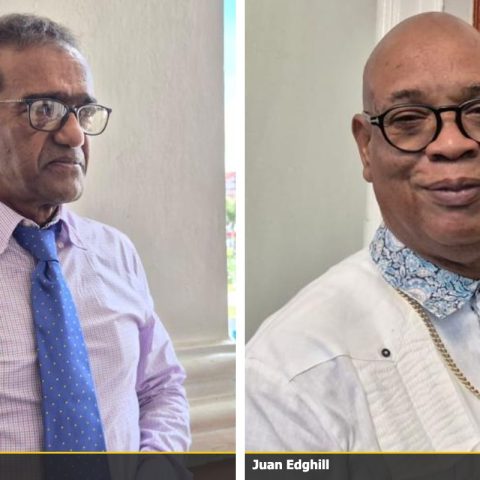
At several points during her presentation to the National Assembly, Persaud was forced to almost shout to be heard above chants calling for Minister of Public Works Juan Edghill and Minister of Public Utilities and Aviation Deodat Indar to step down.
“Who must go? Edghill and Indar,” the opposition members repeatedly chanted while thumping their desks.
At one point, several opposition MPs stood directly in front of Persaud and held up photographs of persons who perished in the July 18 ferry tragedy as she continued her presentation.
Speaker Manzoor Nadir cautioned WIN MP Odessa Primus and another opposition member over what he described as verbal abuse of the minister.
Persaud described the proposed amendments as a “pivotal piece of legislation” and said there was both a moral and legal obligation to protect vulnerable people.
She said the Sexual Offences Act of 2010 was progressive and necessary when passed, but a subsequent review had identified gaps and inadequacies that now required “robust, modern and uncompromising measures.”
According to Persaud, the amendments emerged from more than a year of examination and consultation involving the ministries of Parliamentary Affairs and Governance, Legal Affairs and Human Services and Social Security.
She said constitutional and rights commissions, legal and judicial stakeholders, civil society groups, non-governmental organisations, faith-based and community organisations, Indigenous and regional leaders and members of the disciplined and public services were also involved.
Among the organisations she identified were the Women and Gender Equality Commission, Rights of the Child Commission, Blossom Inc, ChildLink and the Guyana Relief Council.
Persaud said the gap analysis and drafting process had been led by Dr Kim Kyte-Thomas, who is now a sitting judge.
The amendments, she said, would modernise definitions and terminology, allow for greater use of visual and digital evidence and strengthen the privacy of complainants.
They also address reporting and accountability procedures involving healthcare workers and police, provide for a National Sexual Offences Task Force and establish a national database of convicted sexual offenders.
Persaud said the differences in views and perspectives surrounding the legislation warranted further parliamentary scrutiny.
“I believe because of the differences in opinions, different perspectives and opinions that this Bill should, like the 2010 Bill, be taken to the special select committee so that it can benefit from more scrutiny, more discussion and more intervention from every member across this National Assembly,” she said.
She invoked Standing Order 58 to have the proposed legislation sent to the committee.
Closed
The referral followed controversy over the bill’s provision for a closed national sex offenders registry and the government’s subsequent announcement that it supported making the registry publicly accessible.
The government’s decision to send the bill to a select committee had been announced by Vice President Bharrat Jagdeo, who said President Irfaan Ali had instructed that it undergo further consideration.
That announcement came five days after Persaud tabled the bill. She had initially defended the proposed closed registry as progressive and consistent with international practice.
Following Jagdeo’s announcement, however, Persaud said on Facebook that she, Ali and the Cabinet supported a public registry. She maintained that the closed arrangement contained in the bill reflected the overwhelming view emerging from public consultations and said she had intended to propose that it be sent to a select committee.
No mention of such an intention had been made in a statement issued by her ministry one day earlier. That statement had described the legislation as a “historic milestone” which would establish Guyana’s first sex offenders registry more than 15 years after the principal Act was passed.
Minister of Parliamentary Affairs and Governance Gail Teixeira later defended the consultation process, saying it had been conducted between 2024 and 2025 under the Support for the Criminal Justice System Programme, which was implemented by the Ministry of Legal Affairs with assistance from the Inter-American Development Bank.
Teixeira said 103 organisations and agencies had been invited to a national stakeholders’ forum on July 3, 2024, and 62 had confirmed their attendance.
According to her, participants welcomed the proposed database, but the recommendation emerging from the consultation was for it to remain closed while allowing applications for information on convicted offenders.
Red Thread and several other civil society participants had welcomed the introduction of a database but called for further consultation on its design and operation. They suggested consideration be given to maintaining both a restricted database and a public registry, as exists in Trinidad and Tobago.
They also warned that technical expertise, adequate time and clear procedures would be required, given Guyana’s previous difficulties with collecting and managing data.
Red Thread’s Karen de Souza had told Kiskadee Watch that the referral provided an opportunity for more meaningful consultation, particularly on the registry.
She questioned whether the institutions responsible for managing the information possessed the necessary capacity and public trust. De Souza said a public registry could expose convicted offenders to vigilante action, while a closed registry would place significant authority in institutions which had not demonstrated that they could be entrusted with such responsibility.
She also said the earlier consultations were inadequate, with some stakeholders feeling that they had been presented with conclusions rather than genuinely consulted.










Discussion