Home Affairs Minister Oneidge Walrond yesterday urged Caribbean law enforcement agencies to go after the people who finance and profit from illegal mining, logging, wildlife trafficking and other environmental crimes, warning that arresting those caught carrying out the offences can leave the networks behind them intact.
“We must identify those who organise, finance, facilitate, and ultimately profit from environmental crime,” Walrond said. “Otherwise, we risk arresting individuals while leaving the criminal enterprises behind them intact.”
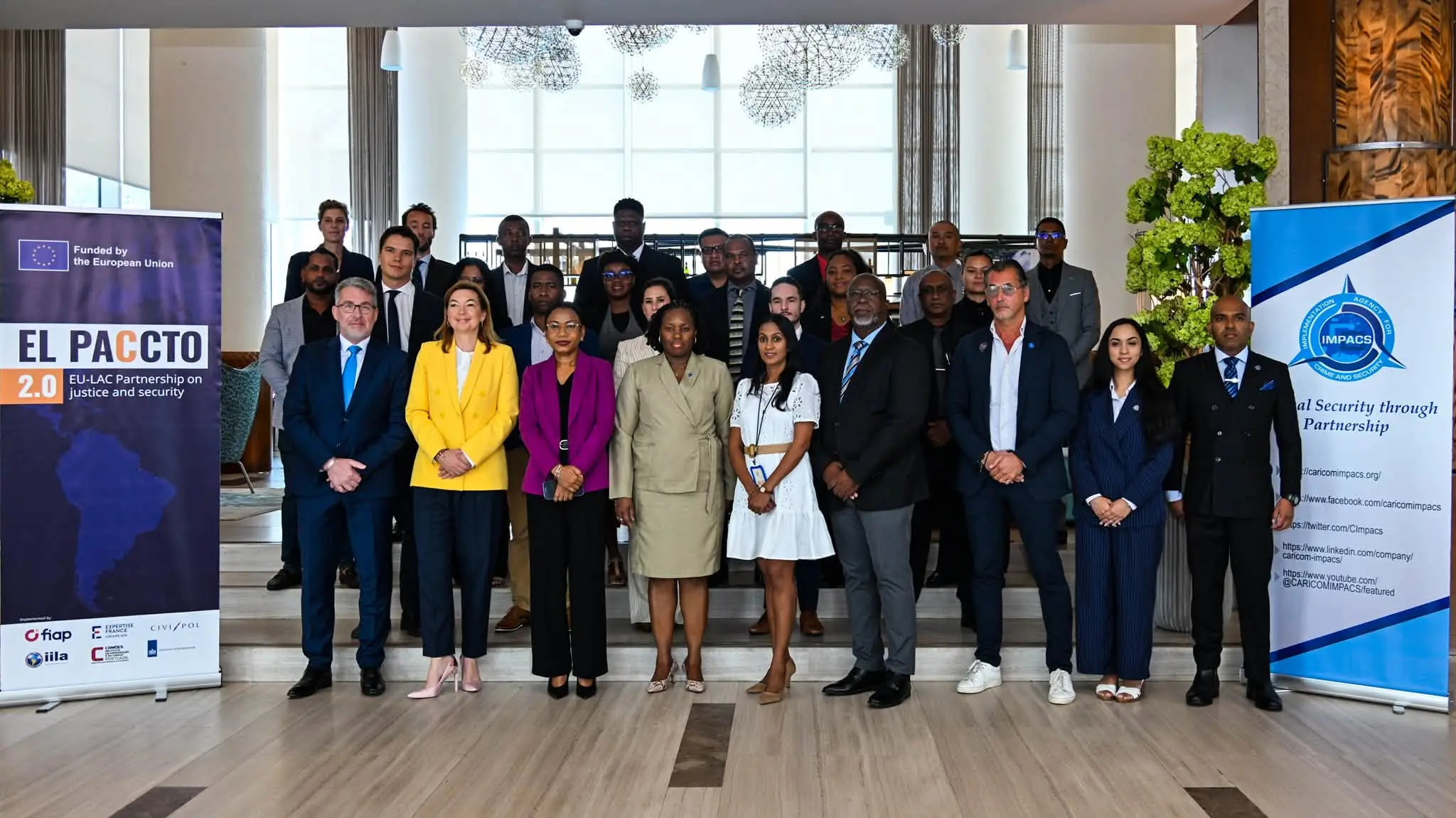
She delivered the keynote address at the first General Assembly of the Caribbean Network of Environmental Enforcement Agencies, a two-day meeting that opened at the Guyana Marriott Hotel in Georgetown on November 25. The meeting is jointly hosted by CARICOM IMPACS and the European Union-funded EL PACCTO 2.0 programme.
Walrond said a criminal enterprise could operate in one country, obtain financing in another, move illegally sourced goods through a third and conceal its profits elsewhere. In Guyana, she said, extensive borders, remote interior communities and large maritime areas pose enforcement challenges that criminal groups can exploit.
She called for environmental regulators, police, customs officers, financial intelligence units and prosecutors to work together from the point at which suspicious activity is detected. A regulator might flag an offence, she said, while police uncover a wider operation and financial investigators trace the proceeds. Where the evidence and the law permit, authorities should pursue the proceeds of those crimes.
The proposed 2027 Regional Action Plan has three priorities covering police cooperation and intelligence sharing, specialised training and capacity building, and joint operations and financial investigations. Delegates are also expected to consider rules for sharing sensitive information and formalise the network’s governance, with CARICOM IMPACS proposed as its executive secretariat.
Walrond urged delegates to give each priority clear responsibilities, realistic deadlines and a way to measure progress. She pointed to the Guiana Shield operation involving Guyana, Suriname, Brazil and French Guiana, and to Operation Deep Sea, which targets illegal, unreported and unregulated fishing, as examples of cross-border enforcement the network could build on.
The minister said communities that depend on forests, rivers and fisheries for their livelihoods are often among the first to feel the effects of environmental crime. She said the network’s success should be judged by whether investigators can reach one another when time is critical, act together when cases cross borders and build cases that lead to prosecutions.








Discussion