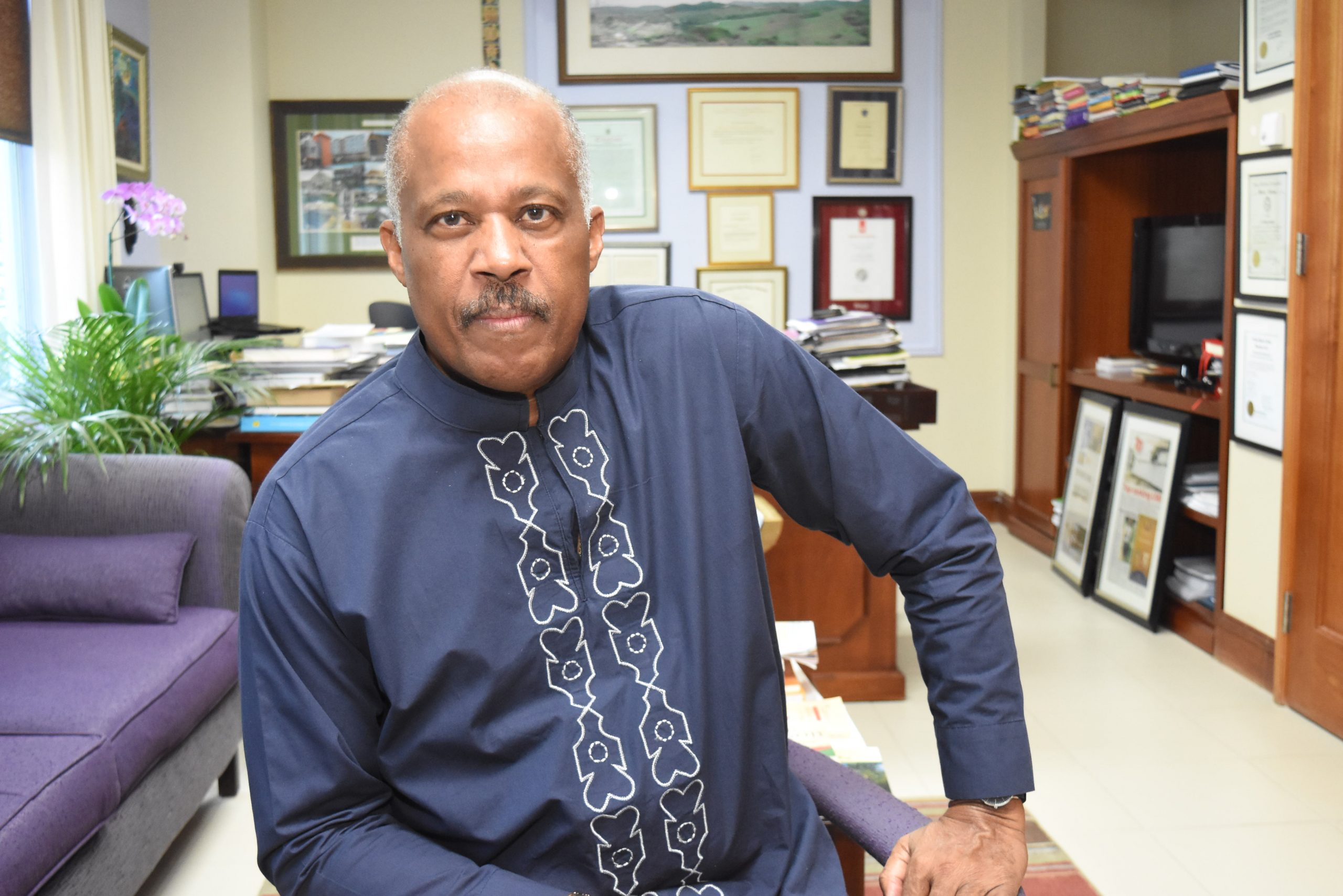
— says revised CARICOM plan centres women, Indigenous peoples
Chairman of the CARICOM Reparations Commission, Sir Hilary Beckles, has declared that the regional reparations movement has entered a decisive phase and must be carried through to completion by the present generation.
“This is the final eruption of this movement,” Beckles said during an address at the relaunch of CARICOM’s Ten-Point Plan for Reparatory Justice.
“There will be no other rise and fall and rise and fall. This is the final eruption of this movement,” he said, adding that the struggle should not be left as a “sermon for the next generation”.
“In this generation, all of us here are going to see this through to the very end,” the University of the West Indies Vice-Chancellor said.
Beckles argued that reparations and the politics surrounding them would constitute one of the defining justice movements of the 21st century. He traced the current campaign to earlier struggles against slavery and colonialism, saying emancipation had not provided formerly enslaved people with the land and economic security required to exercise their freedoms fully.
The revised plan, he said, had been shaped by more than a decade of research, advocacy and public consultation. Criticisms of the original framework had been collected and considered as part of the review.
One significant revision was the clearer recognition of the particular experiences of enslaved African women and the central role their exploitation played in sustaining slavery across generations.
Beckles said slavery had been constructed around the reproductive exploitation of black women, since the legal status of a child followed that of the mother. The children of enslaved women were therefore born into enslavement, allowing the institution to reproduce itself from one generation to another.
“The women carried slavery,” he said, while stressing that the experiences of enslaved women and men could not be treated as identical.
Although both were subjected to enslavement, Beckles said the violence and exploitation inflicted upon Black women had distinctive features which had to be expressly addressed in the reparations framework.
The updated approach also gives greater recognition to the genocide of the Caribbean’s Indigenous peoples and the dispossession of their lands.
Beckles said the commission’s work had been grounded in research intended to establish both the historical case and the philosophy underpinning the movement. The commission had also sought to mobilise public opinion and strengthen advocacy across the Caribbean and internationally.
Its conclusion, he said, was that reparatory justice must be “developmental and transformative”.
The region’s present economic and social difficulties, he argued, could not be separated from centuries of wealth extraction, environmental degradation and structurally imposed poverty.
He rejected any characterisation of reparations as charity or a demand for handouts, maintaining that it was a justice claim arising from crimes committed against Indigenous and African peoples and their descendants.
Beckles drew a distinction between slavery as it had existed at different periods of human history and the system of racialised chattel slavery developed in the Americas.
Under chattel slavery, he said, an entire racial group was classified in law as property and treated as non-human. This feature made the transatlantic system historically distinctive and formed part of the legal and moral foundation of the reparations claim.
He also placed the current movement within a longer history of demands by formerly enslaved Caribbean people for land and economic independence following emancipation.
“Emancipation is not enough,” Beckles said in recounting the position taken by freed people who recognised that political rights would have little meaning without land, secure communities and an economic base.
“The right to vote means nothing unless you have economic security,” he said.
Those demands were repeatedly resisted, he noted, but they demonstrated that the present reparations campaign was not a recent invention. Rather, it was the continuation of a struggle that began among the first generations emerging from enslavement.
Beckles said reparatory justice also carried a responsibility beyond the Caribbean.
“We have a duty to humanity,” he said, arguing that confronting the crimes of slavery, genocide and racial apartheid was necessary to prevent similar systems of dehumanisation from being inflicted upon any other people.
According to CARICOM, heads of government endorsed the original Ten-Point Plan in March 2014. It called for, among other measures, a full formal apology from former colonial powers, debt cancellation, technology transfer, support for public health and education, psychological rehabilitation, cultural institutions, an Indigenous peoples development programme and the right of repatriation.
The revised framework expands on that foundation and places additional emphasis on the experiences of women, Indigenous peoples and other communities affected by colonial exploitation.
Beckles said the movement had now secured support well beyond the Caribbean, including among African nations and communities across the diaspora.
“This is our time,” he declared. “This is our way.”









Discussion