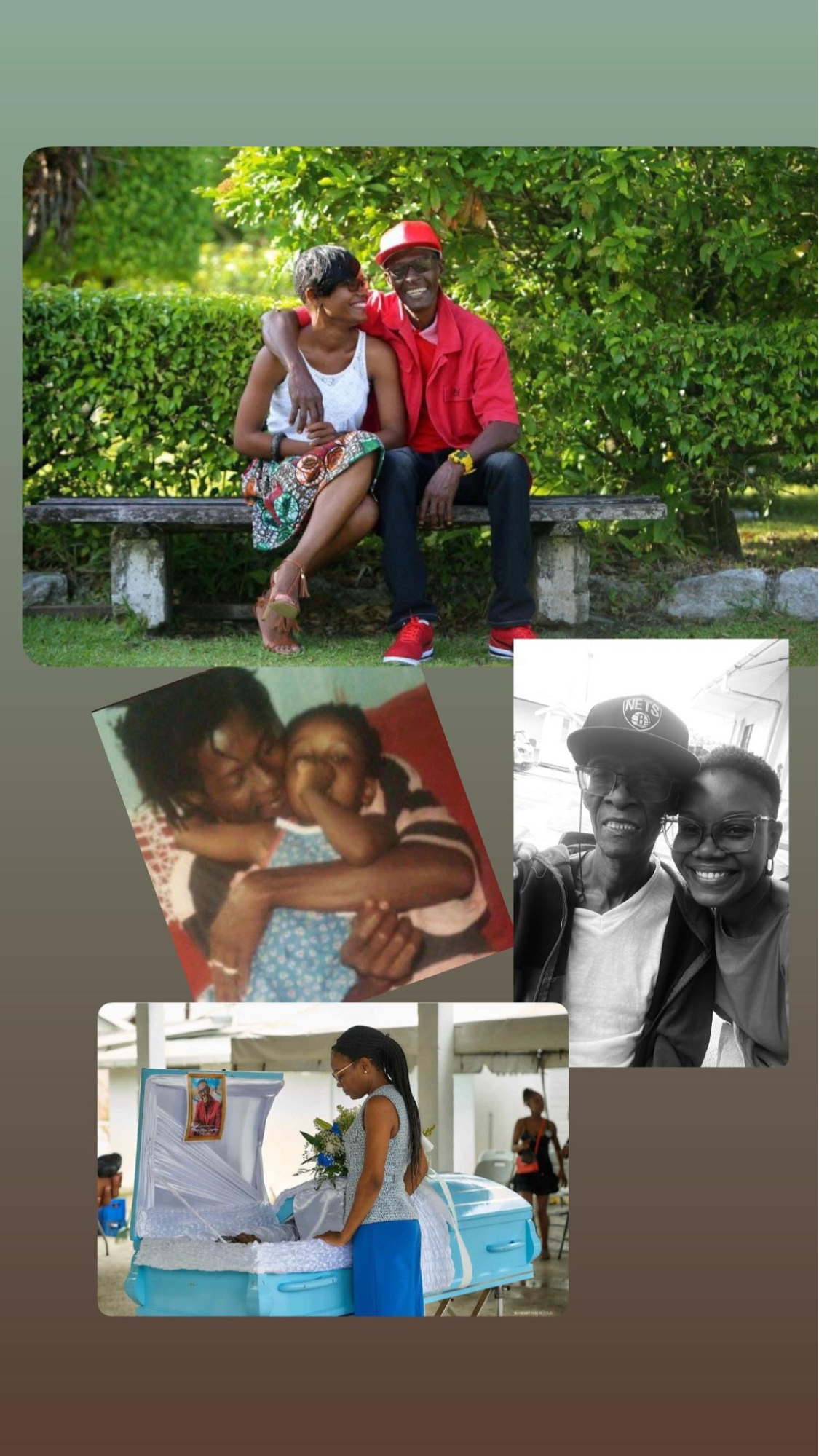
For years, Marva Langevine was the person who entered rooms made heavy by death.
She listened to children struggling to understand why a parent was no longer coming home. She sat with families after sudden and violent loss, helped survivors find language for trauma and encouraged grieving people not to carry their pain in silence.
Then, in 2025, the grief counsellor became the grieving daughter.
Her father, George, was diagnosed with cancer and, for three months, Langevine was his primary caregiver. He died on the afternoon of June 19, leaving her to confront a loss for which more than a decade of professional training and experience could not fully prepare her.
“For the first time, I was not the counsellor in the room. I was the daughter grieving her father,” she has since said publicly.
It was a reversal that brought her life’s work full circle. Langevine understood the language of grief, the warning signs, the value of support and the importance of allowing emotions to surface. But knowing grief and living through it were two different experiences.
In a recent interview with Kiskadee Watch, she said she felt better equipped to recognise what was happening to her and, more importantly, to permit herself to grieve.
“Also allowing myself to grieve,” she stressed.
Her father’s death was not Langevine’s first encounter with loss. Her journey into bereavement work began in 2014 after her friend, Mikiesha Beckles, died from a rare form of cancer, leaving two young sons.
Langevine had watched her friend fight to remain alive for her children. She later made a commitment to remain involved in the boys’ lives, but the experience also opened her eyes to the often-unacknowledged grief of children.
While adults received condolences and attention, the emotional worlds of bereaved children were frequently overlooked. Children were expected to be strong, remain quiet or quickly resume their lives.
That silence disturbed Langevine and eventually helped her find her purpose. She began researching childhood bereavement and later organised workshops, camps and retreats for children who had lost parents through illness, murder, road accidents, mining tragedies and suicide. She also worked with widows and other relatives left to rebuild their families after a death.
Her advocacy led to the establishment of the Guyana Golden Lives Organisation (GGLO), which supports bereaved children and families through counselling, scholarships, home visits, support groups and other practical assistance.
In 2018, she received the Queen’s Young Leaders Award at Buckingham Palace for her work with bereaved, sick and underprivileged children and families. By then, however, the recognition was attached to years of pushing against a culture in which grief—particularly childhood grief—was rarely discussed openly.
GGLO has since directly assisted many bereaved children, according to Langevine. One girl who lost a parent unexpectedly was supported with school supplies, transportation and tuition for seven years. She later graduated from the University of Guyana with a degree in civil engineering.
Over the years, Langevine also trained educators and community leaders, launched grief-support initiatives for children and adults and facilitated trauma-related interventions. Following the 2023 Mahdia dormitory fire, she helped to assess the psychological well-being of survivors, relatives and others affected by the tragedy.

There were other personal losses along the way. One of her mentors, Lovern Seetal, who had supported GGLO, died from cancer. Langevine said at the time that knowledge about grief did not cushion the impact of death, although it helped her process the loss.
Her father’s illness, however, brought grief into the centre of her own home.
Caregiving
Langevine was 32 when she became her father’s caregiver—the same age he had been when she was born.
She had imagined that such a reversal of roles would occur much later, when she was older and perhaps had a family of her own. Instead, the woman who had always regarded herself as “daddy’s girl” suddenly became responsible for helping to care for the man who had spent his life caring for others.
Her father had been the primary caregiver for his own mother, who was 95 and blind. He would rise early to tend his garden before bathing and dressing her and ensuring that she ate. When he was not caring for his mother, he was running errands, watching cricket or helping someone who needed him.
As his health deteriorated, Langevine wrote publicly about the “shock, the quiet grief, the unexpected courage, the discovered strength and the persistent hope” which accompanied her new role.
She described caring for him as both humbling and an honour—a chance to return a small part of the love he had poured into her life.
But beneath her outward composure was anticipatory grief: mourning that begins before a loved one dies.
“I’m holding it all together—calm on the outside, but quietly screaming within,” she wrote during his illness. “Time feels strange: rushing past me and standing still all at once.”
She anchored herself in gratitude, recalling the father who allowed her to be her extroverted self, quietly cheered her on, wiped away her tears and taught her courage.
The caregiving period also tested the very lessons she had shared with others. Professional knowledge did not remove the emotional and physical exhaustion, the uncertainty or the burden of constant decision-making.
She learnt that resilience was not simply pushing through. It also involved recognising her limits, asking for help and accepting that caring for herself was necessary if she was to continue caring for him.
Friends, relatives and members of her community responded with practical assistance. They lent her a vehicle, helped with laundry, brought supplies and food, prayed with the family and gave her space to speak openly.
A former student whose mother had died also reminded her of advice she had once offered: “Miss, don’t give up, remember you told me that.”
There was an agonising interruption near the end. Langevine contracted dengue and COVID-19 simultaneously and could no longer visit her father in hospital.
Then, on the morning of June 19, she received word that he wanted to see her.
When she arrived, he asked: “Hug me up, my daughter.”
It was an intimate return to childhood. As a girl, she had fought with her brother for the opportunity to lie on their father’s chest because it was the only place she could fall asleep.
Her father then told her that “dying feels good”.
Langevine remained at his bedside for another three hours, slowly accepting that he was ready to leave. He died that afternoon.
She later described caring for him and witnessing his final moments as painful but also sacred.
Grief moved into the body
After his death, Langevine discovered that grief was not confined to sadness.
There was brain fog. Simple decisions became burdensome. Her sleep was disrupted, her appetite disappeared and her concentration scattered. She would begin a sentence and forget where it was going or pick up her telephone without remembering why.
“Grief had moved into my body and rearranged the furniture,” she said publicly.
Although she had always encouraged others to seek support, she found herself without the energy to initiate contact or explain what she needed.
The people around her did not wait to be asked. They cooked, cleaned her home and provided other practical forms of care. More importantly, they reminded her that she did not have to manage her mourning efficiently or perform the role of the grief professional who always knew what to do.
They allowed her to be a daughter who had lost her father.
“I had to reject the urge to be strong,” Langevine said. “Strength, I was reminded, includes knowing when to receive.”
Everything she had spent years teaching—the importance of community, speaking about grief and receiving support—was now required for her own survival.
“And it held me,” she said. “Not perfectly. Not quickly. But it held.”
Metamorphosis
More than a year later, Langevine does not speak of “moving on” from her father. Instead, she speaks about transformation and continuing bonds: preserving parts of him while accepting that her identity has changed.
“I think even with loss and grief, there is a metamorphosis that occurs. So I’m going through one,” she told Kiskadee Watch.
“I’m not daddy’s girl anymore. There is some of that identity that once existed.”
She said there were aspects of her relationship with her father which could be continued and honoured, including his gardening and his habit of reading the Word. Other parts of their shared life, however, could not be preserved in the same way.
“There are parts of daddy that I will keep alive and I will honour,” she said. “But it’s like this new identity that is forming.”
The transition was initially disorienting. Langevine said she has become quieter, more reserved and observant. She is learning to sit with the discomfort of change while remaining open to what her new life may reveal.
“I’m now feeling excited,” she said. “Of course, it was a bit disorienting, but I’m excited and I’m trusting the process.”
She remains emotional and makes no attempt to suppress it.
“I cry when I have to cry,” she said.
But alongside the sadness, she has found greater confidence in her resilience and a renewed sense that her purpose remains unfinished. She believes her father would not have wanted her to retreat permanently into mourning.
“He would not have wanted me to be in a corner crying forever,” she said.
Her personal experience has also altered her work. Langevine said she is more sensitive and empathetic when supporting clients because she now recognises dimensions of grief she did not fully notice before.
Her advocacy has not changed direction, she said, but it has acquired a different texture. She no longer approaches grief only through training and years of listening to others. She now knows it from inside.
The loss has changed her, she has publicly acknowledged, but it has not shattered her.
Healing, in Langevine’s telling, is neither quick nor painless. It does not mean forgetting, ceasing to cry or returning to the person one was before. It means learning to make room for seemingly opposing emotions.
“I can still mix sadness and joy,” she told Kiskadee Watch.
For the woman who spent years teaching others that no one should grieve alone, that may be the most significant lesson of her own journey: even the helper must sometimes allow herself to be helped.
And in receiving the care she had so often given, the grief counsellor found space simply to be Marva—the daughter who loved her father, lost him and is slowly learning who she is becoming.











Discussion